
In short
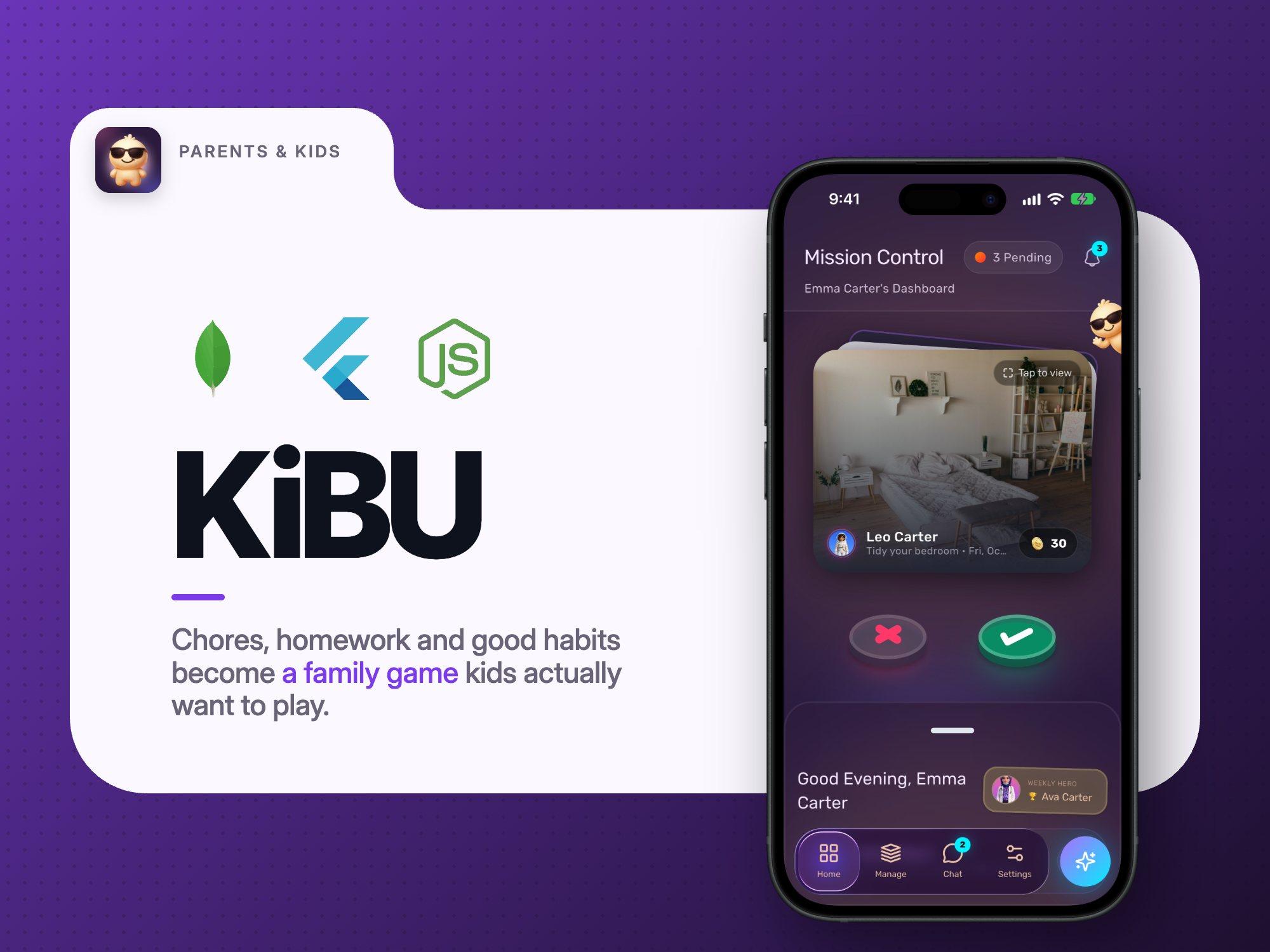
In KiBU, a finished mission never pays out on its own. It becomes a card on the parent's deck, often with a photo as proof, and one tap approves or rejects it. That gives the child a clear answer, stops the parent chasing, and means coins only ever move when an adult has said yes.
A chore chart only works while someone keeps checking it
Asking a child to tidy their room, do their reading and feed the dog is easy once. Asking every day turns a parent into a reminder service, and the child learns that a task is finished when the nagging stops, not when the work is done.
So the question we had to answer for KiBU was not how to make a nicer to-do list. It was how to make "done" mean something both sides agree on, without the parent having to go and look.
Finishing a mission is a request, not a payment
Every mission in KiBU carries a coin reward, a schedule and, when the parent wants it, a photo as proof. When the child marks it done, nothing is paid. The mission lands on the parent's deck as a card, and one tap approves or rejects it.
Putting approval before the coins is the whole design. The child gets a clear yes or no instead of silence, the parent stops chasing, and a reward never appears and then has to be taken back.
- The parent sets the price. Each mission has its own coin value and schedule.
- Proof is optional and per mission. A photo is only asked for when the parent wants one.
- Payment waits for a decision. Coins move only after approval.
One deck for everything that needs a grown-up
Once approval existed for missions, it turned out to be the right shape for almost everything else a parent has to decide. KiBU's Mission Control is a swipeable deck that holds:
- a mission proof waiting to be approved or rejected
- a reward a child wants to redeem from the family shop
- a friend request in KiBU Club
- a post held back for review, with the reason shown
Parents never have to go looking for what is waiting on them. That matters more than any single feature: an approval flow that has to be hunted for is an approval flow that gets ignored, and then the child's work sits unpaid.
Spending coins goes back to a parent too
Coins buy real rewards the parent has set up, such as a pizza night. A hold-to-buy gesture means nothing is spent by an accidental tap, and every purchase still goes back to a parent for approval before it counts.
So the loop is closed at both ends: a parent approves the work that earns coins and approves the reward that spends them. The child gets the game; the parent keeps the keys.
Designing for a phone handed from parent to child
Families share devices, and a younger child often has no phone of their own. KiBU is one app with a parent side and a kid side, each with its own navigation shell, and a switch between profiles on the same device. Whatever the parent uses has to become the child's app for a few minutes and then safely turn back.
Because approvals have to reach a parent quickly, the Node.js backend pushes them, along with friend requests, chat messages and badges, over Socket.IO in real time, with a Redis adapter so it can scale past one server.
Questions
Does a child get coins the moment they finish a mission?
No. A finished mission becomes a card on the parent's deck, and coins are paid only after the parent approves it.
Is a photo required for every mission?
No. The parent decides per mission whether a photo is needed as proof.
Can a child spend coins without a parent knowing?
No. Rewards are set up by the parent, buying one needs a hold-to-buy gesture, and every purchase goes back to a parent for approval.