- Industry
- Fashion
- Product type
- Mobile application and API
- Period
- Aug 2026
- Platforms
- iOS, Android, API
- Services
- Product StrategyUX DesignCross-platform ApplicationsAI IntegrationBackend SystemsAPIs
- Technology
- Flutter · Dart · BLoC/Cubit · Node.js · Express · MongoDB · Gemini · AWS S3 · Hive · Dio · GetIt
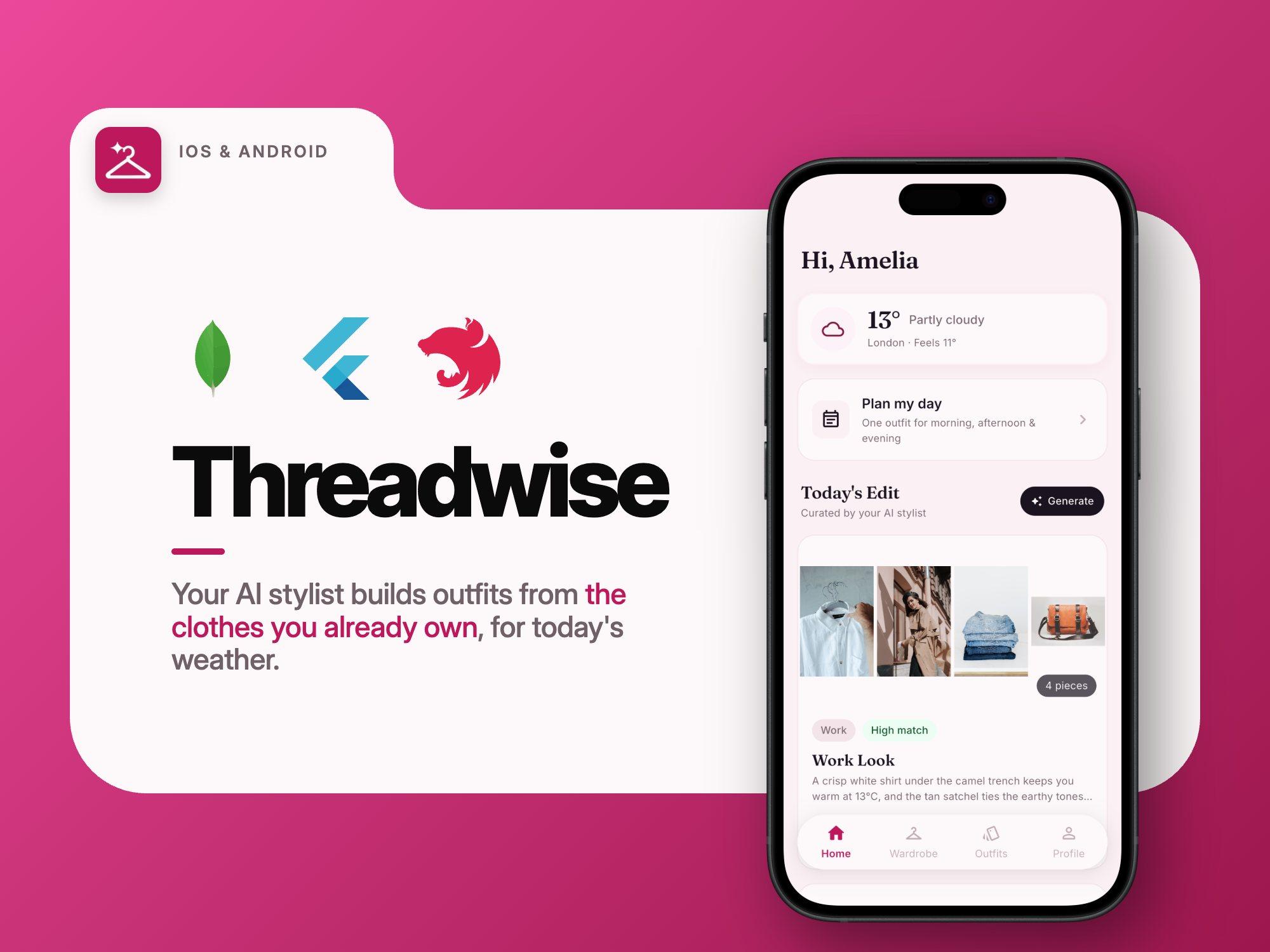
Styling apps mostly end up selling something new. Threadwise starts from the clothes already hanging in the wardrobe: each piece is photographed and tagged once, and the app composes outfits from that collection against the weather, the occasion and how the colours actually behave together. The recommendation comes from a rule engine that can be inspected, not from a model asked to guess.
- What we did
- Built the Flutter application and the Node.js API behind it, including the rule engine that composes and scores outfits and the language model layer that explains them.
- Outcome
- Recommendations a wearer can argue with. Every suggestion traces back to a stated rule about colour, weather or formality, and the wear log turns the wardrobe into a record of what actually gets worn rather than what was bought.
The problem
The wardrobe is already there, and nothing can read it
People own far more than they wear. The reason is not taste, it is retrieval: at the moment of getting dressed nobody can hold a whole wardrobe in their head, so the same few items surface and everything else quietly stops existing.
Every product in the category answers this with a shop. The brief here was the opposite: work only with what someone already owns, which means the app has to actually know the collection rather than infer a taste profile from purchases.
The approach
Capture each piece once, then never ask again
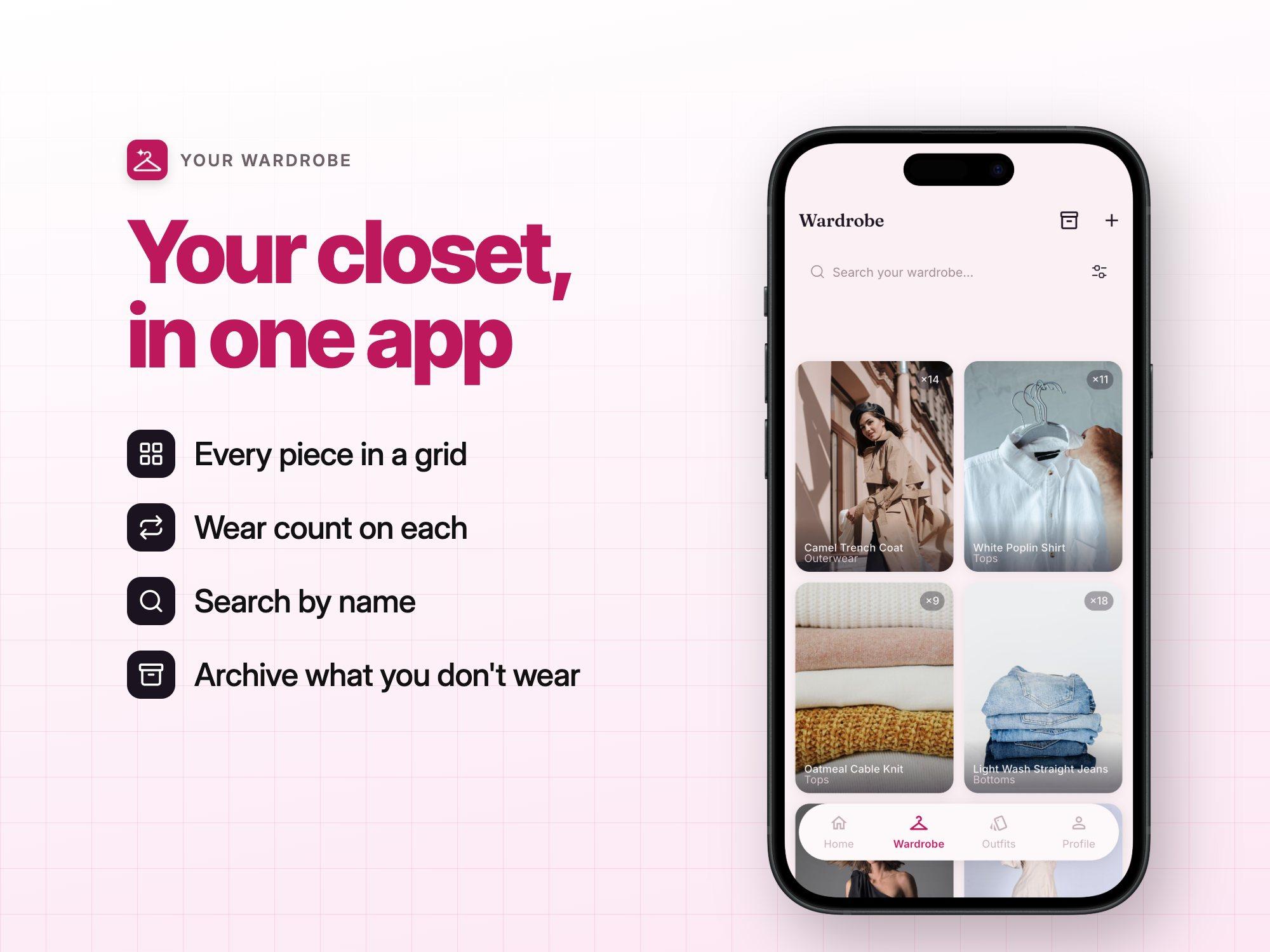
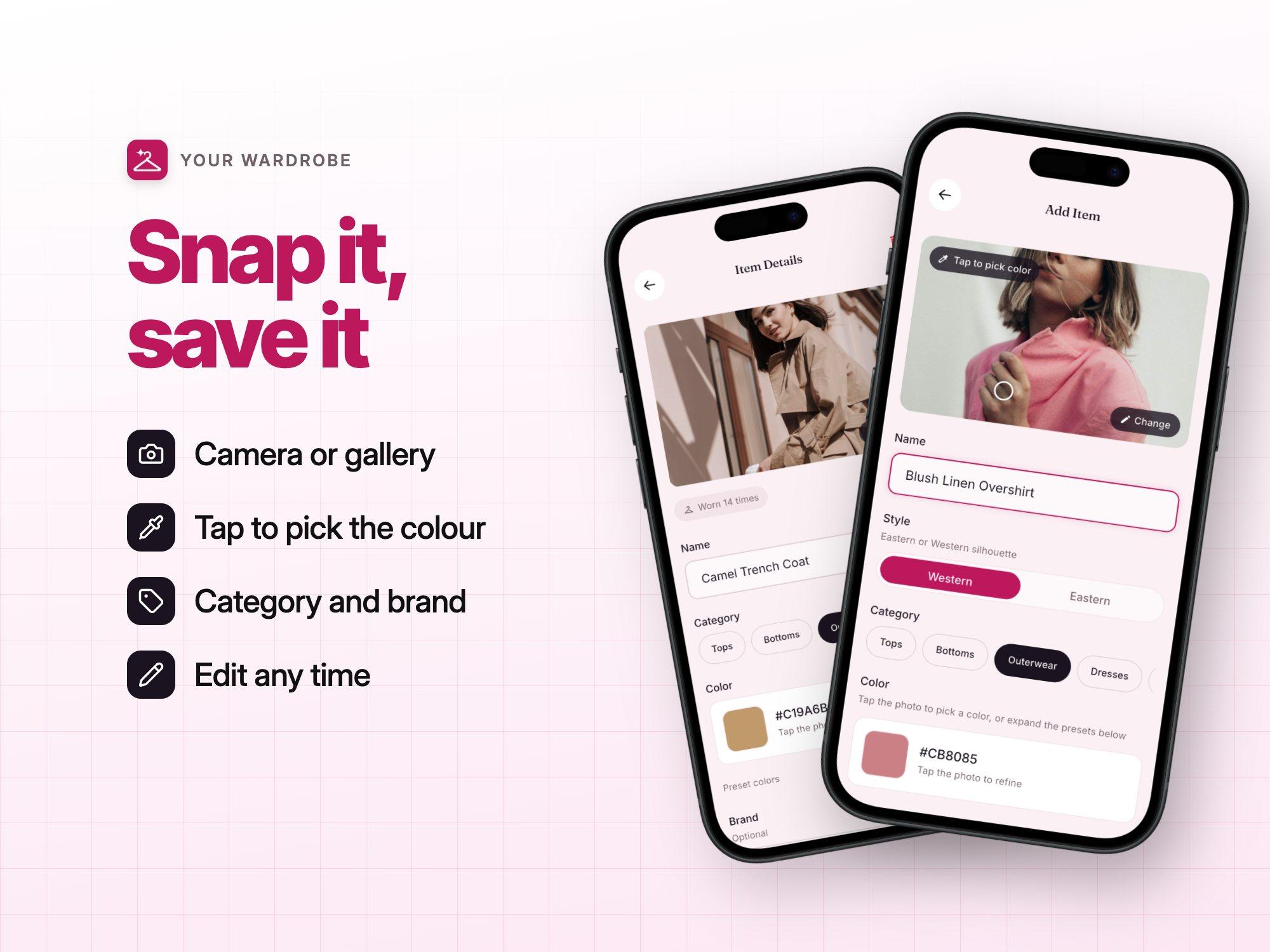
Everything downstream depends on the wardrobe being complete, so the cost of adding an item had to be close to nothing. A photo, a category, a silhouette, and the colour lifted from the picture by tapping it. Fabric, formality, occasion and season are there for anyone who wants the suggestions sharper, and skippable for everyone else.
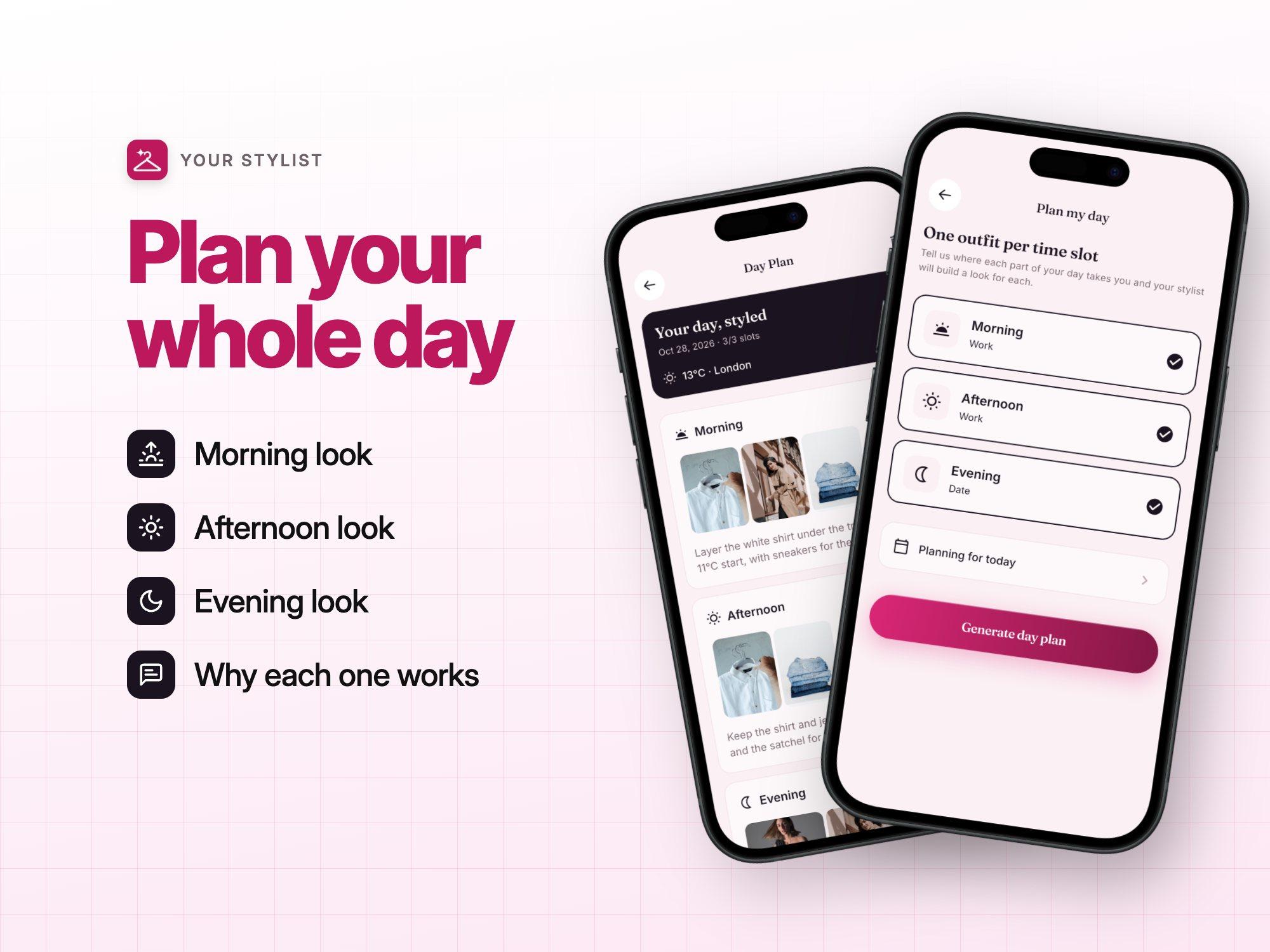
From there the app has four surfaces over one collection: the wardrobe itself, outfits a person composes by hand, the suggestions the engine composes for them, and a day plan that puts either against a date.
- A guided add-item flow: photo, category, silhouette, colour sampled from the image
- Hand-built outfits and generated suggestions living in the same list
- A wear log, so the wardrobe records what is used rather than what is owned
- A day plan that ties an outfit to a date and the forecast for it
Design
Clothes are the colour, so the interface is not
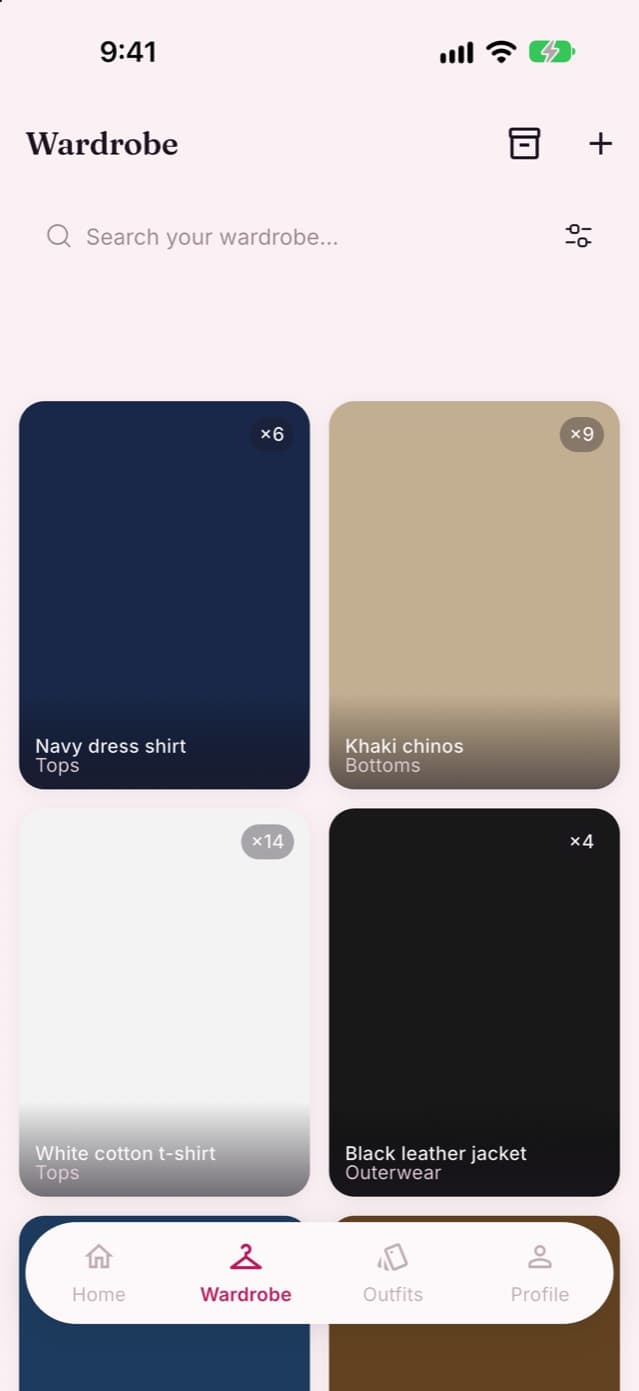
A wardrobe grid is dozens of photographs at once, every one of them a different colour. An interface with opinions of its own would fight all of them, so the chrome stays a single crimson against near-white, and the garments carry the page.
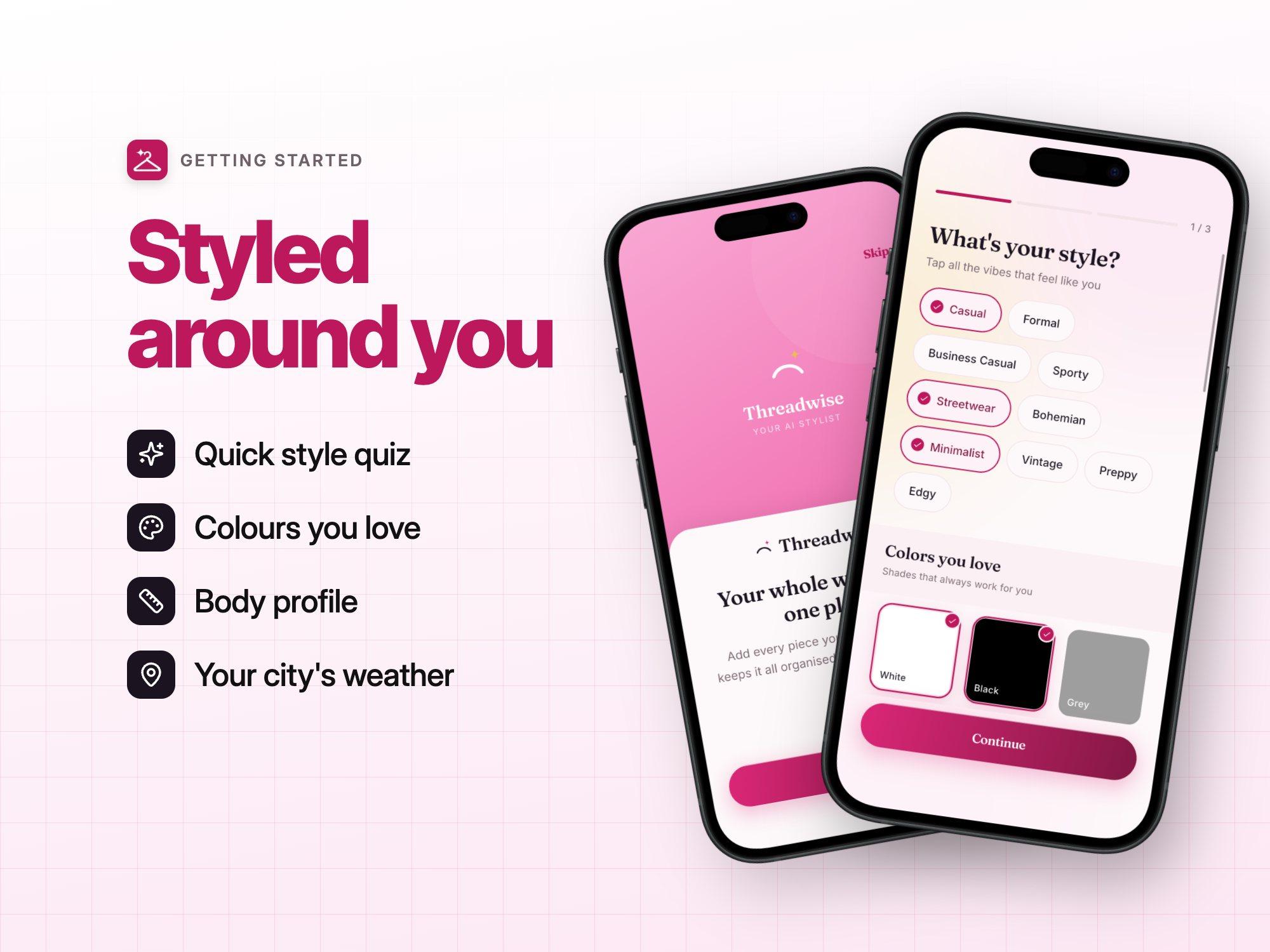
The onboarding makes one promise and stops. It says what the app does with the wardrobe rather than what it will do for a person's life, which is the claim the product can actually keep on day one, when the wardrobe is still empty.
- A single accent on a near-white ground, so photography sets the palette
- A serif display face, so a styling product does not read as a utility
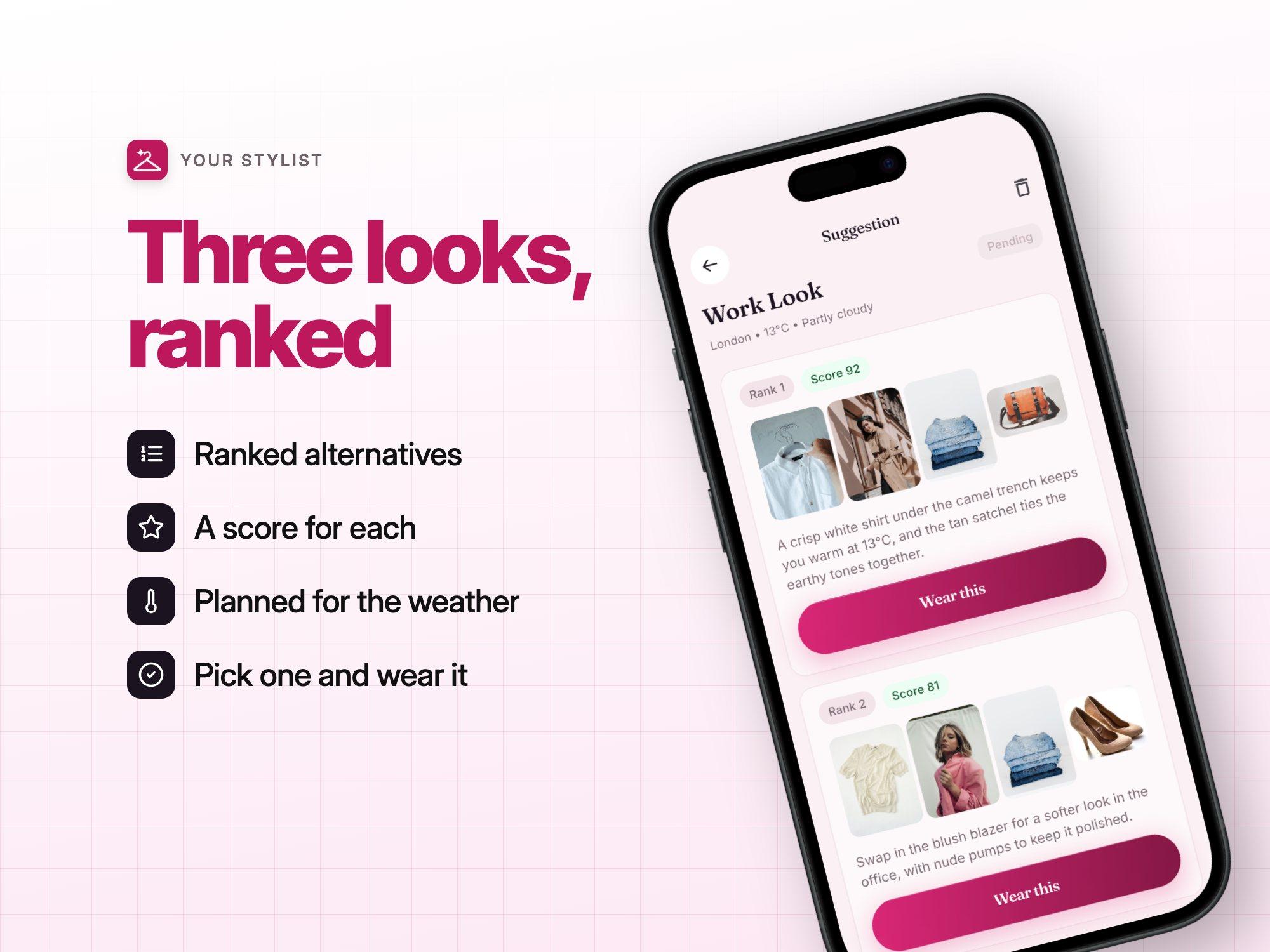
- Match strength shown as a plain label on the suggestion, not a score out of ten
Build
The rules choose the outfit, the model only narrates it
The suggestion engine is a deterministic expert system, not a prompt. It builds valid outfits slot by slot, then scores each one through three independent rule sets: colour, using the Sanzo Wada harmony tables; weather, against the live forecast for the wearer's location; and occasion, against the formality the day calls for. A rule can also block an outfit outright, which is what keeps a linen shirt out of a suggestion for a cold morning.
A language model enters only after the decision is made, to turn the winning outfit into a sentence a person would say. It never reorders the results and never overrules a rule. That boundary is the whole design: the recommendation stays explainable and reproducible, and the interesting part of the product does not disappear behind a provider's API.
The narration sits behind a swappable provider and a two-tier cache, in memory and in MongoDB, keyed by the outfit fingerprint and the prompt version. If the provider is slow or down, the request falls back to deterministic prose and the suggestion still arrives. Nothing in the feature can fail in a way the wearer sees.
- A rule engine scoring colour, weather and occasion, with hard blocking rules
- Sanzo Wada colour harmony as the knowledge base behind the colour rules
- A swappable model provider, cached in memory and in MongoDB, with a text fallback
- Node.js and Express over MongoDB, with garment photography on S3
- One Flutter codebase on Clean Architecture with BLoC and Cubit
Result
A recommendation with its reasoning still attached
Because the rules decide, every suggestion can be traced to the reason it was made, and a wearer who disagrees is disagreeing with something specific. That is a different relationship with a styling product than being handed a look and asked to trust it.
It is also the cheaper architecture. The model is called once per unseen outfit and never on the hot path, so the running cost of the feature stays flat as the wardrobe grows.
Inside the app
Real screens, demo data
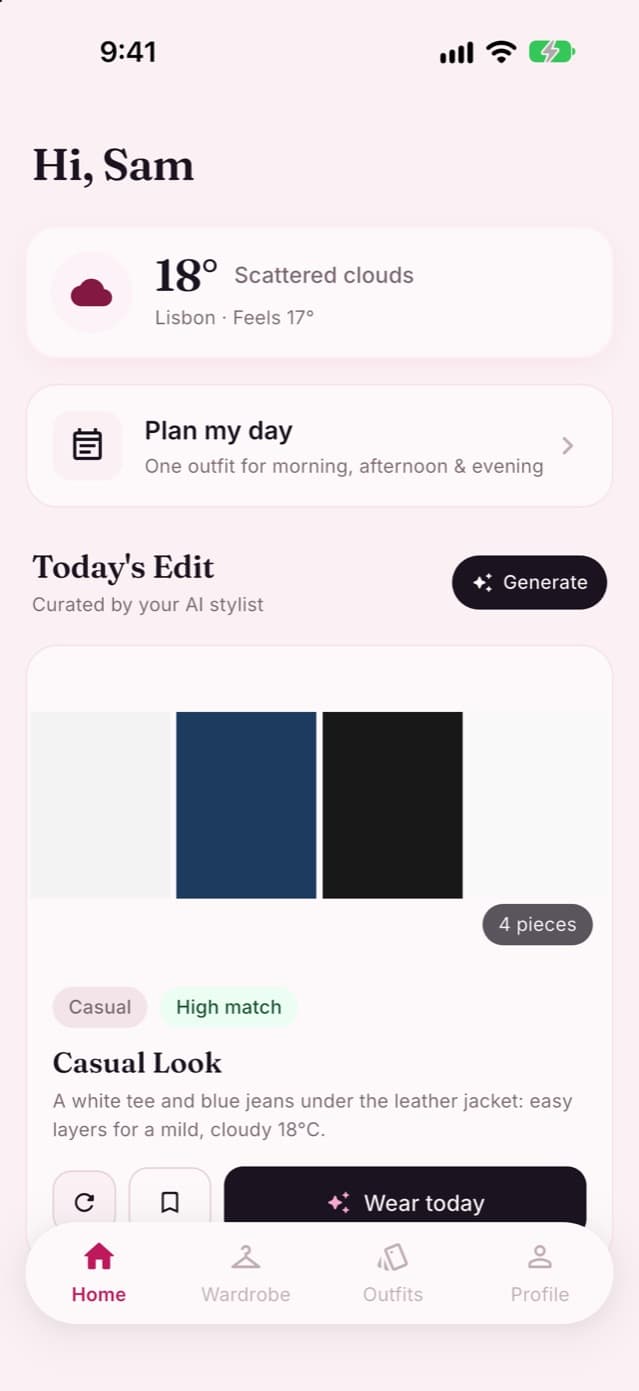
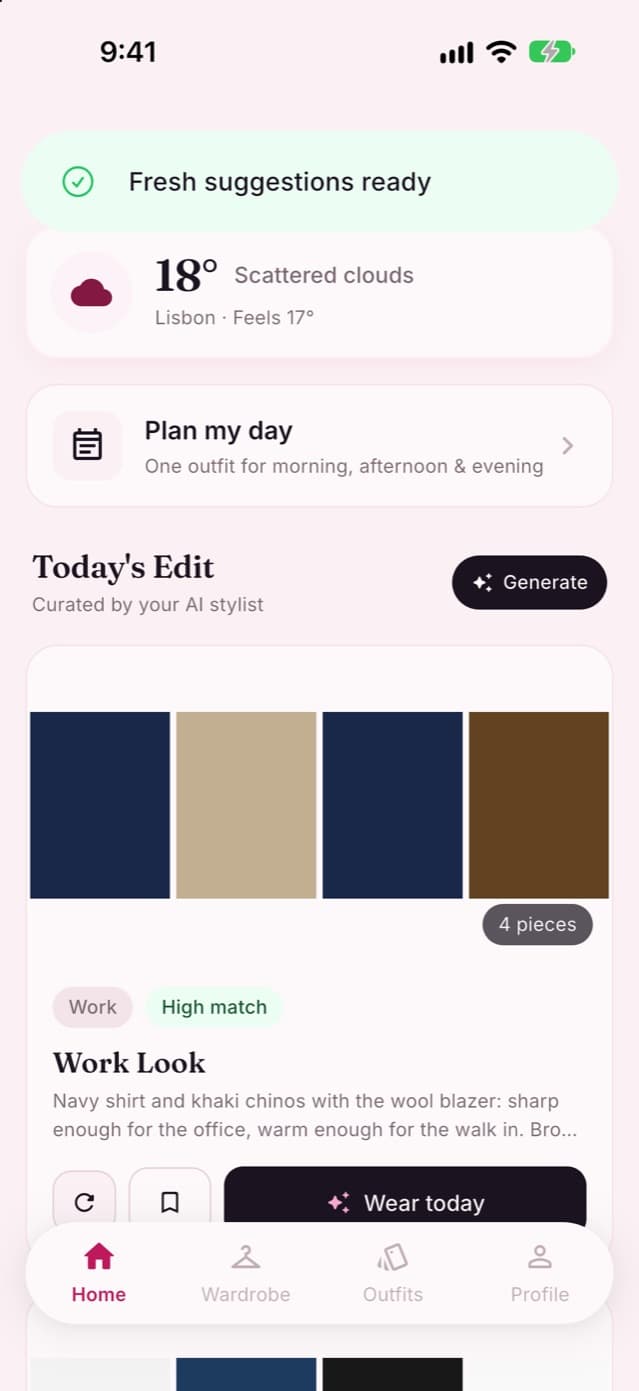
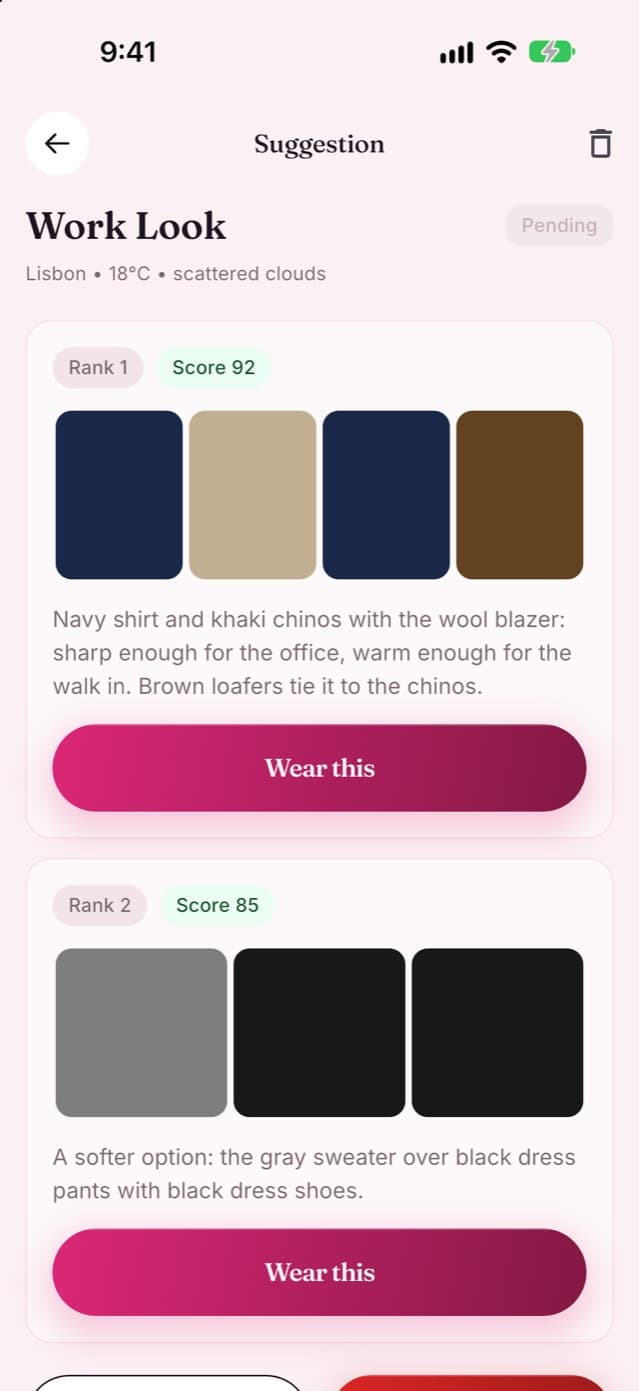
06Book a call
Building something like this?
Book thirty minutes and we'll tell you quickly whether we're the right team for it, and roughly what it takes.
- 01You pick the slot
- 02Bring anything you have
- 03We come prepared
Your idea stays yours. Read only by the people who would build it, never reused, never passed on. Happy to sign your NDA first.
Pick a time. We'll tell you what it takes.
Thirty minutes, no pitch deck. Bring a rough idea or a finished spec, and leave with a straight answer on scope, cost and whether we're the right team.
- 01You pick the slotA live calendar, not a queue. Most people find something inside forty-eight hours.
- 02Bring anything you haveA spec, a Figma link, screenshots, a competitor you like, or nothing at all.
- 03We come preparedWe read whatever you send beforehand, so the call starts at the interesting part.
Your idea stays yours
- What you share stays between you and the people on your project.
- We never reuse your concept, your research or your materials elsewhere.
- Happy to sign your NDA before the call, or send ours.
We read every brief and reply within 60 minutes.
Prefer to write? with your files instead, or email abdullahmughal1976@gmail.com.