- Industry
- Creative services
- Product type
- Multi-sided mobile platform
- Period
- Aug 2026
- Platforms
- iOS, Android
- Services
- Product StrategyUX DesignUI DesignCross-platform ApplicationsBackend Systems
- Technology
- Flutter · Dart · BLoC/Cubit · Firebase Auth · Cloud Firestore · Firebase Storage · Firebase Cloud Messaging · GoRouter · Hive · Dio · GetIt
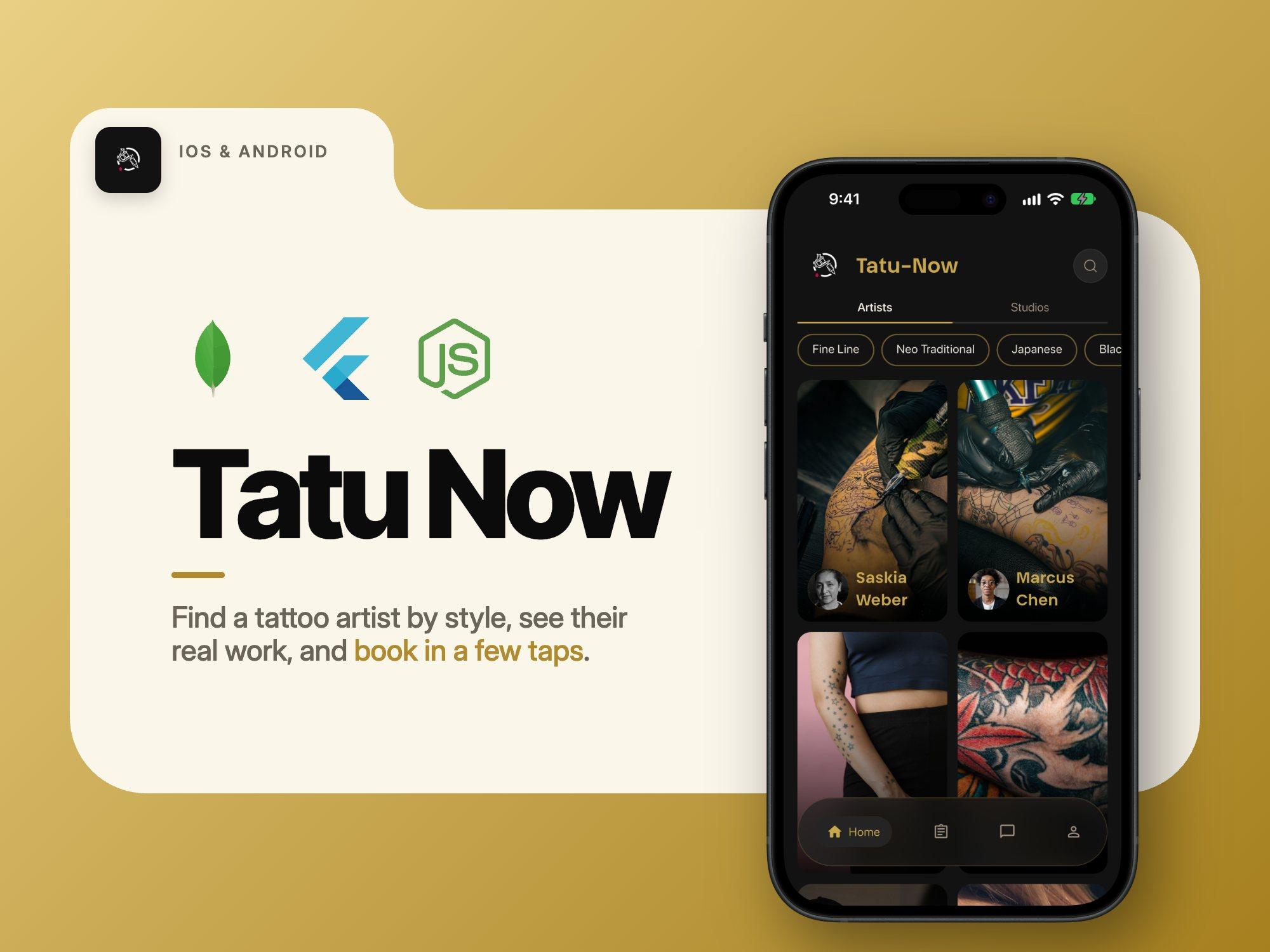
Tattoo booking runs on direct messages. A client finds an artist through a social feed, describes the idea in a chat thread, and both sides lose the placement, the reference art and the deposit somewhere in the scroll. TatuNow gives each side of that transaction its own product: clients open a project and follow it, artists work a request queue attached to their portfolio, and studios manage the artists under their roof.
- What we did
- Built the cross-platform application covering all three roles, on Firebase for authentication, data, media and notifications.
- Outcome
- A booking that survives leaving the chat window. A request carries its style, its reference art and its history in one place, and an artist's portfolio becomes the thing being browsed rather than a public grid that happens to contain work.
The problem
A booking that lives in a chat thread is not a record
The whole trade already happens on phones, but on tools built for something else. An enquiry, the reference images, the placement, the size, the quoted price and the deposit all arrive as messages, and a message is the one format none of them can be looked up in later.
The three sides also want opposite things from the same screen. A client is deciding whom to trust with permanent work. An artist is triaging a queue. A studio is looking at a roster. Serving all three from one feed is what makes the existing tools feel wrong to everyone at once.
The approach
Three products, one account system
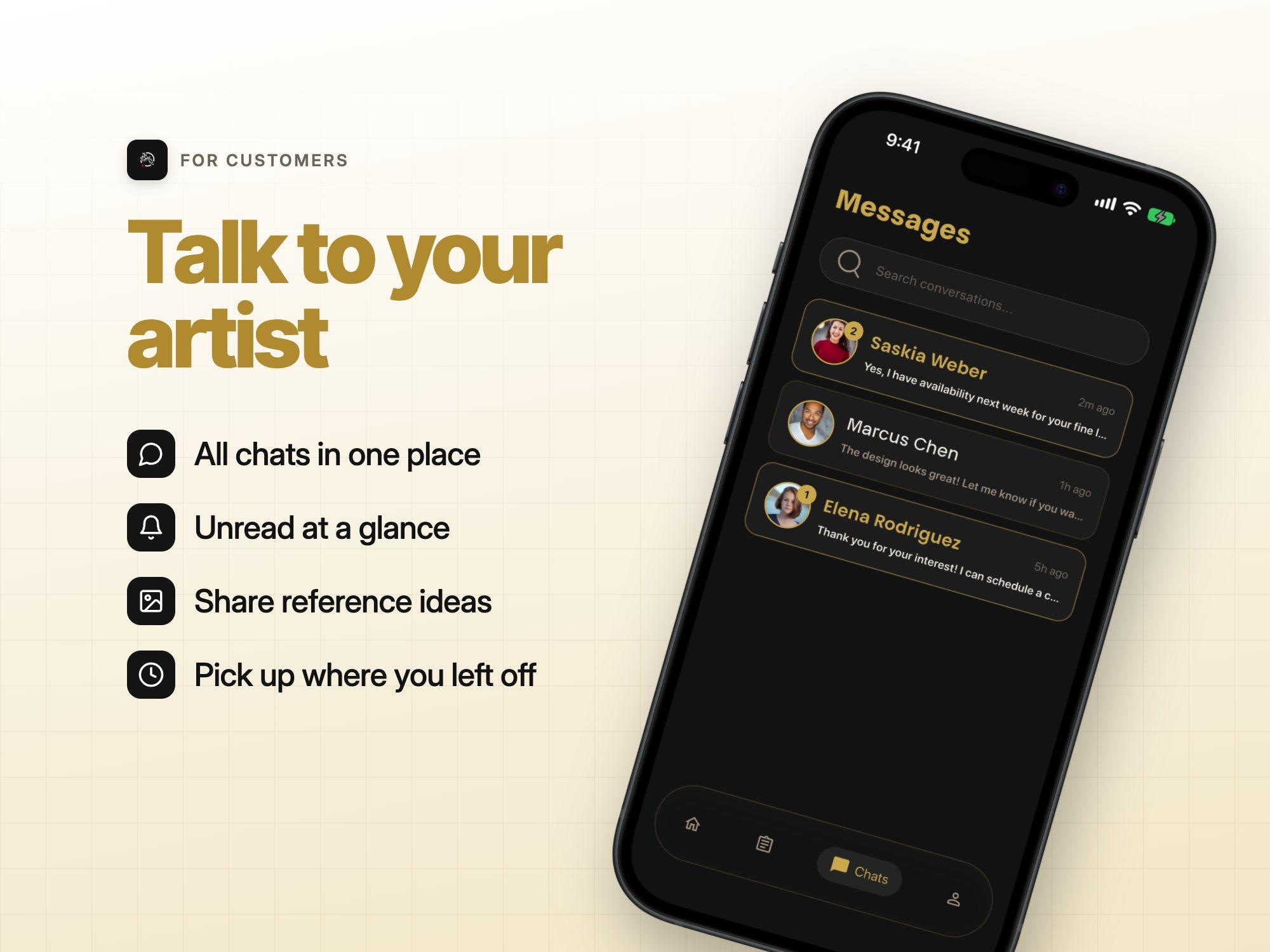
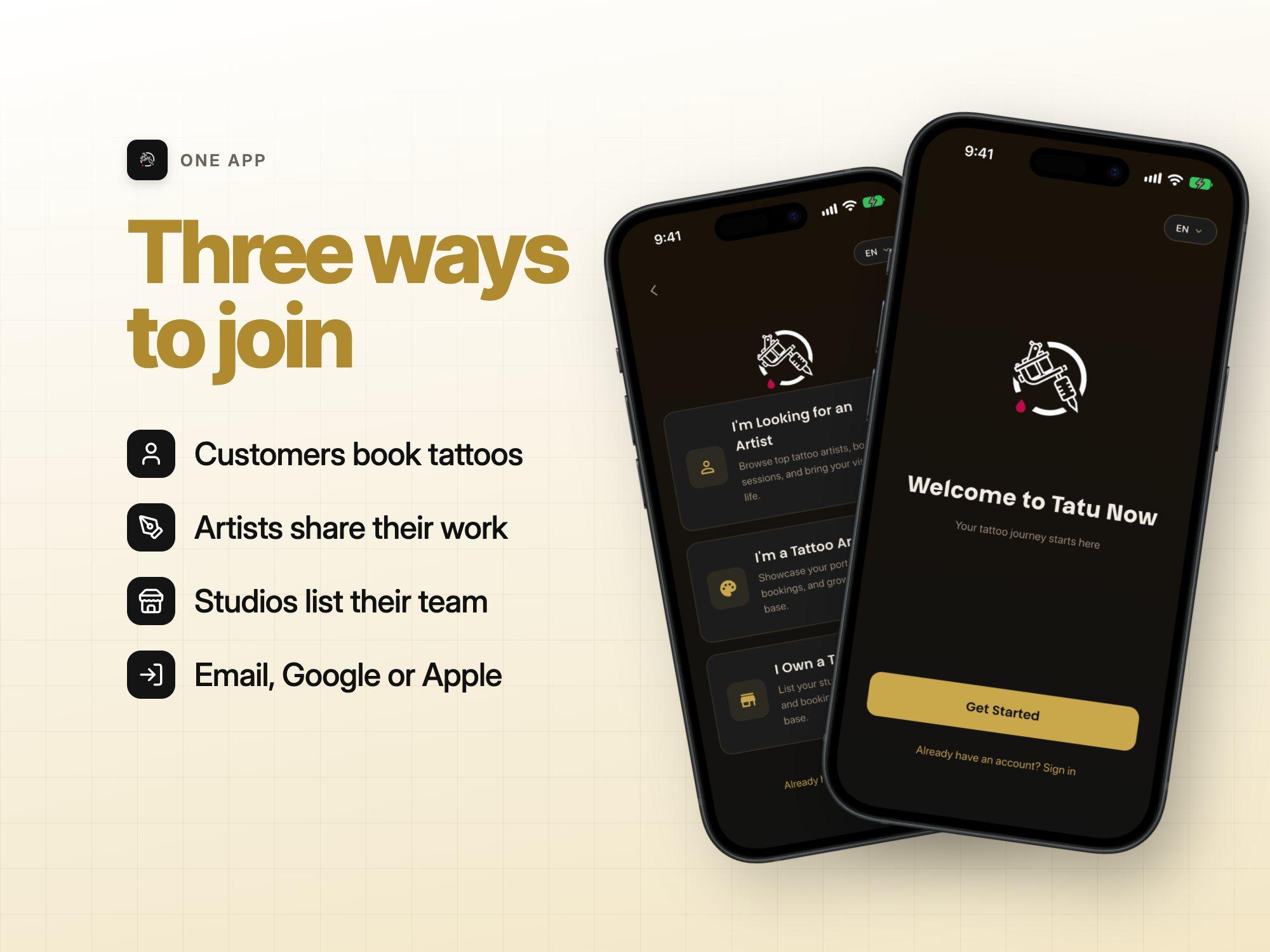
The role is chosen at sign-up and decides the entire application: its navigation, its home screen and what a person can do at all. A client gets discovery and projects. An artist gets a dashboard, a request queue and a portfolio to keep. A studio gets those plus the artists it represents.
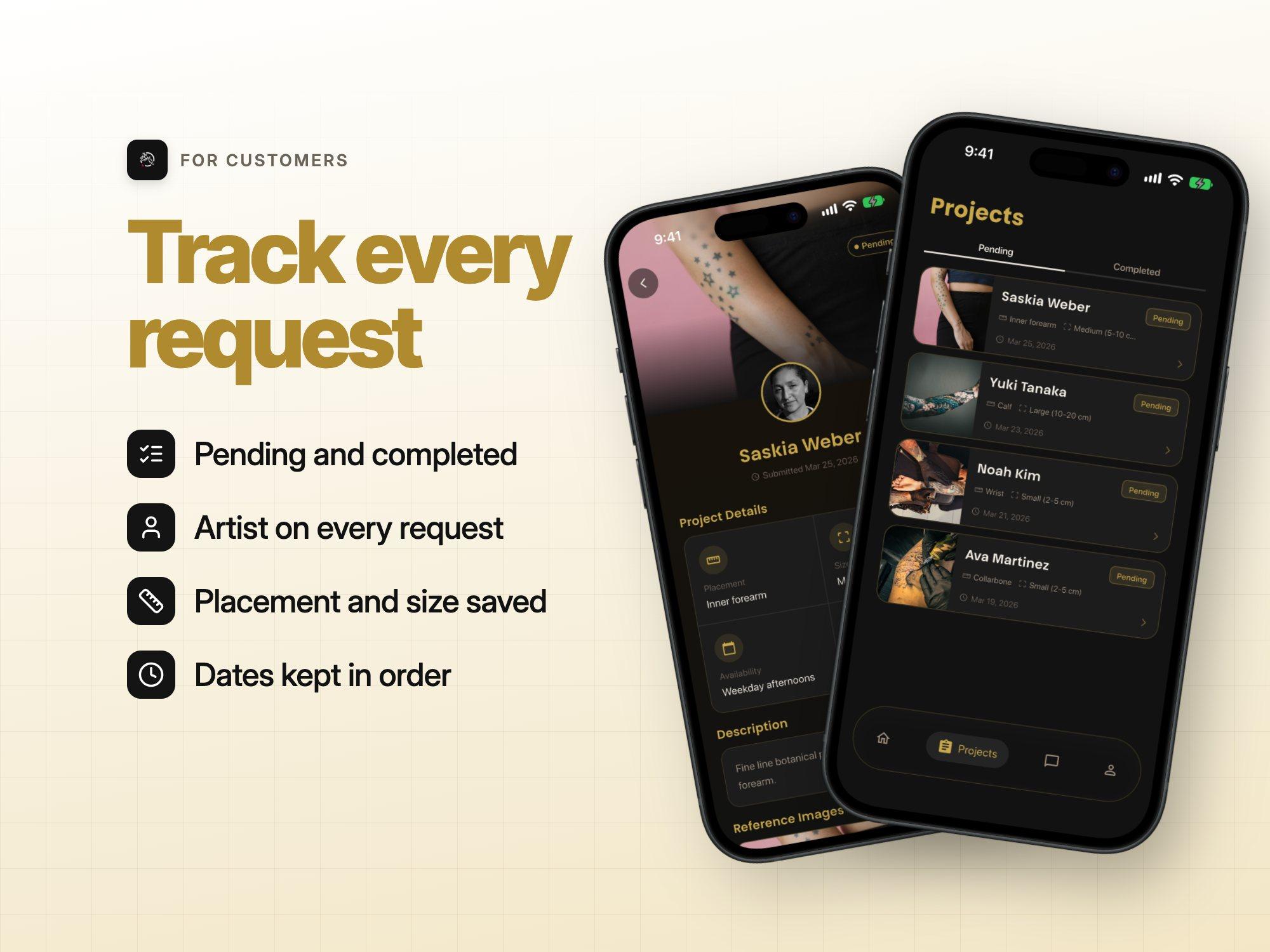
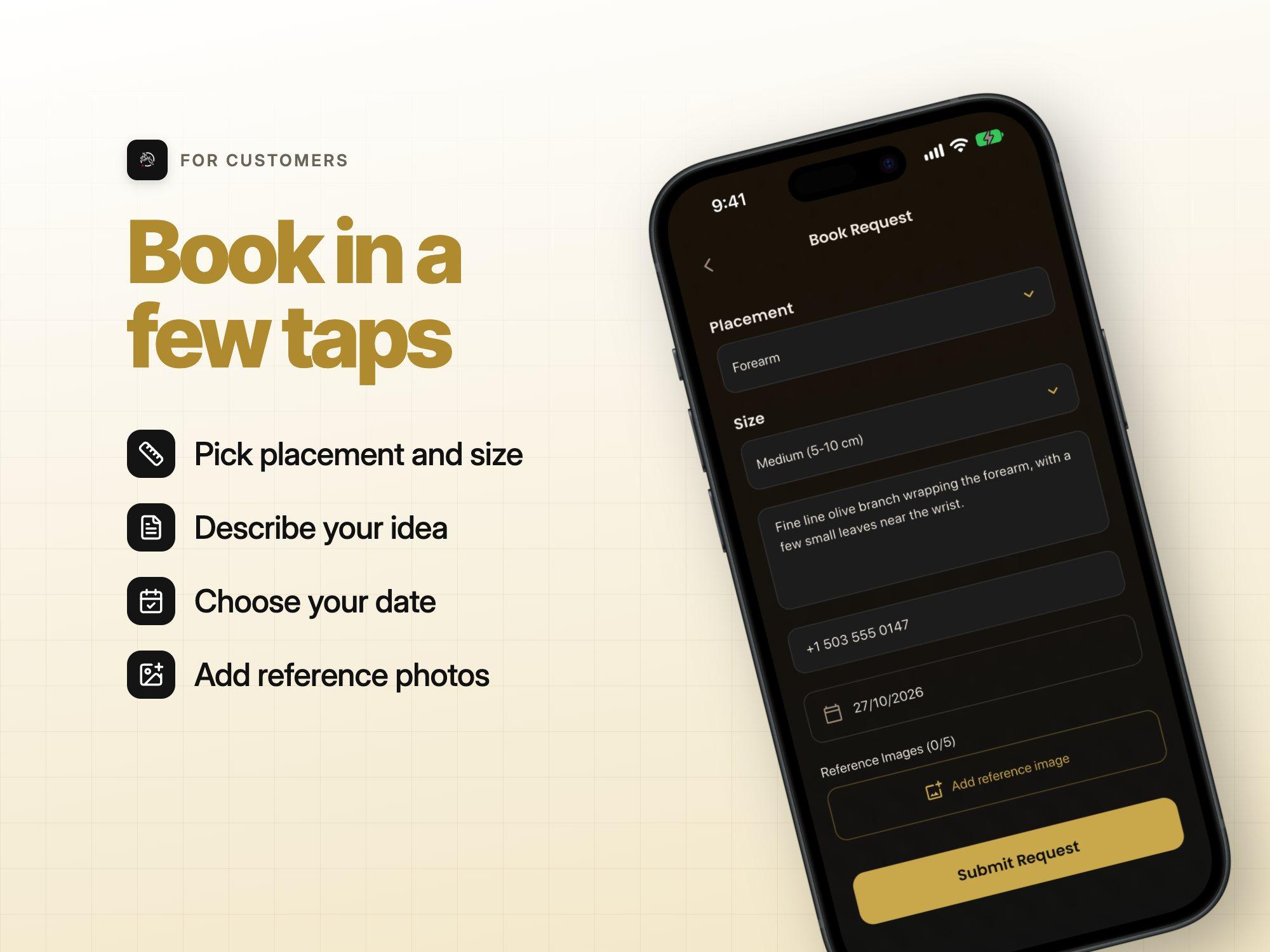
The enquiry becomes a project: a named thing with a style, a description, reference art and a state, which both sides open rather than scroll back through. Chat stays, because the conversation is real, but it sits beside the record instead of being the record.
- Role chosen at sign-up, driving navigation and permissions throughout
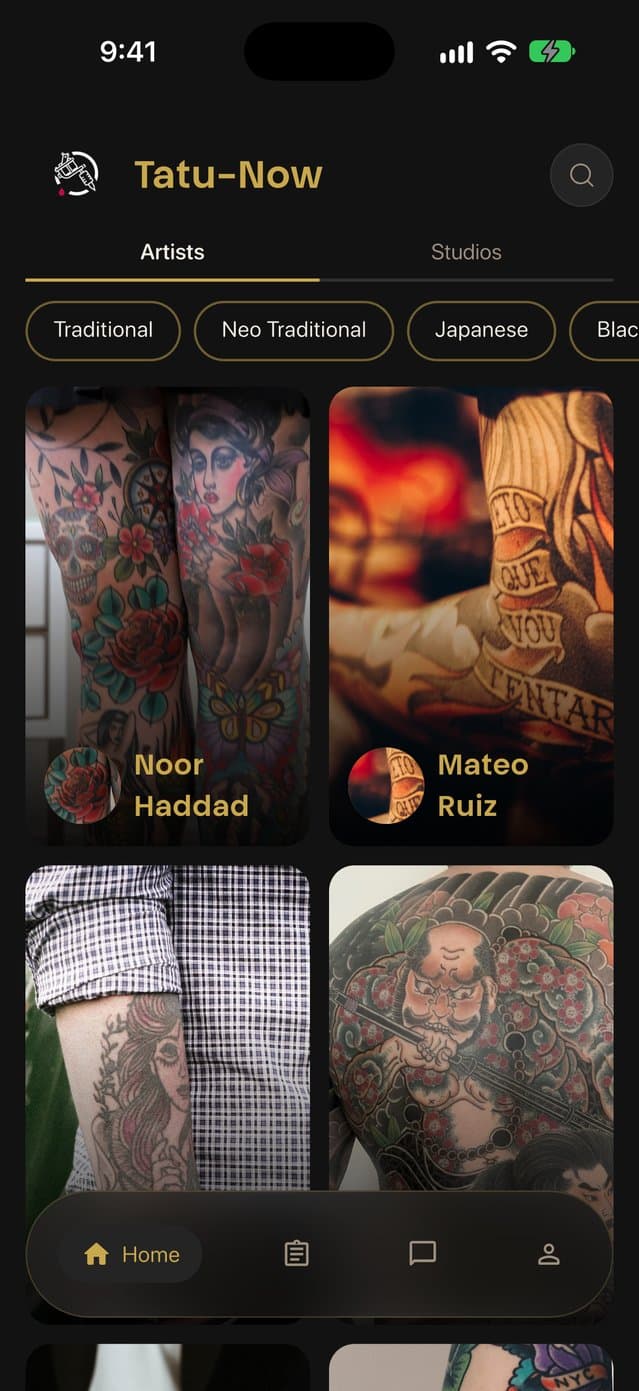
- Discovery filtered by tattoo style, across both artists and studios
- A project record carrying style, description, reference art and state
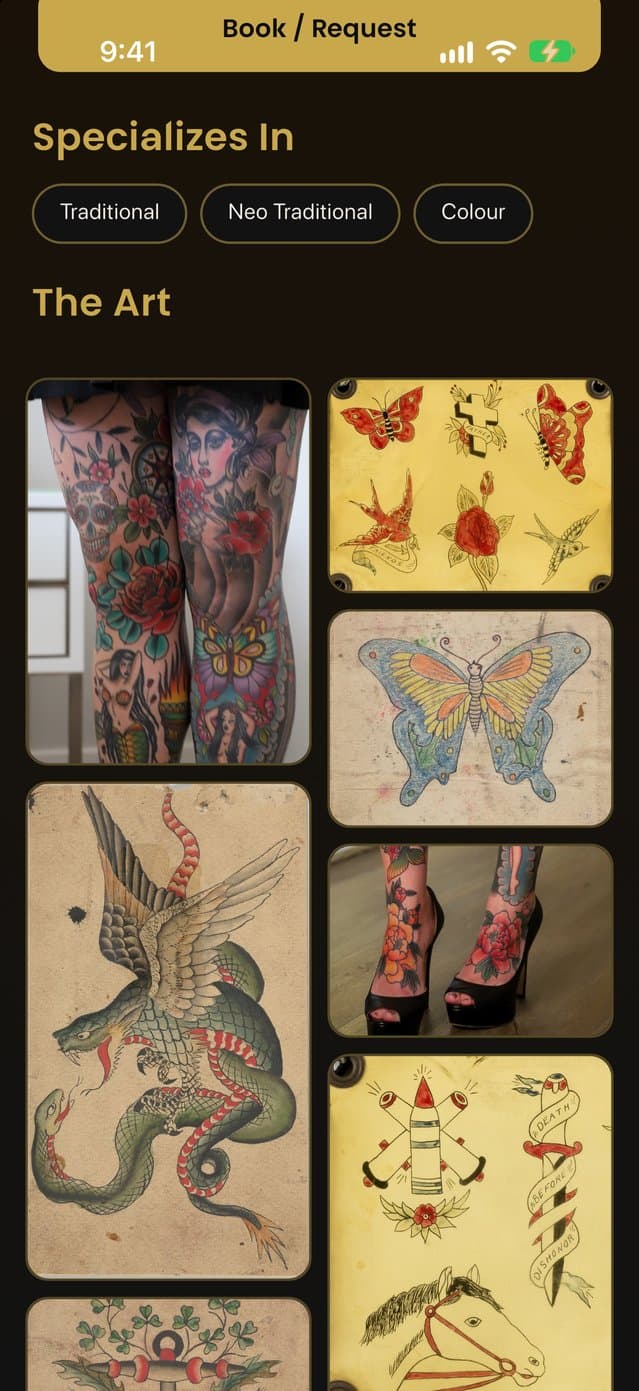
- Portfolios an artist builds and keeps, rather than a public grid
Design
Dark, because the work is the only thing with colour in it
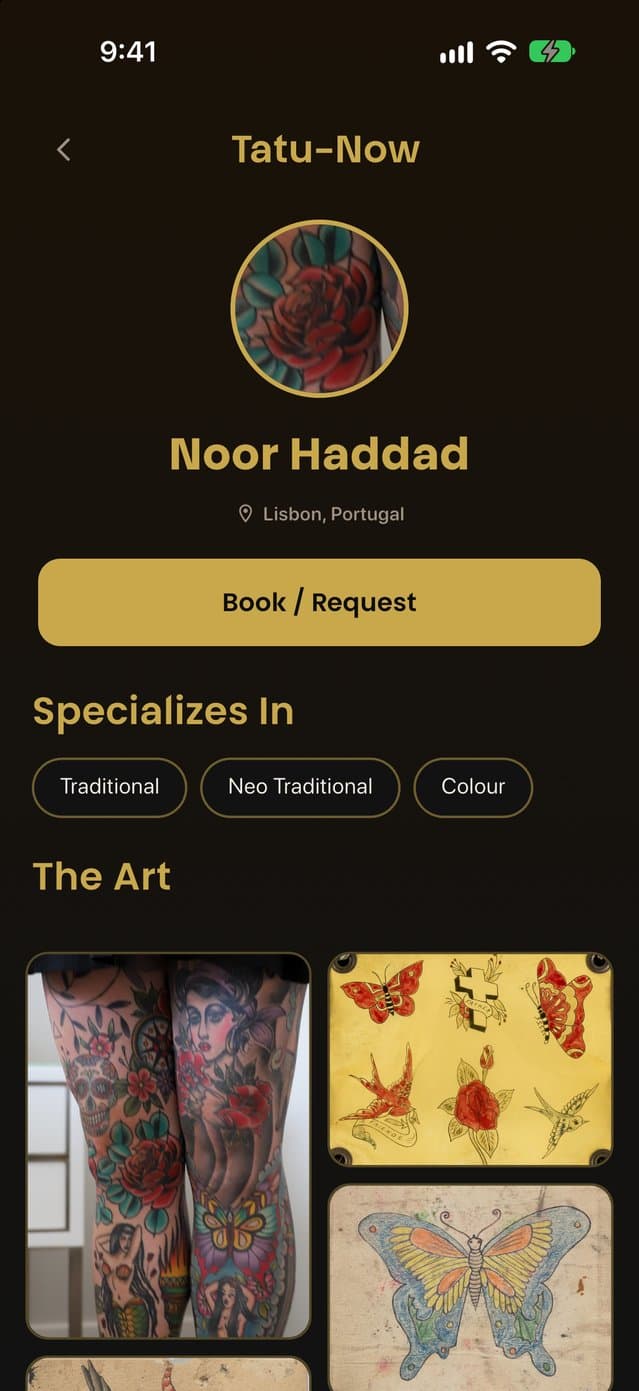
Tattoo photography is high-contrast skin and ink, and it dies on a white page. The application is near-black with a single brass accent, which lets a portfolio grid read as a portfolio rather than as a product listing.
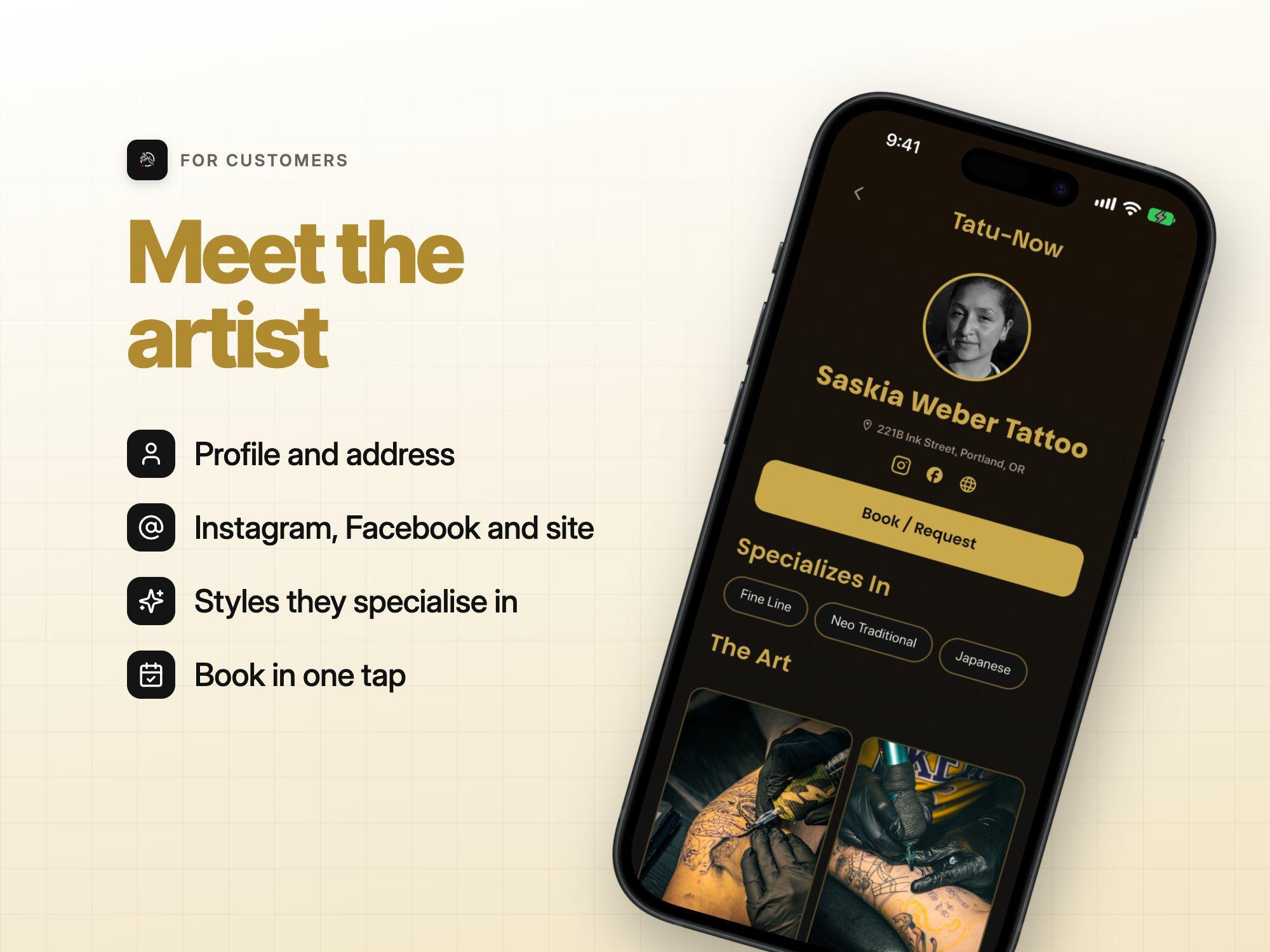
The one thing the interface asserts is the artist. A profile leads with the person, their studio address, their social links and the styles they name themselves, because that is the evidence a client is actually weighing before they commit to something permanent.
- A near-black ground with one brass accent, so ink photography carries the screen
- Style chips as the primary filter, the vocabulary the trade already uses
- An artist dashboard that opens on the two numbers that matter, then the queue
Build
One codebase, three applications, no forked build
Three roles usually become three apps, or one app with conditionals scattered through every screen. Here each role owns its own feature tree with its own navigation shell, and the router picks the shell once, at sign-in. Anything genuinely common, chat, portfolio creation, the search surface, lives in a shared layer both sides import.
The backend is Firebase throughout: authentication with Google and Apple sign-in, Firestore for projects and profiles, Storage for portfolio images, and Cloud Messaging for the notification an artist needs when a request arrives. For a marketplace at this stage that is the right trade, the whole team's effort goes into the three products rather than into operating a server.
- A feature tree per role, with the navigation shell resolved once at sign-in
- A shared layer for chat, portfolio creation and search, imported by every role
- Firebase for authentication, Firestore, Storage and Cloud Messaging
- Clean Architecture with BLoC and Cubit; GoRouter for routing, GetIt for injection
- Localised from the first screen, with the language switch on the welcome view
Result
The trade's own workflow, in something built for it
Nothing here asks an artist to work differently. It takes the sequence they already run, being found by style, agreeing a piece, booking it, and gives each step somewhere to live that is not a message thread.
Splitting by role early is what makes the third side possible. Studios were added as a full participant rather than as an artist account with extra fields, which is the version that would have had to be unpicked later.
Inside the app
Real screens, demo data
06Book a call
Building something like this?
Book thirty minutes and we'll tell you quickly whether we're the right team for it, and roughly what it takes.
- 01You pick the slot
- 02Bring anything you have
- 03We come prepared
Your idea stays yours. Read only by the people who would build it, never reused, never passed on. Happy to sign your NDA first.
Pick a time. We'll tell you what it takes.
Thirty minutes, no pitch deck. Bring a rough idea or a finished spec, and leave with a straight answer on scope, cost and whether we're the right team.
- 01You pick the slotA live calendar, not a queue. Most people find something inside forty-eight hours.
- 02Bring anything you haveA spec, a Figma link, screenshots, a competitor you like, or nothing at all.
- 03We come preparedWe read whatever you send beforehand, so the call starts at the interesting part.
Your idea stays yours
- What you share stays between you and the people on your project.
- We never reuse your concept, your research or your materials elsewhere.
- Happy to sign your NDA before the call, or send ours.
We read every brief and reply within 60 minutes.
Prefer to write? with your files instead, or email abdullahmughal1976@gmail.com.