- Industry
- Security services
- Product type
- Mobile application
- Period
- Since May 2026
- Platforms
- iOS, Android
- Services
- Cross-platform ApplicationsBackend Systems
- Technology
- Flutter · Dart · BLoC/Cubit · GoRouter · Dio · GetIt · Hive · Node.js · Express · MongoDB
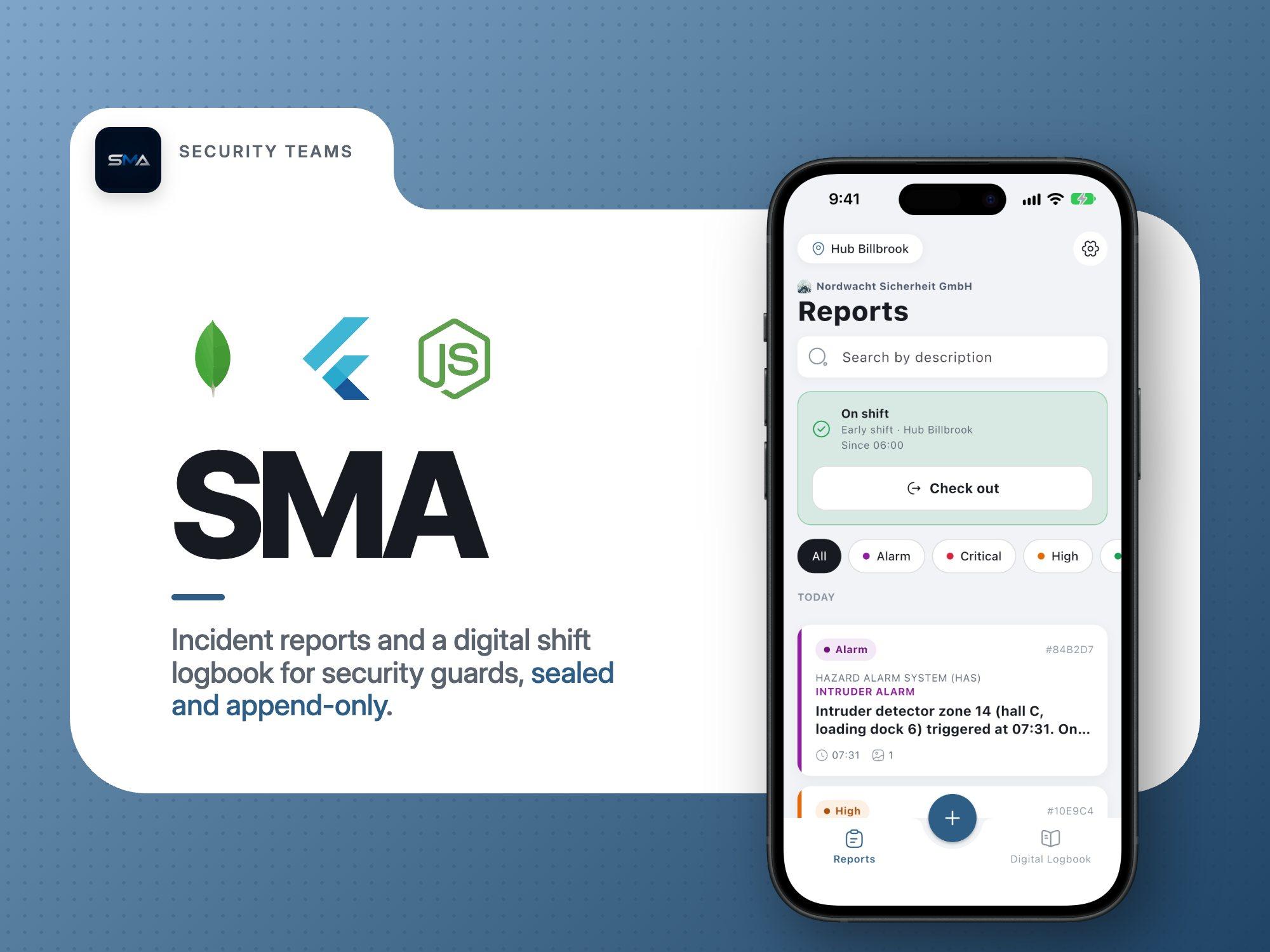
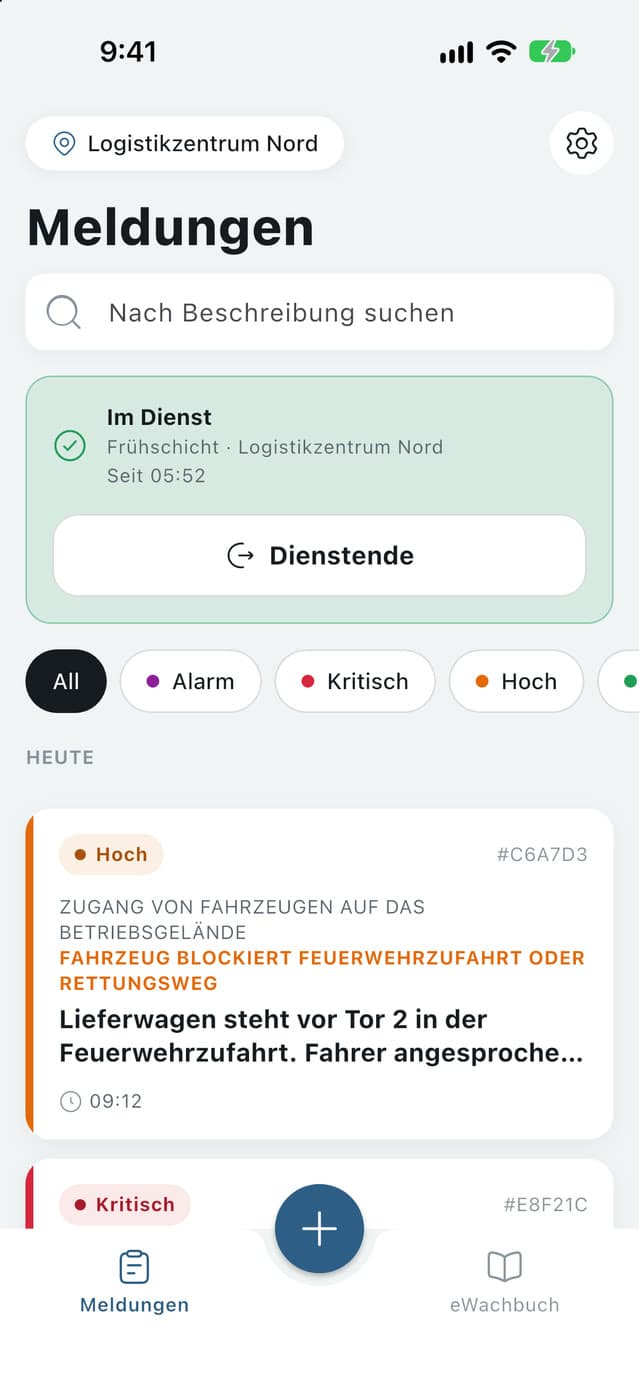
A guard on site has to record what happened while it is still happening: a blocked fire lane, a fault on the alarm panel, a visitor who was never announced. SMA, the Security Melde-App, gives that guard a four-step report, a shift check-in, and a guard book the whole shift writes into, in German and English.
- What we did
- Built the mobile application in Flutter for two field roles, the guard and the site manager, in German and English, and the Node.js API behind it.
- Outcome
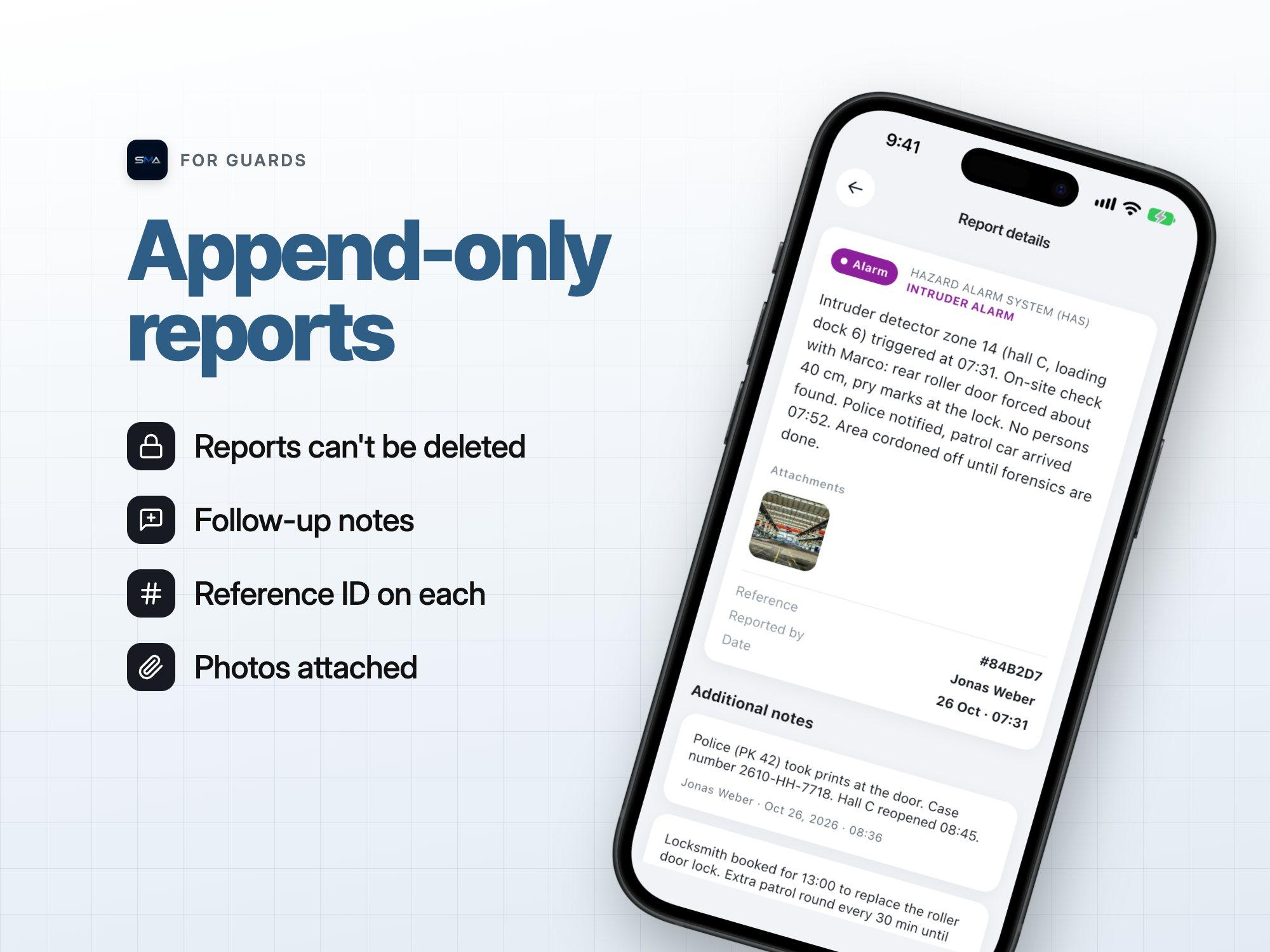
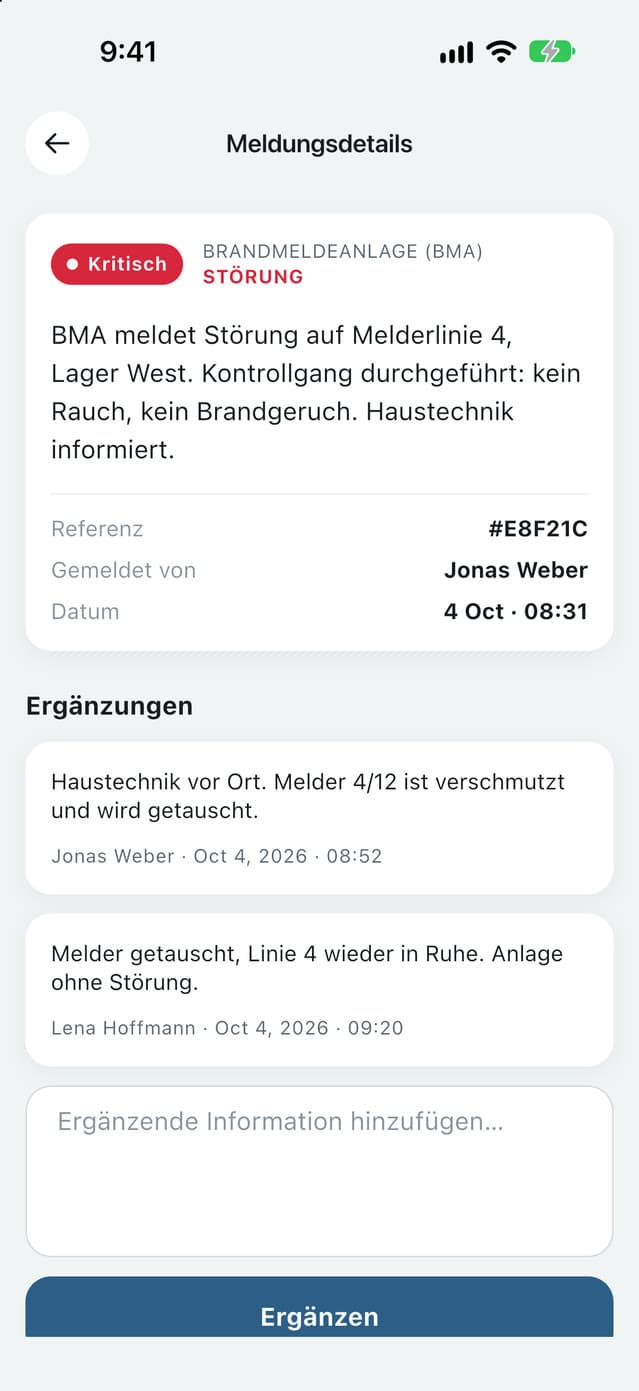
- A report takes four steps and cannot be quietly edited afterwards: once sent it is sealed, and anything learned later is added underneath as a signed, dated note.
Draft write-up. The product and the screens are real; this account of the work is a draft awaiting review by the team who built it, and by the client.
The problem
A report is only useful if it is written on the spot
The person who sees the incident is standing at a gate with a phone in one hand. Whatever they are asked to fill in has to be short enough to finish there, and structured enough that the person reading it later does not have to call back and ask.
The approach
Let the list of categories do the writing
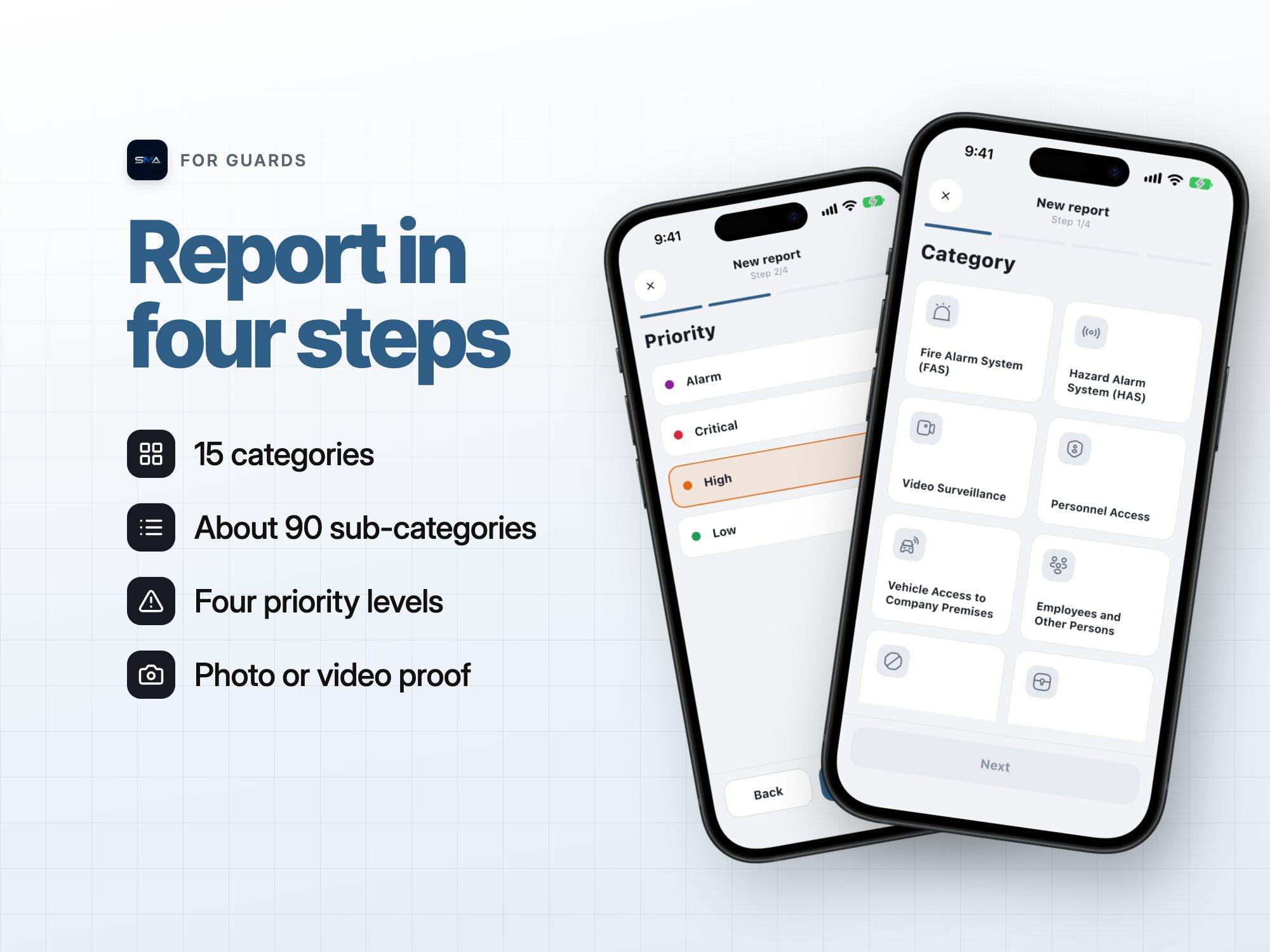
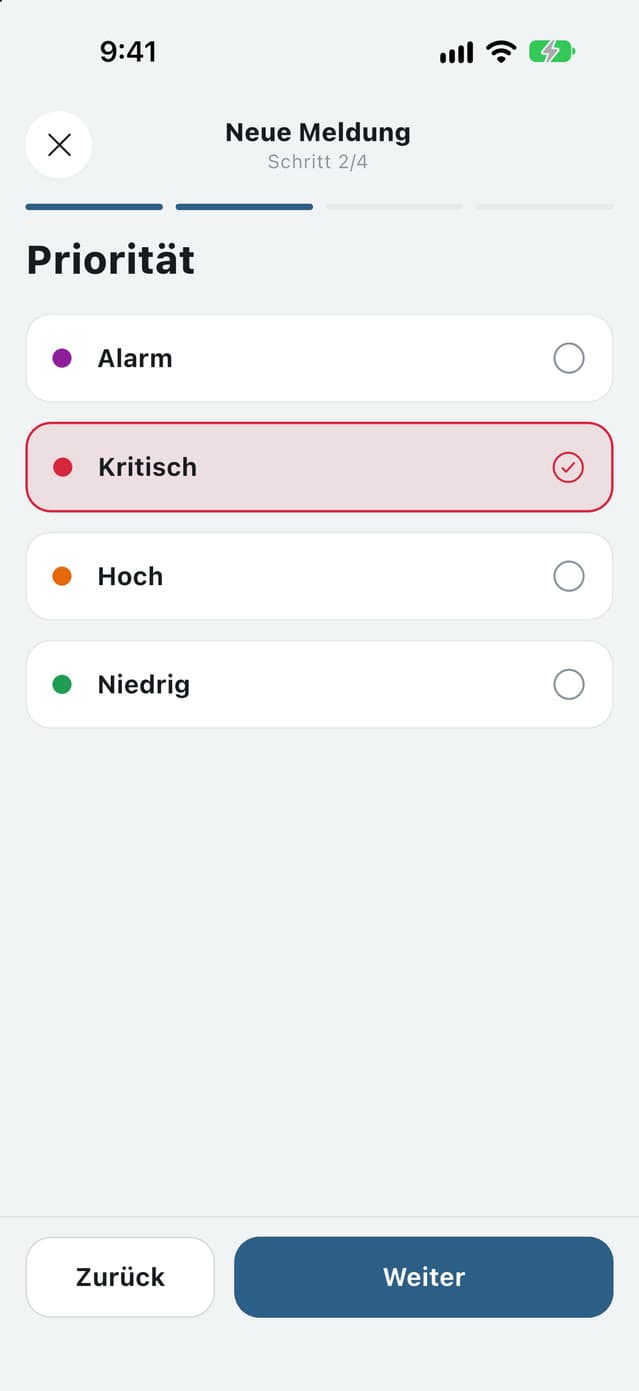
Most of a report is chosen, not typed. Fifteen categories with their subcategories, in German and English, mean two taps already say what kind of incident this is and where it belongs, and the free text is left for the part only the guard knows.
Design
Four steps, four priorities, and a record that stays put
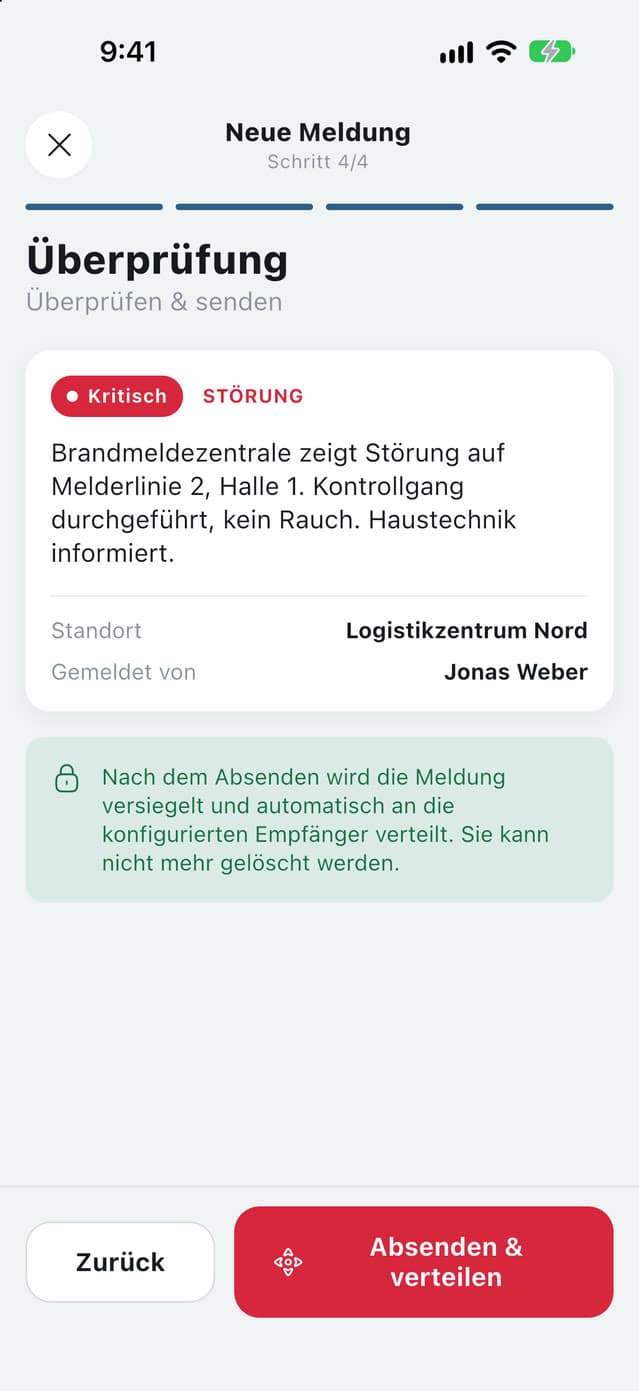
A new report is a category and subcategory, a priority, a description with optional photos or video, and a review. The categories are the trade's own, from access control to the fire alarm system, so the guard picks from a list instead of inventing a heading.
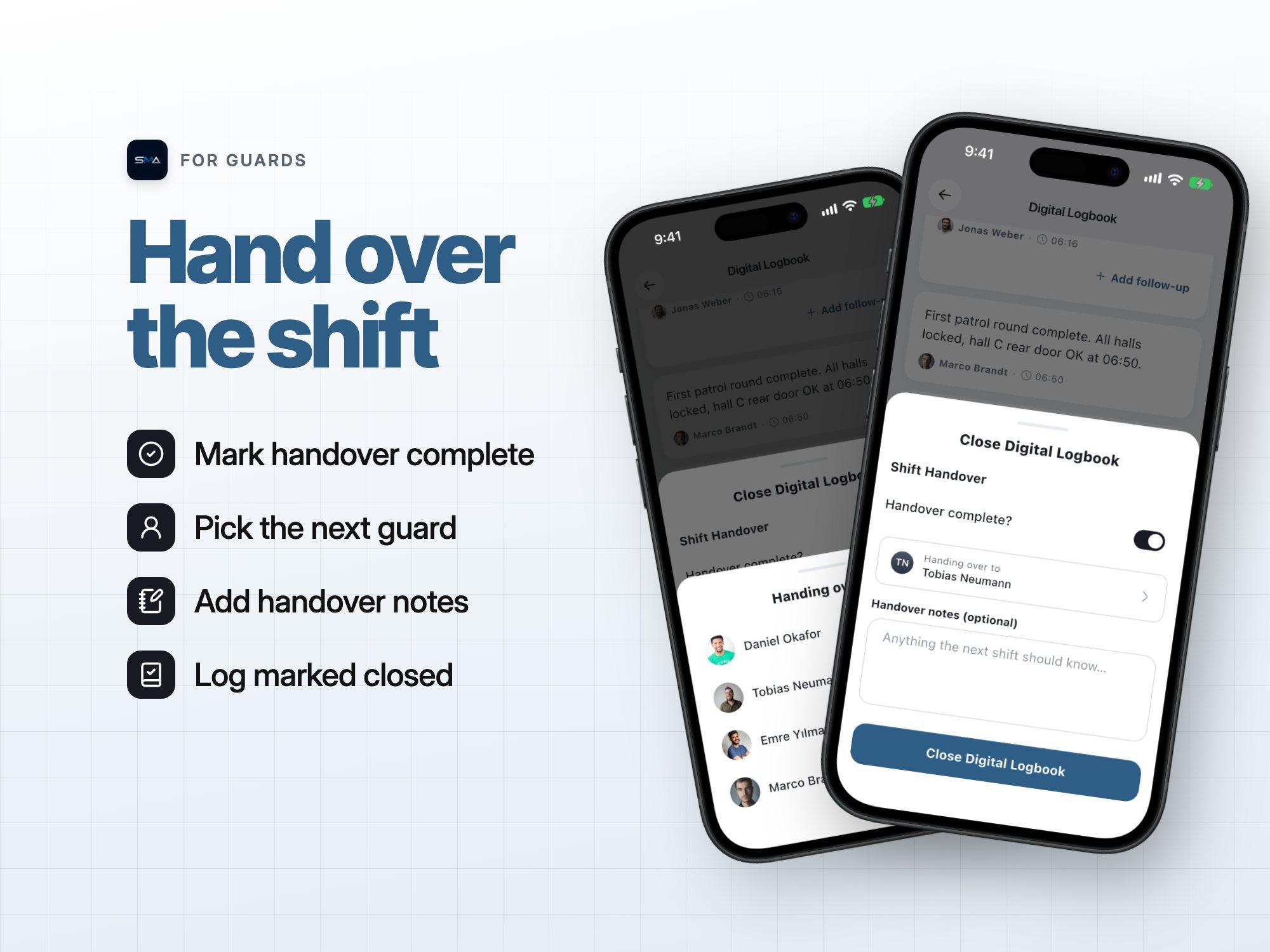
The review step says plainly that a sent report can no longer be deleted. After that the report is sealed, and the only way to change the story is to add a follow-up note under it, which carries a name and a time.
Build
One app, two field roles, and a guard book per shift
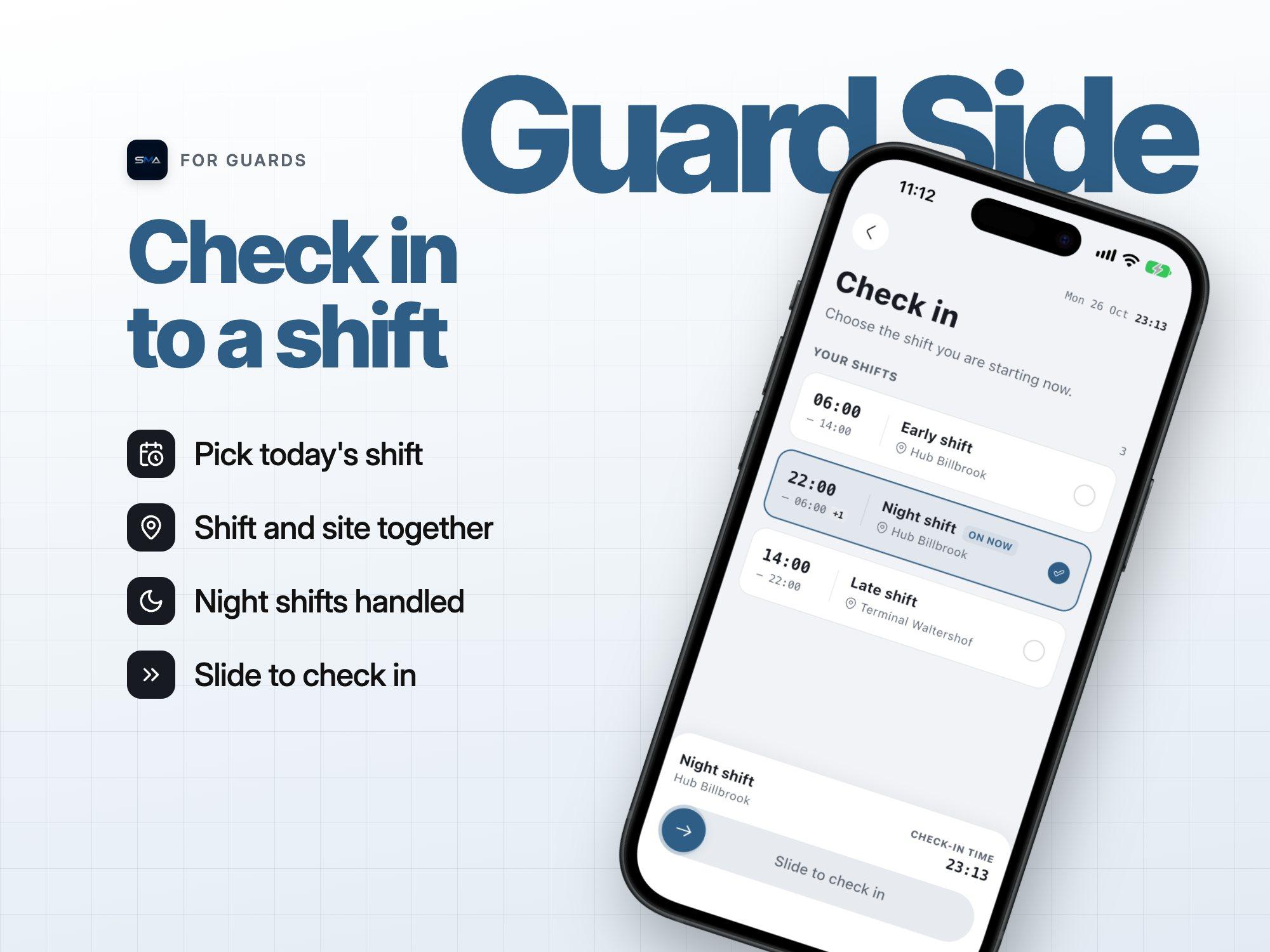
Guards check in to a shift at a site and file reports. Site managers see their sites, their people and each person's reports. Administrators are refused by the app in code, because their work happens on a dashboard and a phone is the wrong place for it.
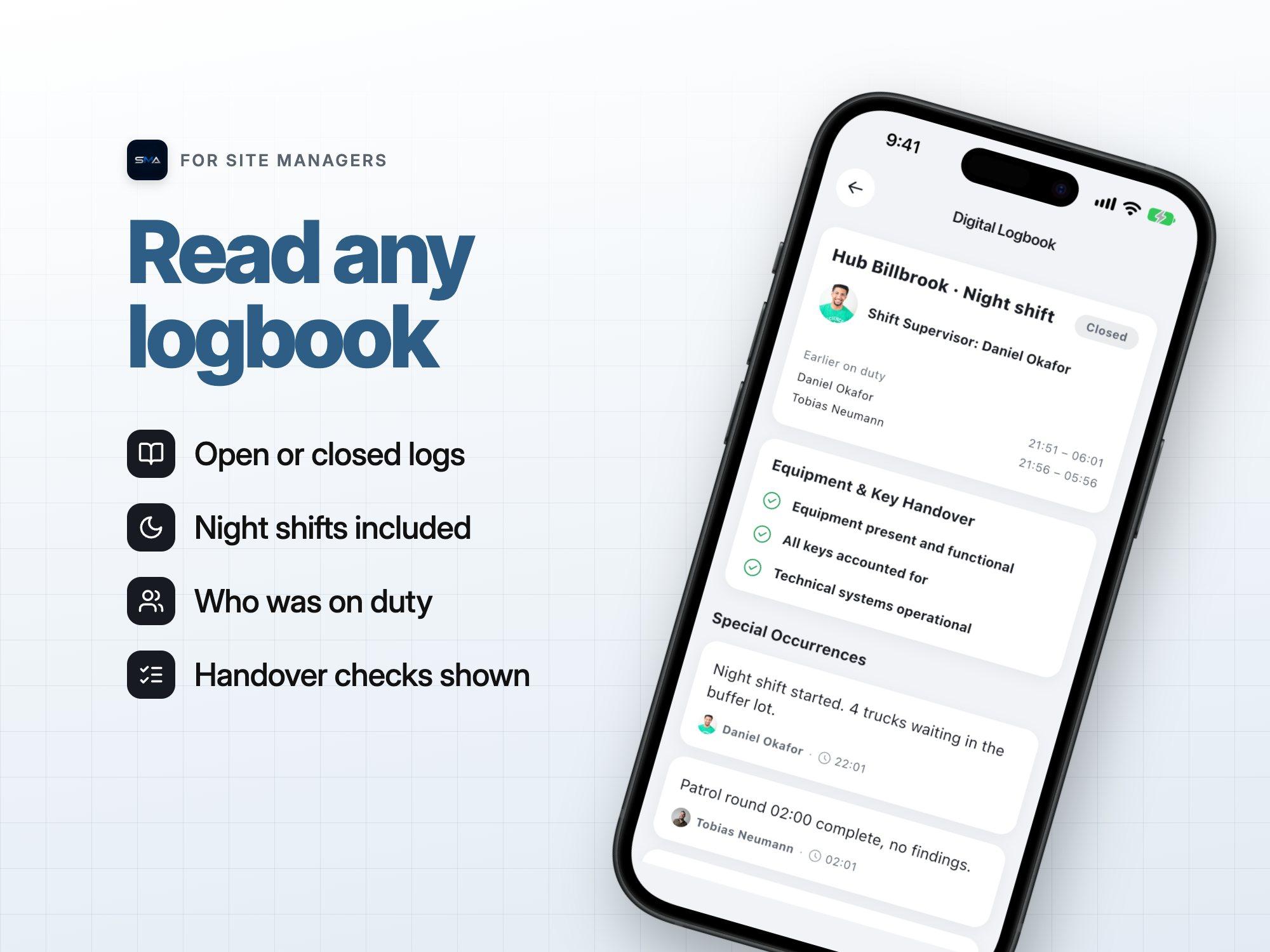
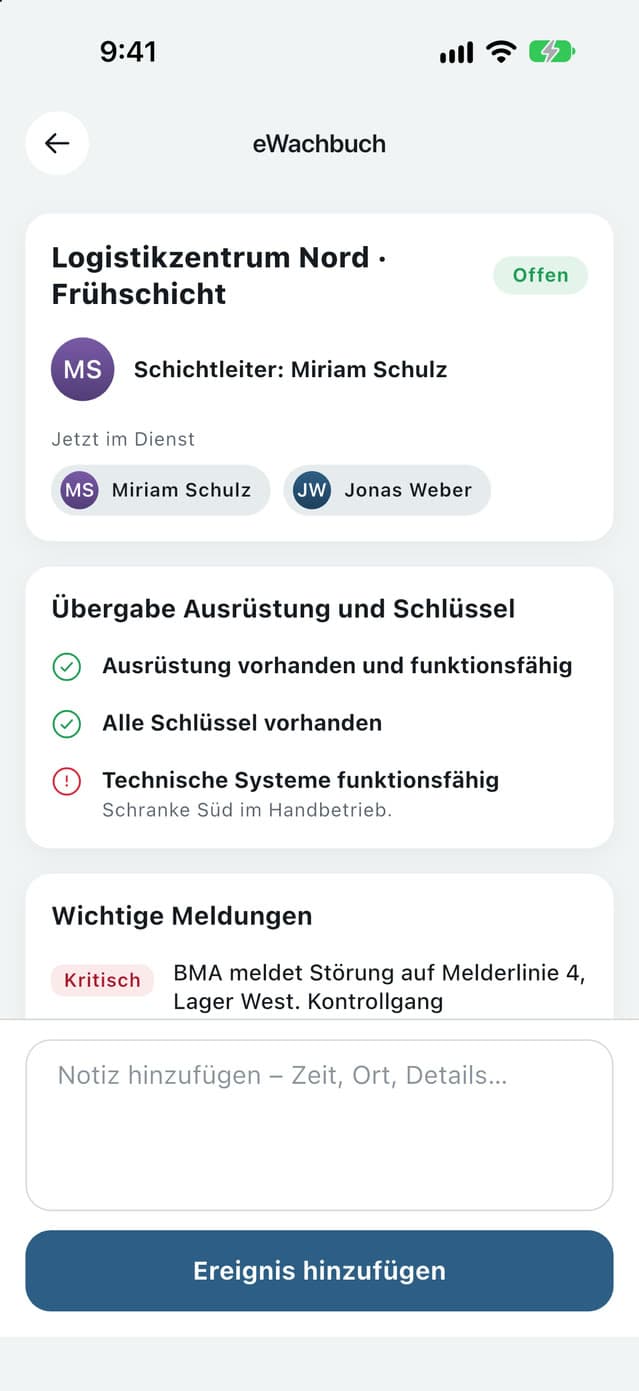
The guard book belongs to a site and a shift. A shift supervisor opens it, confirms the handover of equipment, keys and technical systems, and the shift writes timestamped entries into it until it is closed and handed on.
Result
A shift that can be read back afterwards
Between the reports, their follow-up notes and the guard book, a shift leaves an ordered account of who was on duty, what was handed over and what happened, written by the people who were there. No usage figures are published here, because none have been measured.
Inside the app
Real screens, demo data
06Book a call
Building something like this?
Book thirty minutes and we'll tell you quickly whether we're the right team for it, and roughly what it takes.
- 01You pick the slot
- 02Bring anything you have
- 03We come prepared
Your idea stays yours. Read only by the people who would build it, never reused, never passed on. Happy to sign your NDA first.
Pick a time. We'll tell you what it takes.
Thirty minutes, no pitch deck. Bring a rough idea or a finished spec, and leave with a straight answer on scope, cost and whether we're the right team.
- 01You pick the slotA live calendar, not a queue. Most people find something inside forty-eight hours.
- 02Bring anything you haveA spec, a Figma link, screenshots, a competitor you like, or nothing at all.
- 03We come preparedWe read whatever you send beforehand, so the call starts at the interesting part.
Your idea stays yours
- What you share stays between you and the people on your project.
- We never reuse your concept, your research or your materials elsewhere.
- Happy to sign your NDA before the call, or send ours.
We read every brief and reply within 60 minutes.
Prefer to write? with your files instead, or email abdullahmughal1976@gmail.com.