Community & non-profit
OurUmmah
One place for a mosque, its members and the businesses around it
- Industry
- Community & non-profit
- Product type
- Multi-sided mobile platform
- Period
- May, Jul 2026
- Platforms
- iOS, Android, API
- Services
- Product StrategyUX DesignCross-platform ApplicationsBackend SystemsAPIs
- Technology
- Flutter · Dart · BLoC/Cubit · Node.js · MongoDB · Stripe · OAuth
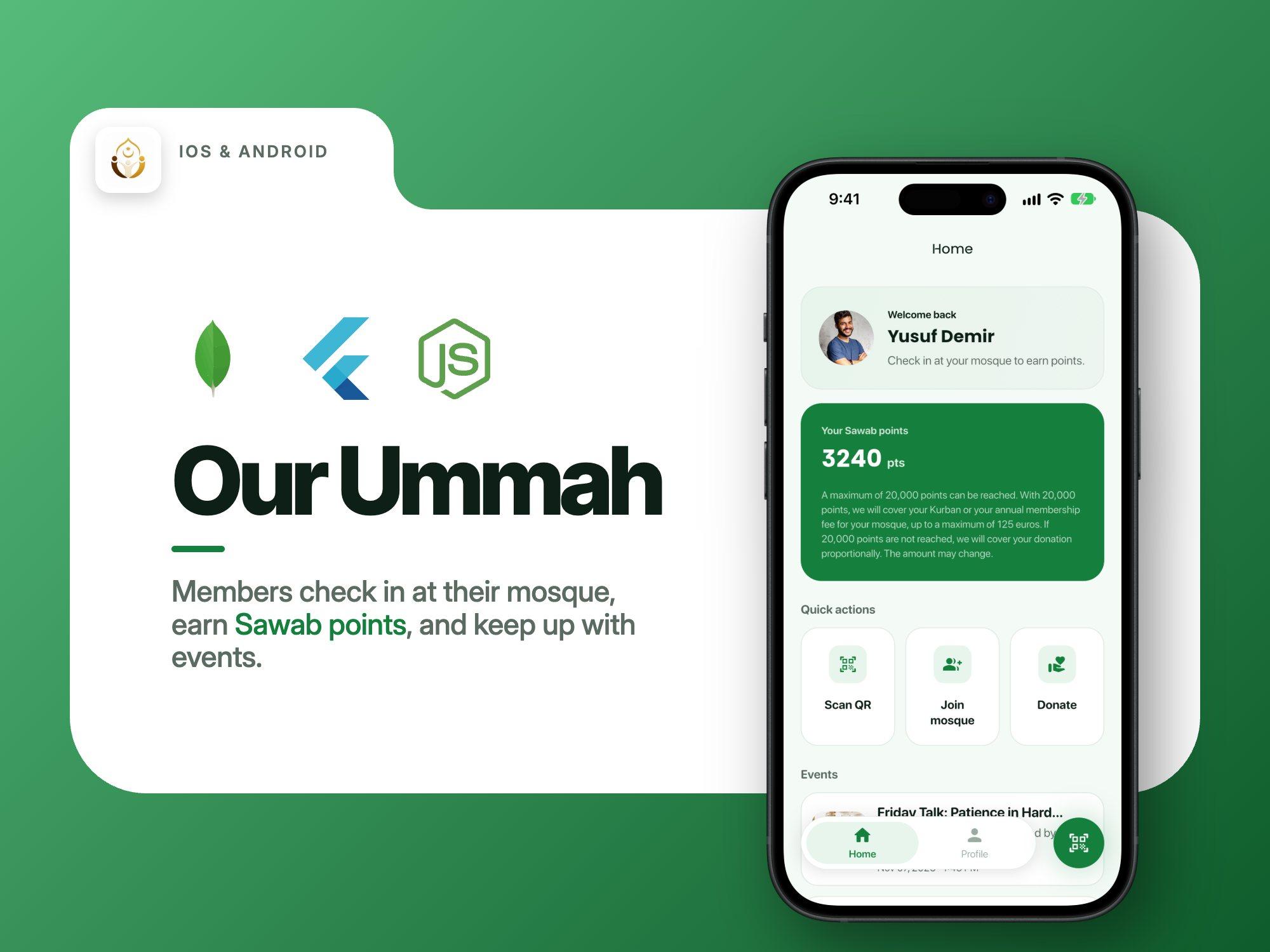
A multi-role community platform for local Muslim communities: a hub for events and announcements, QR check-ins that earn reward points at your mosque, giving that covers Zakat, Sadaqah and membership in one flow, and a directory connecting members to trusted local businesses.
- What we did
- Built the Flutter front end and the Node.js backend behind it, including dynamic QR generation, the points model, Stripe payments and OAuth.
- Outcome
- Attendance, membership and giving became one record instead of three. A member checks in with a scan; the mosque sees its community; local businesses reach it through a listing rather than a noticeboard.
The problem
Three groups, three sets of records, none of them shared
A mosque knows who has paid. A member knows how often they attend. A local business that wants to support the community has no route to it beyond a poster on a wall. None of these three had a shared surface.
Membership fees and seasonal giving were handled by cash, transfer and reminder, which is workable at small scale and stops being workable the moment it grows.
The approach
Model all three sides from the first screen
The very first decision in onboarding is which of the three you are: mosque, member, or community partner. Retrofitting a second audience onto a product built for one is expensive, and this product had three from the start.
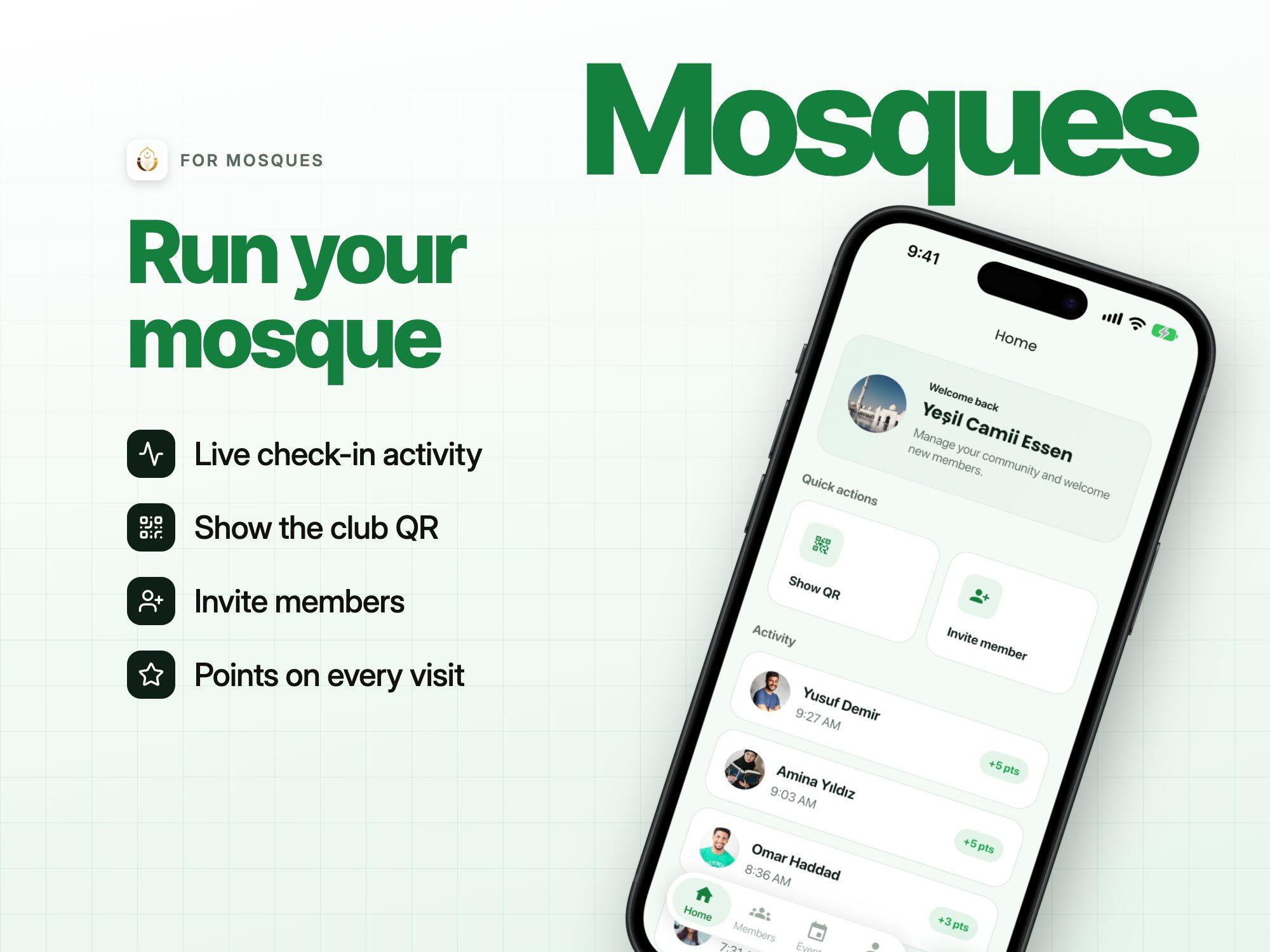
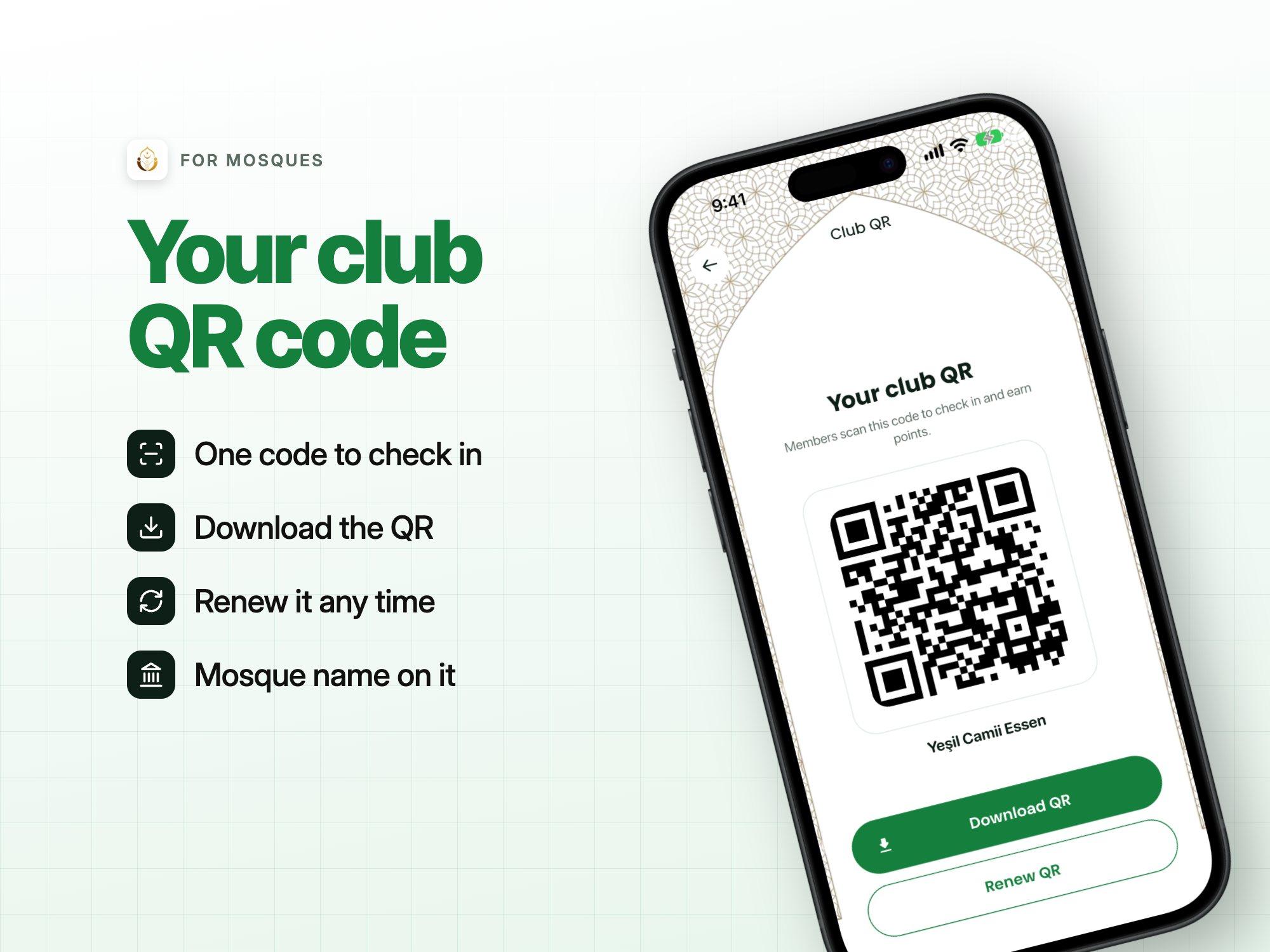
Attendance is the connective tissue: the mosque displays a dynamically generated QR code, the member scans it, and that single event feeds reward points, membership standing and the mosque's own view of its community.
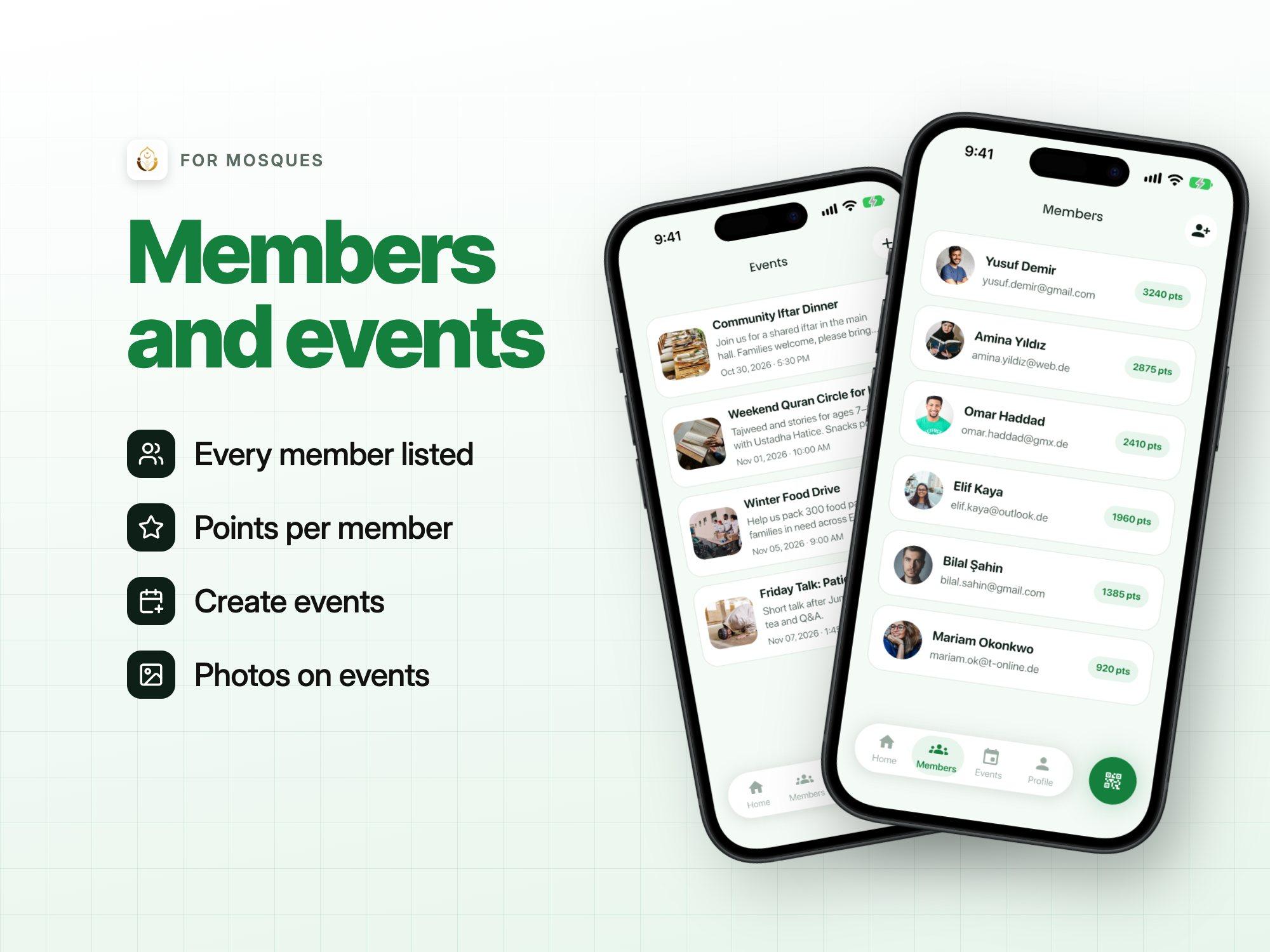
- Three account types, chosen at sign-up, each with its own surfaces
- Dynamic QR check-in as the shared event linking attendance and points
- A community hub carrying local events, services and announcements
- A member directory for managing community connections
Design
Explain the mechanism, in plain language, on the screen
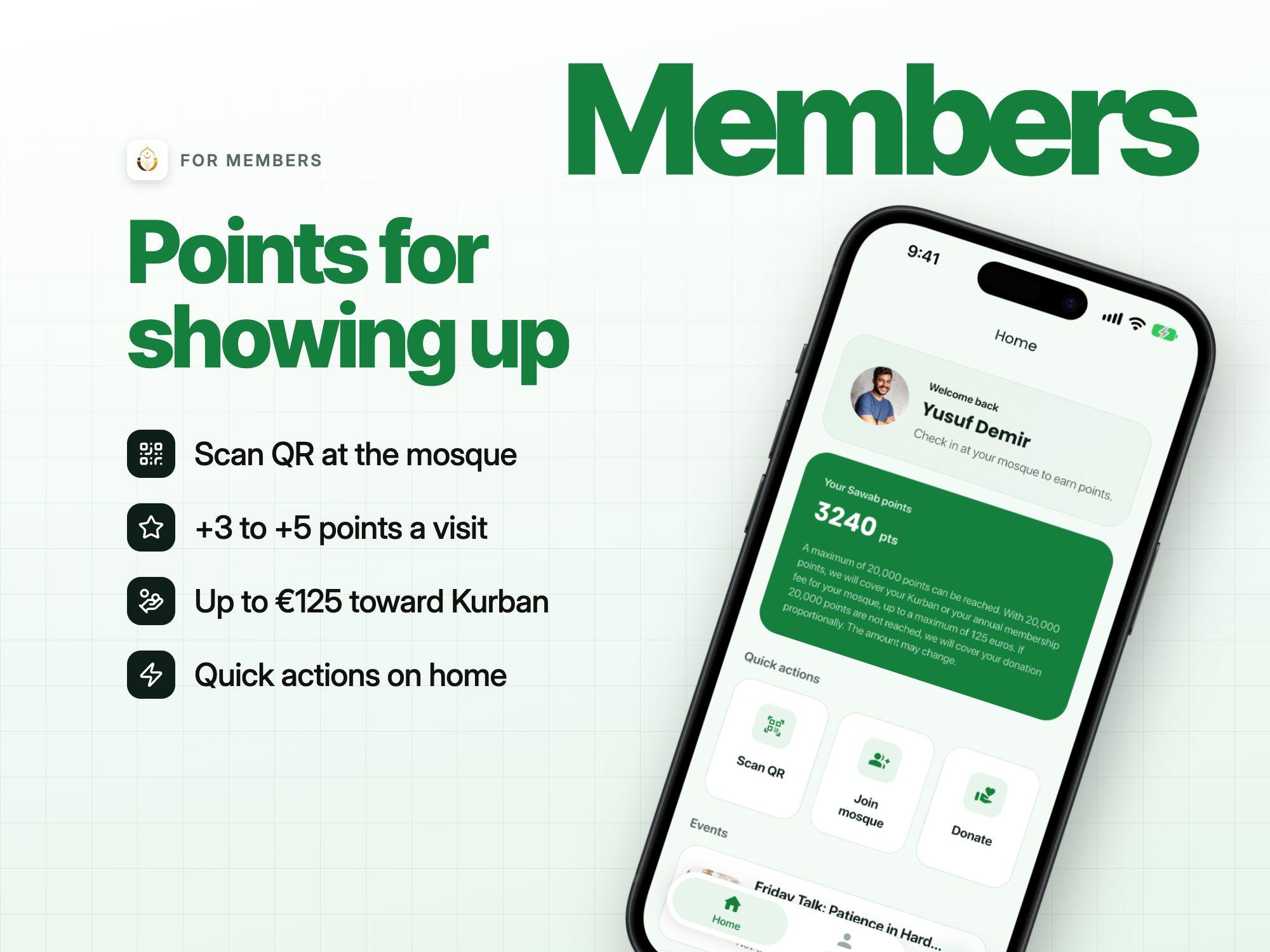
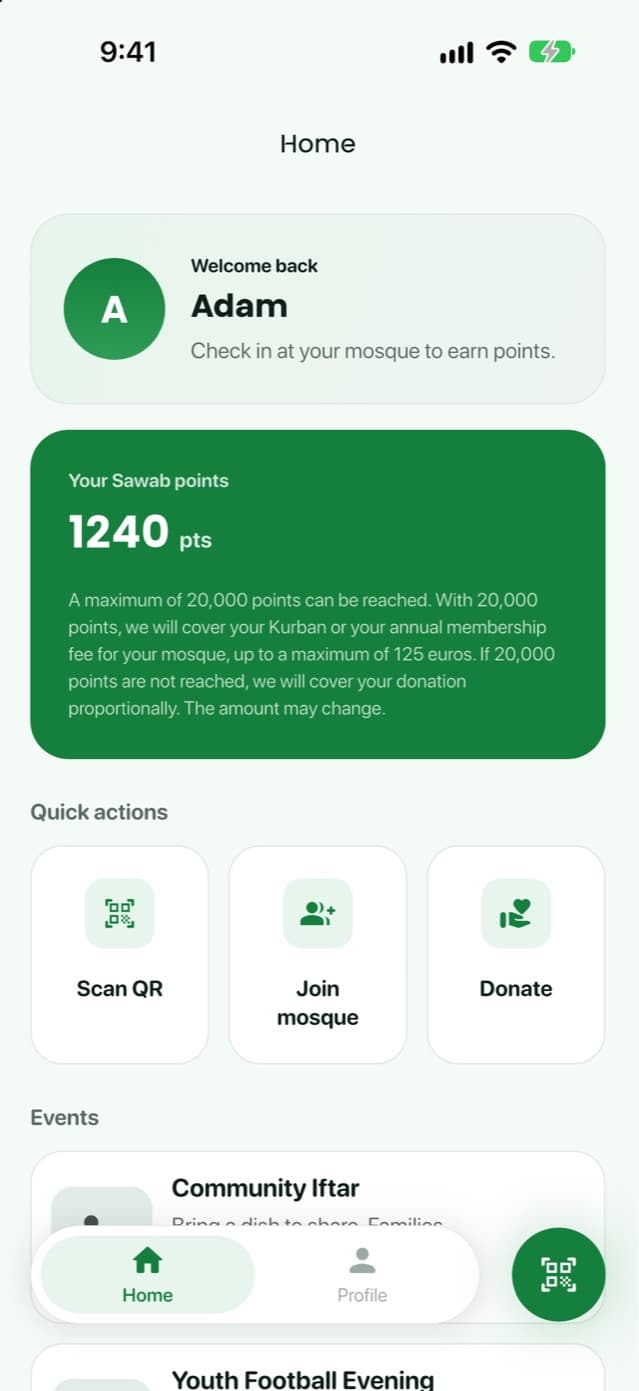
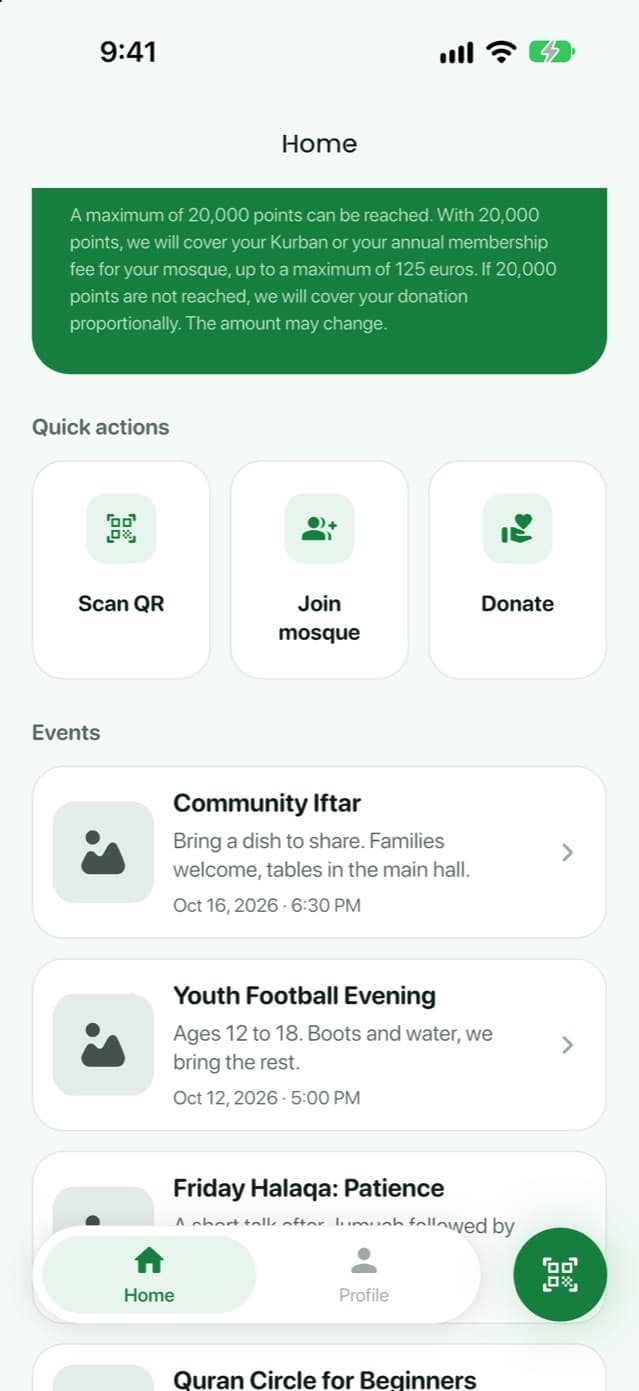
A points system that converts into a real financial benefit has to state its own rules where people can see them: how many points, what they cover, and what happens if the target is not reached. That explanation sits on the home screen rather than in a help page.
The rest of the interface is three quick actions and a partner list. There is very little to learn, which matters for an audience that spans every level of comfort with an app.
- The points model explained in full on the screen that shows the balance
- Three quick actions, scan, join, donate, and nothing competing with them
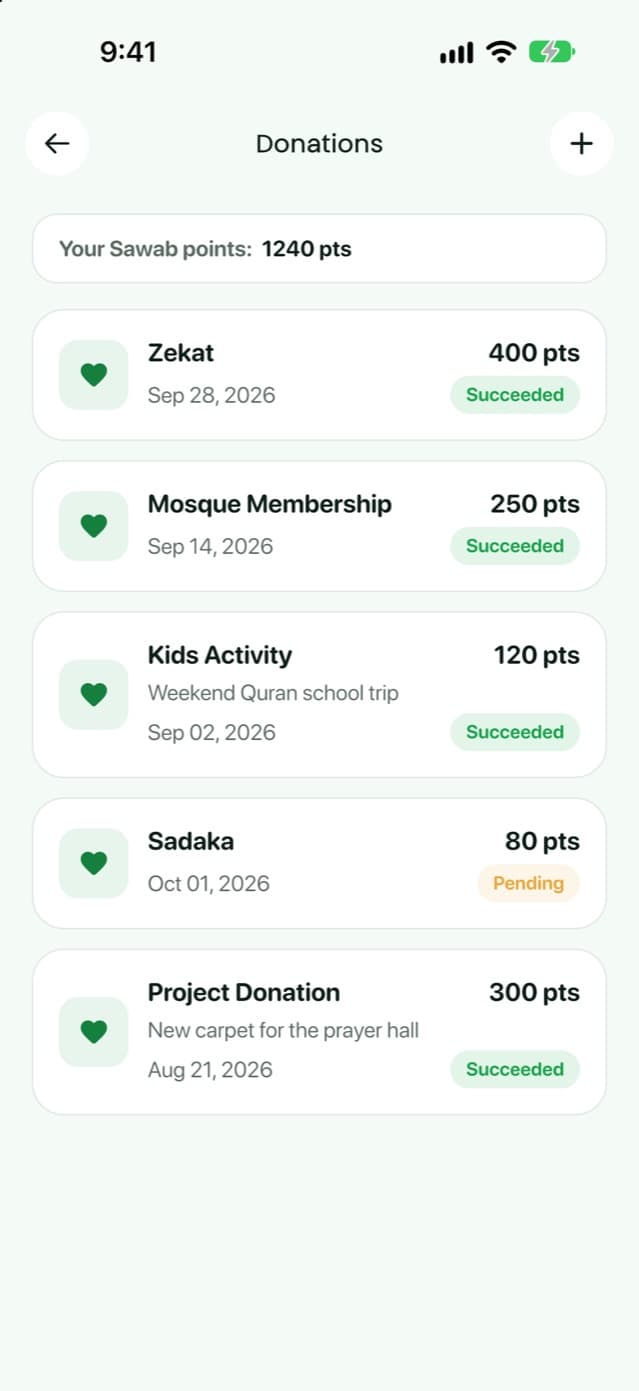
- Giving named the way the community names it: Zakat, Sadaqah, membership
Build
Money, identity and QR codes, handled properly
Payments run through Stripe and identity through OAuth. For a product handling Zakat and mosque memberships, neither was a place to improvise. The money is donated in trust, and the trust is the product.
Check-in codes are generated on the fly per mosque rather than printed once, so a code that leaks stops working without anyone's membership being touched.
- Stripe for donations, Zakat, Sadaqah and membership payments
- OAuth for authentication
- Dynamic, per-mosque QR generation rather than a static printed code
- Node.js and MongoDB handling the relational data and real-time updates
Result
One record the whole community can see its own part of
Attendance, membership and giving are now the same system, which is what makes any of them reportable.
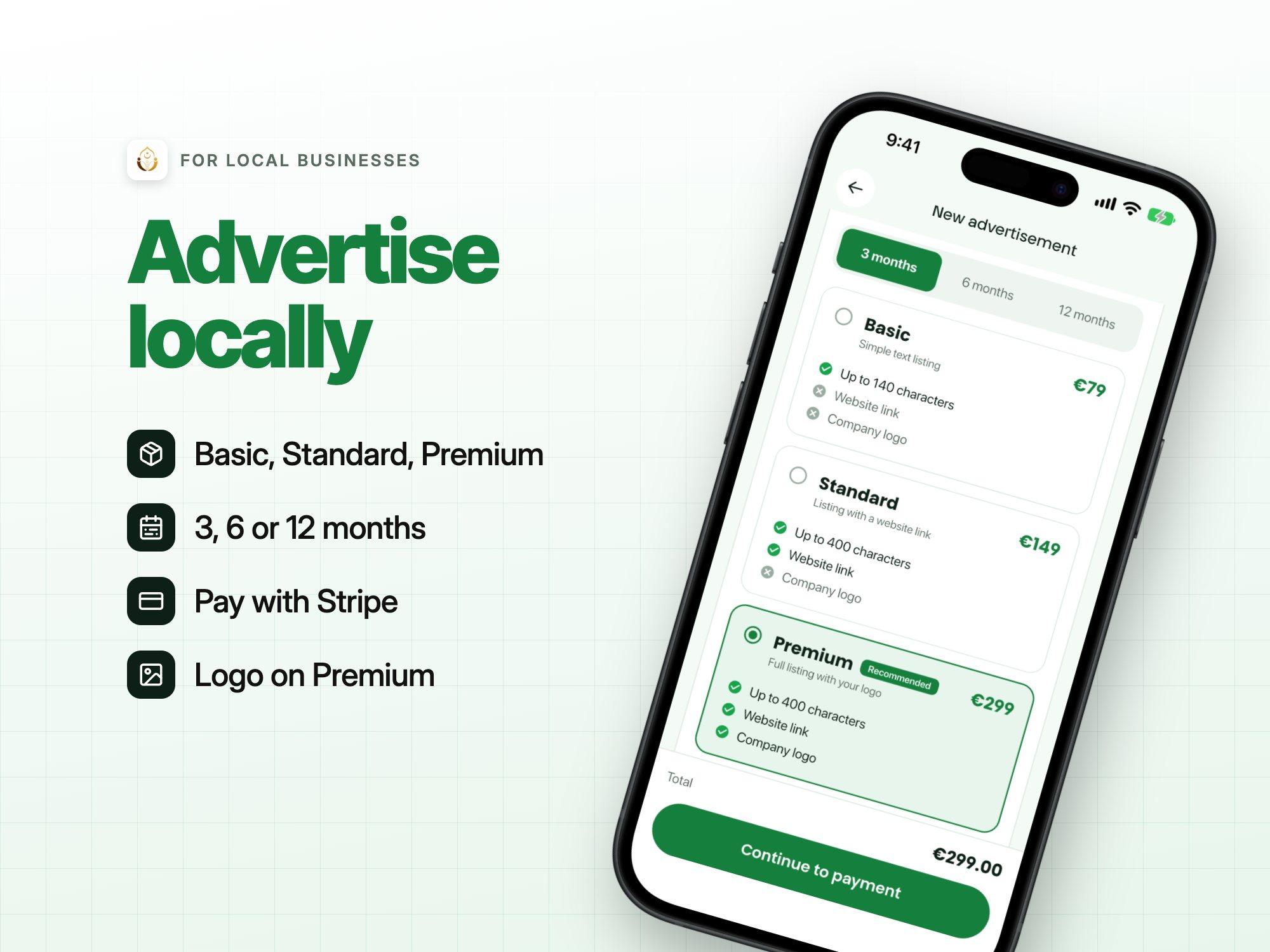
The partner side gives mosques a funding route that does not depend on asking the same members for more, which was the part that made the model work.
Inside the app
Real screens, demo data
06Book a call
Building something like this?
Book thirty minutes and we'll tell you quickly whether we're the right team for it, and roughly what it takes.
- 01You pick the slot
- 02Bring anything you have
- 03We come prepared
Your idea stays yours. Read only by the people who would build it, never reused, never passed on. Happy to sign your NDA first.
Pick a time. We'll tell you what it takes.
Thirty minutes, no pitch deck. Bring a rough idea or a finished spec, and leave with a straight answer on scope, cost and whether we're the right team.
- 01You pick the slotA live calendar, not a queue. Most people find something inside forty-eight hours.
- 02Bring anything you haveA spec, a Figma link, screenshots, a competitor you like, or nothing at all.
- 03We come preparedWe read whatever you send beforehand, so the call starts at the interesting part.
Your idea stays yours
- What you share stays between you and the people on your project.
- We never reuse your concept, your research or your materials elsewhere.
- Happy to sign your NDA before the call, or send ours.
We read every brief and reply within 60 minutes.
Prefer to write? with your files instead, or email abdullahmughal1976@gmail.com.