- Industry
- Fashion
- Product type
- Mobile application
- Period
- Sep 2025 to Aug 2026
- Platforms
- iOS, Android
- Services
- Cross-platform ApplicationsBackend Systems
- Technology
- Flutter · Dart · BLoC/Cubit · GoRouter · Dio · GetIt · Hive · Firebase · NestJS · Prisma · PostgreSQL · Redis · AWS S3 · Shopify
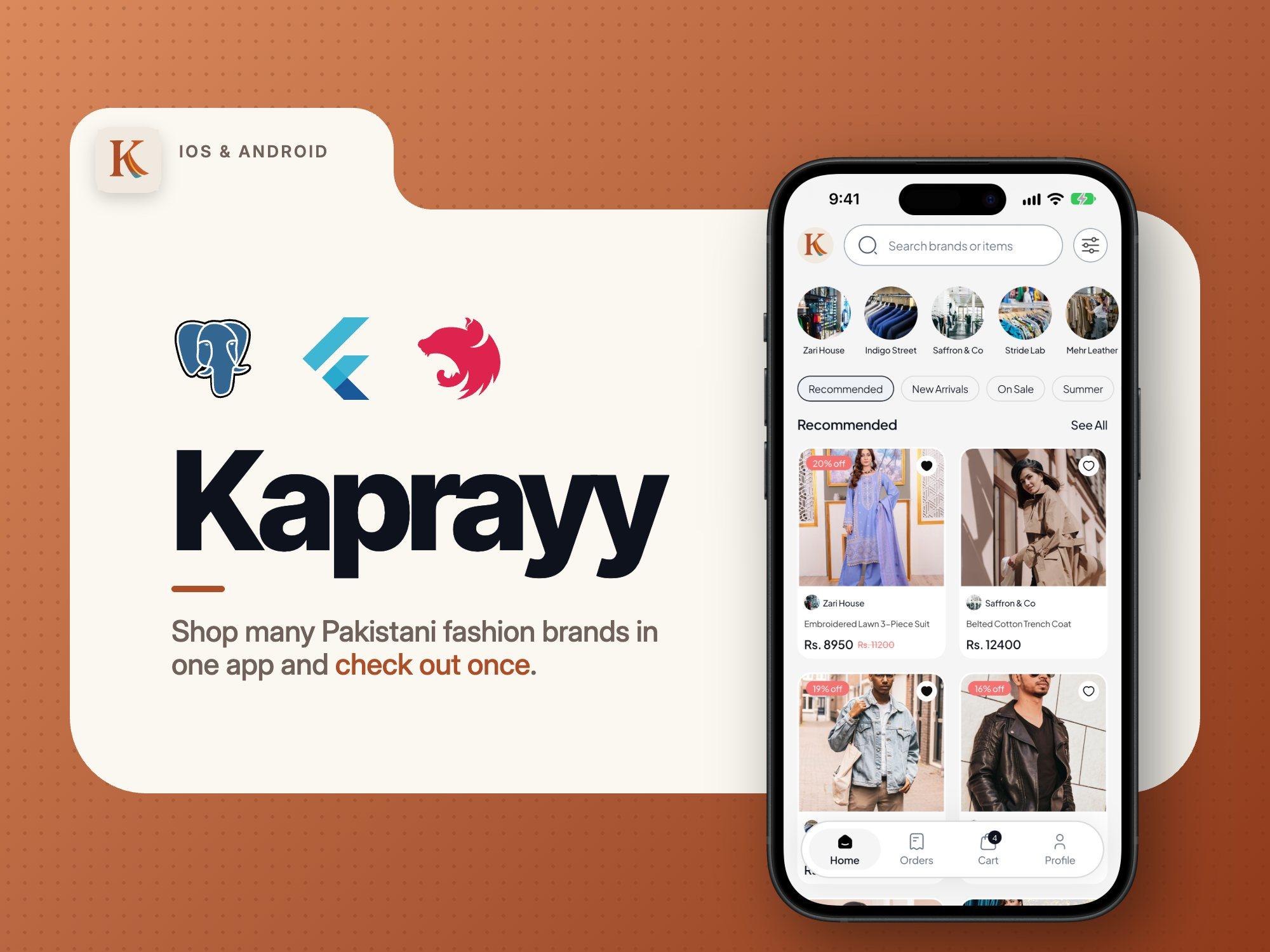
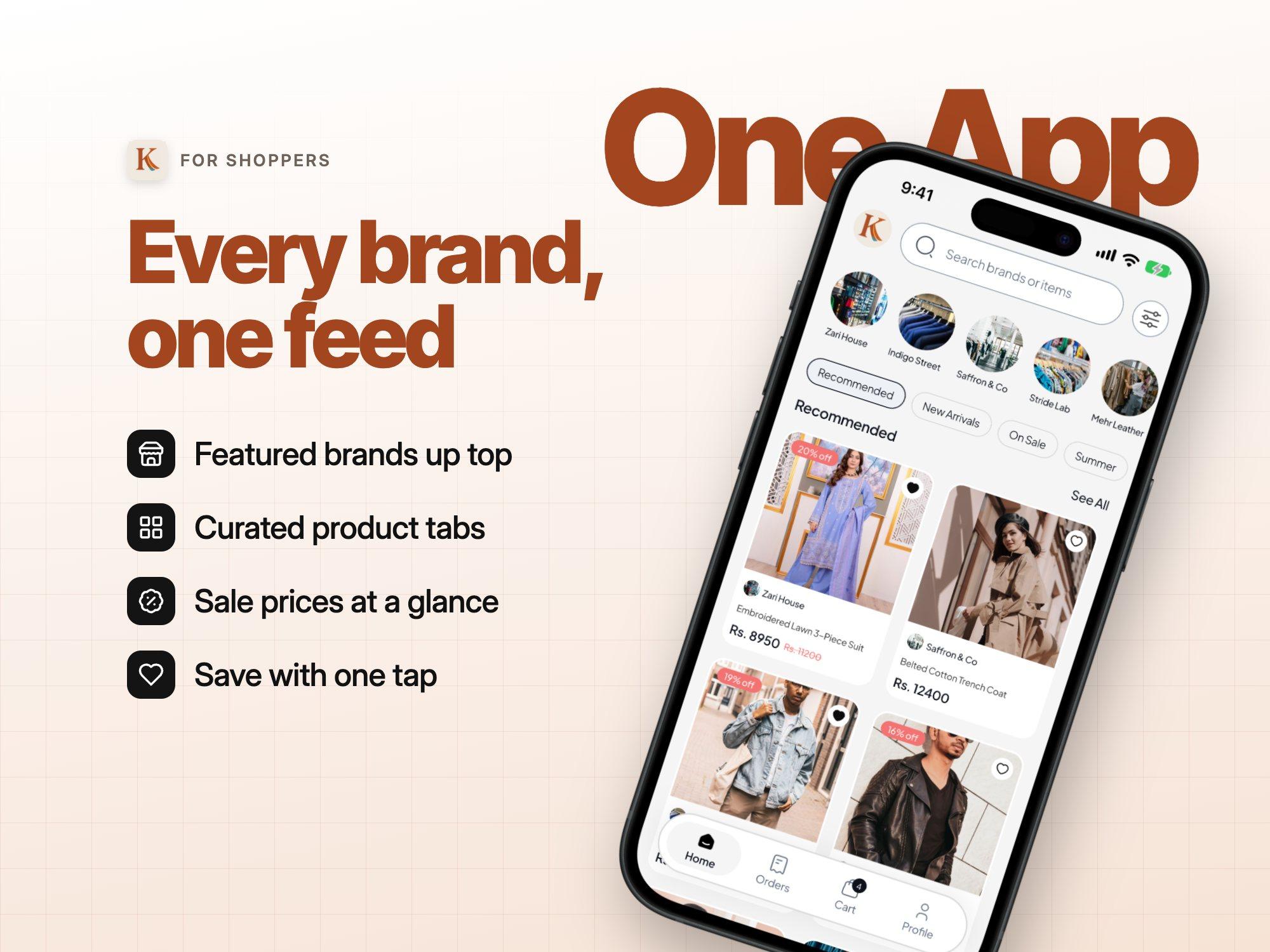
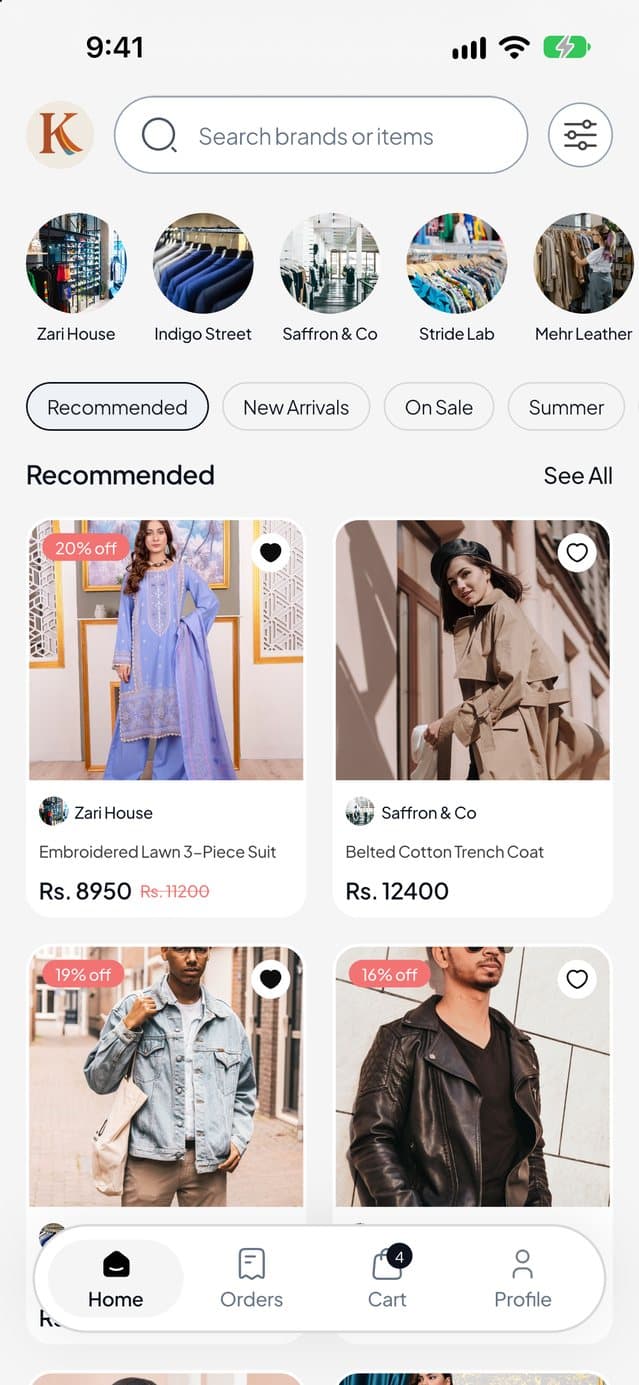
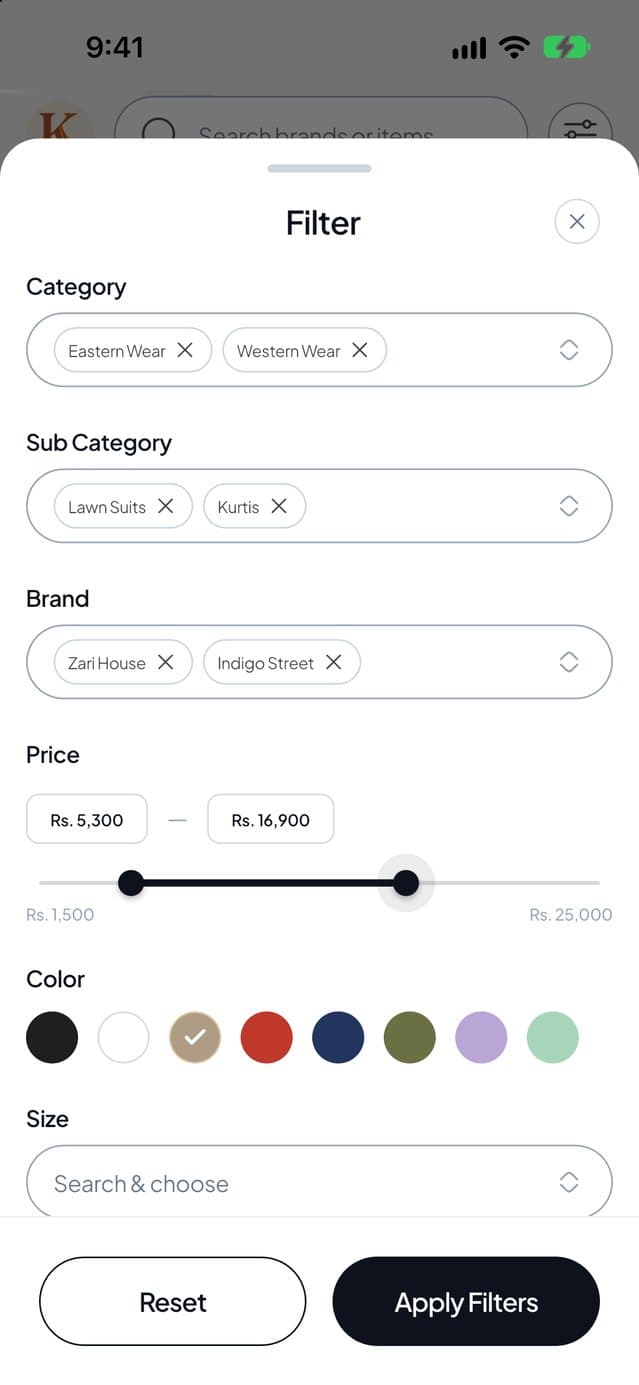
A multi-brand fashion shopping app for Pakistan. Shoppers browse clothes from many brands in one feed, filter by category, brand, size, colour and price, and check out once for a cart that mixes stores. Each brand ships its own part of the order, and the shopper follows every part from one Orders tab.
- What we did
- Built the Flutter shopping app, from guest browsing and filters to the multi-brand cart, checkout and order tracking, and the NestJS and PostgreSQL backend behind it, with brand catalogues pulled from Shopify.
- Outcome
- A complete shopping app, not yet published. A cart can mix any brands, totals always come from the server, and a retried checkout cannot place the same order twice.
Draft write-up. The product and the screens are real; this account of the work is a draft awaiting review by the team who built it, and by the client.
The problem
Every brand is its own shop, with its own cart
Someone putting together an outfit rarely buys it from one label. Shopping several brands usually means several apps or websites, several carts, several checkouts and several deliveries to keep track of, each with its own way of showing sizes and prices.
A marketplace that fixes this has to do the opposite job on the back end: take one order and split it cleanly across brands that each pack and ship their own part.
The approach
One cart for every brand, one checkout split by store
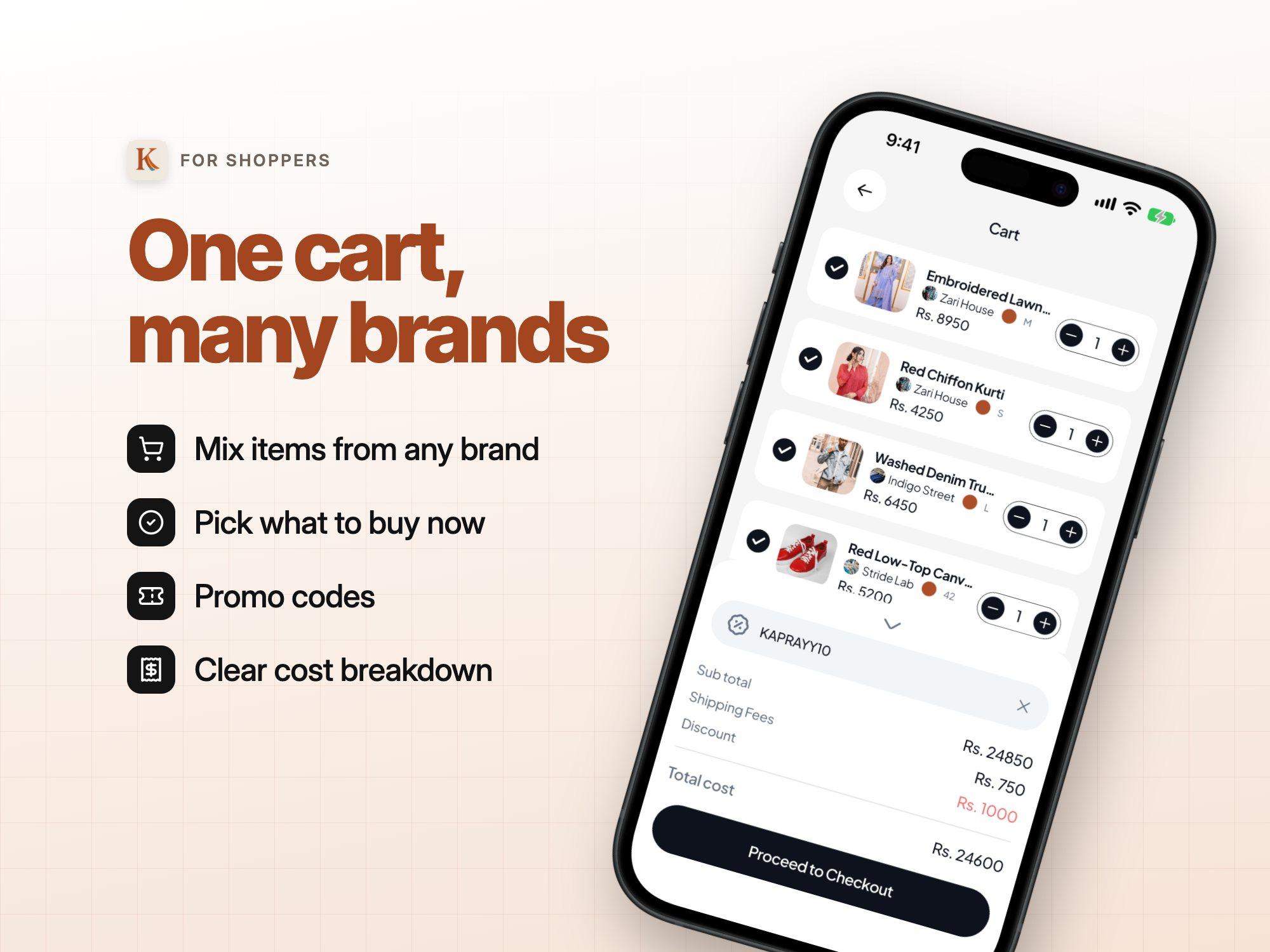
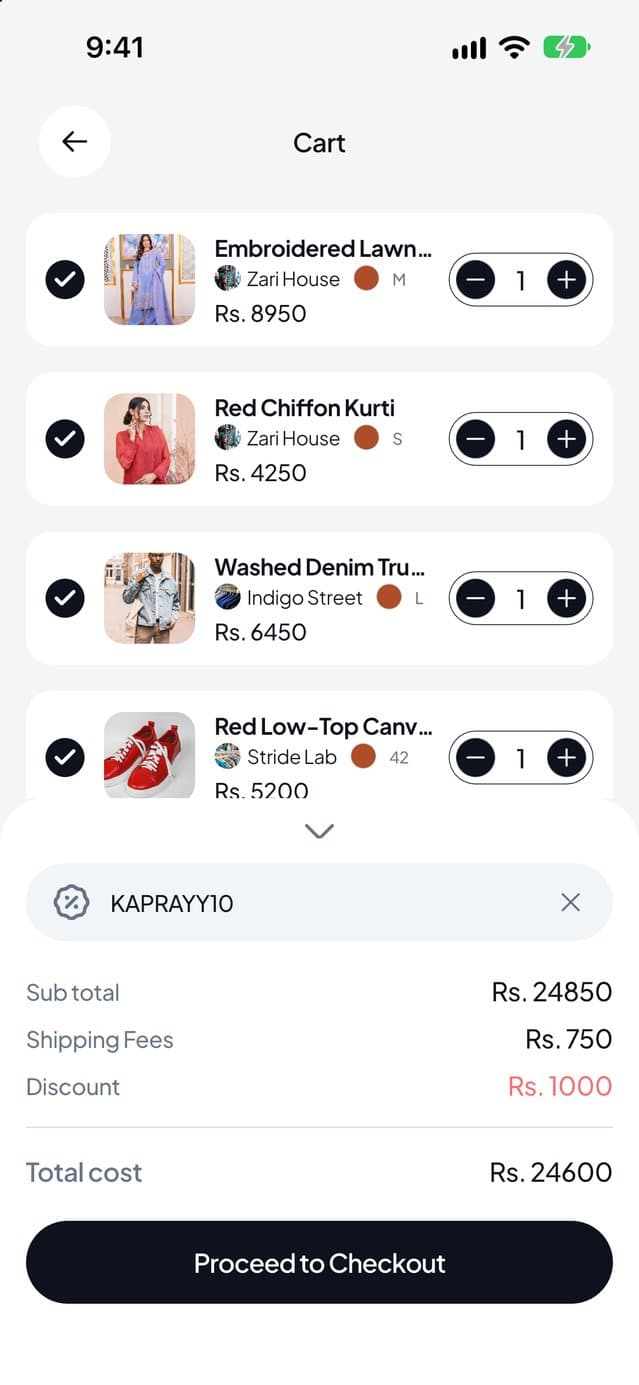
Items from any number of brands go into the same cart, where the shopper ticks what to buy now, changes quantities and applies a promo code. Checkout happens once, and the order is grouped by brand so each store ships its own part.
The money stays on the server. The selection is synced as the shopper changes it, so the totals on screen come from the server's cart and never from arithmetic on the phone. Shoppers can browse as a guest from the first launch and sign in with Google or Apple when they want a wishlist, orders and saved addresses.
Design
Product pages built around fit
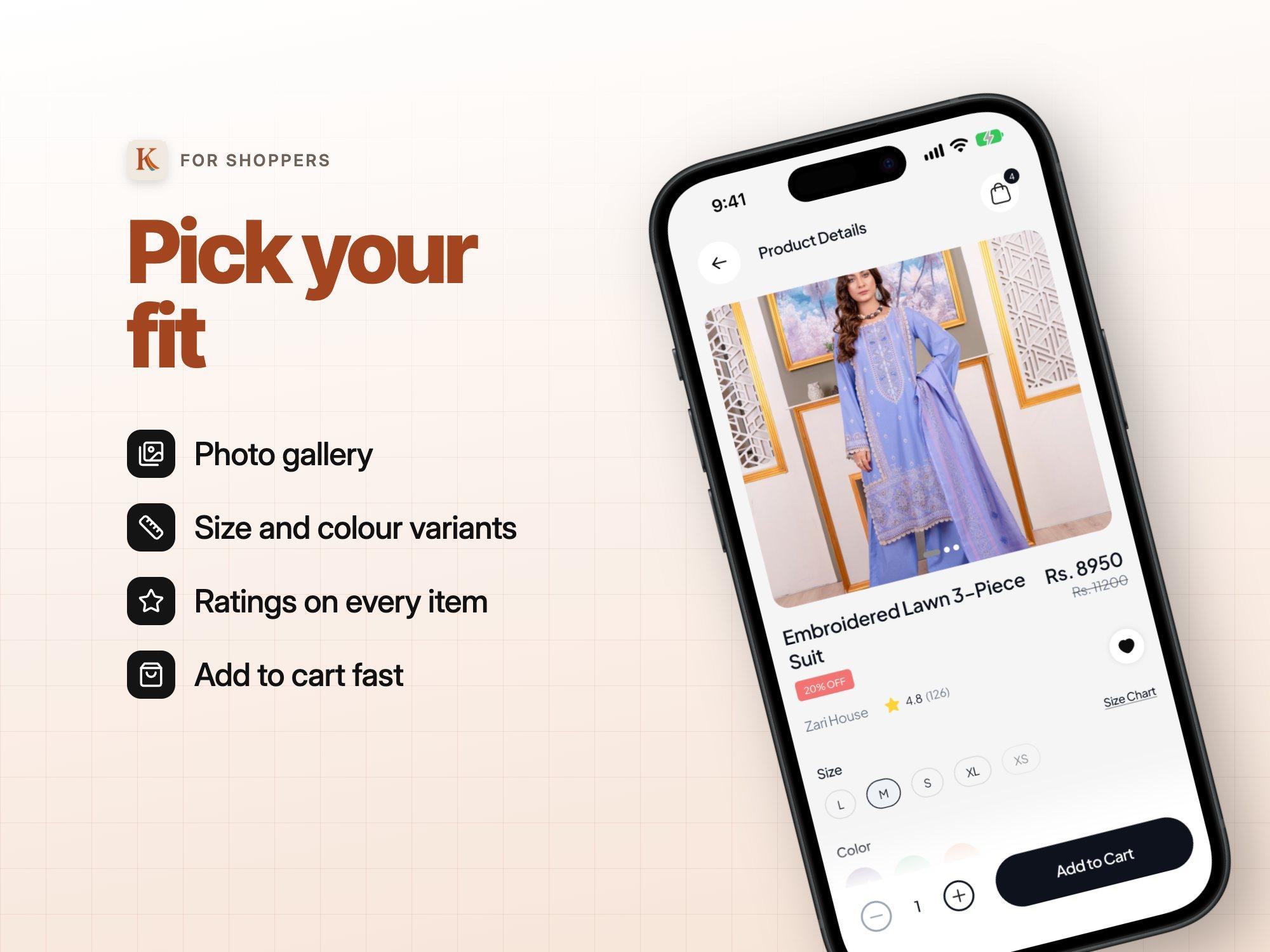
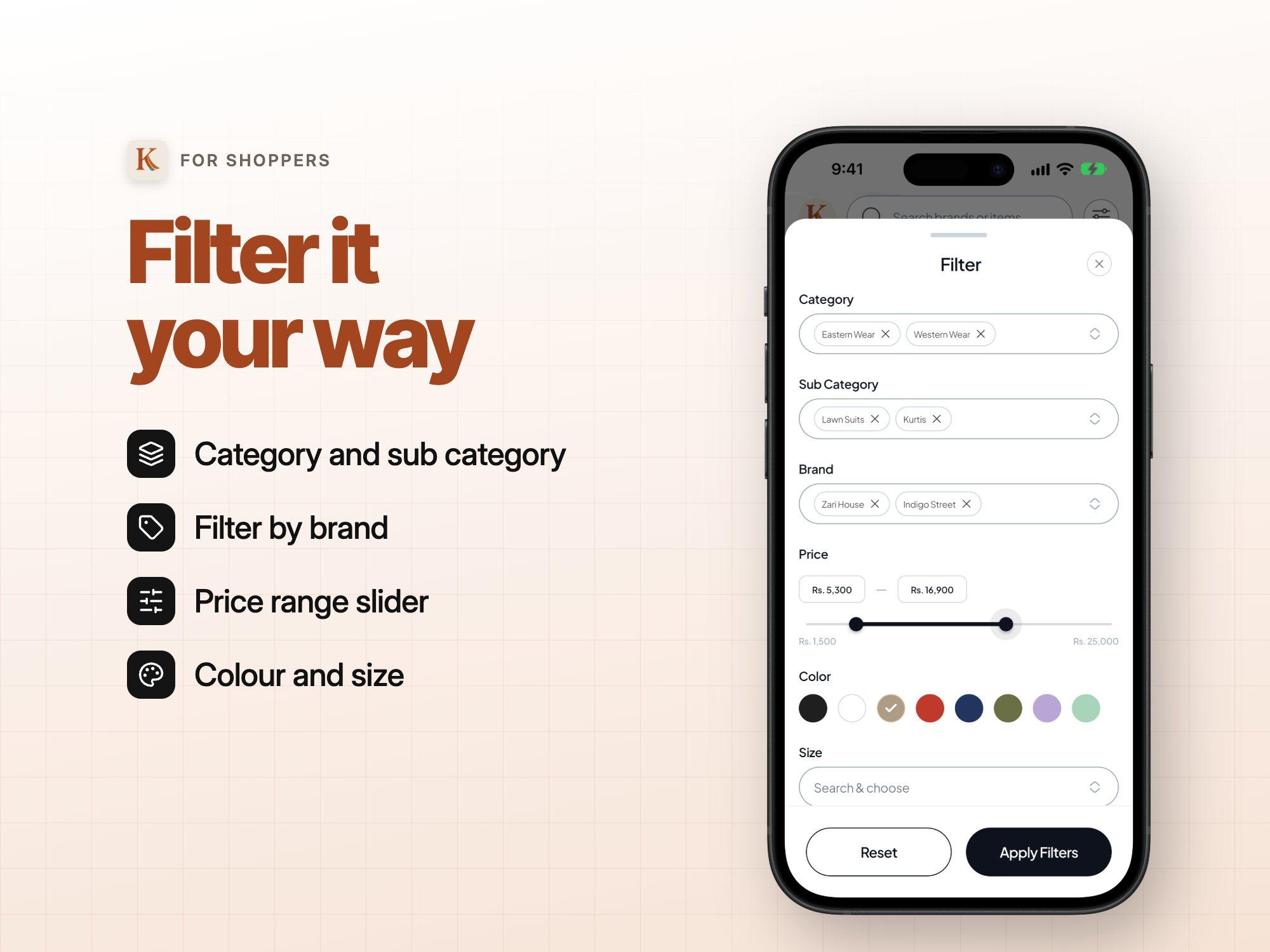
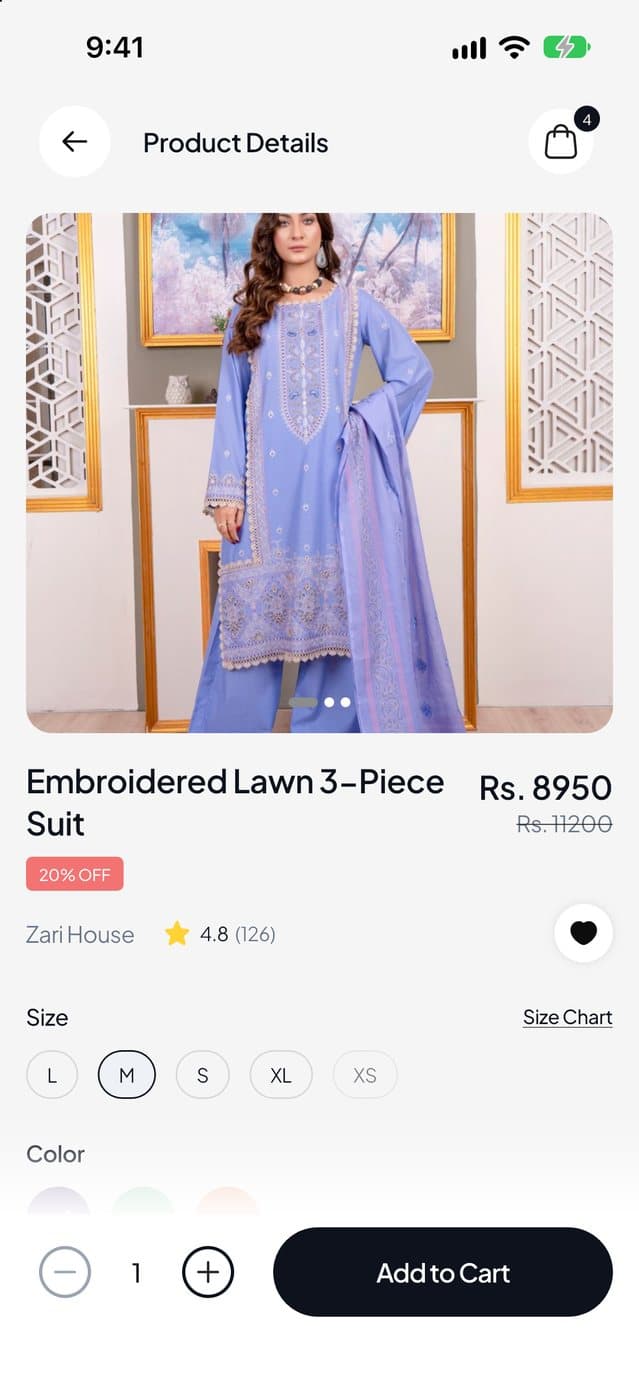
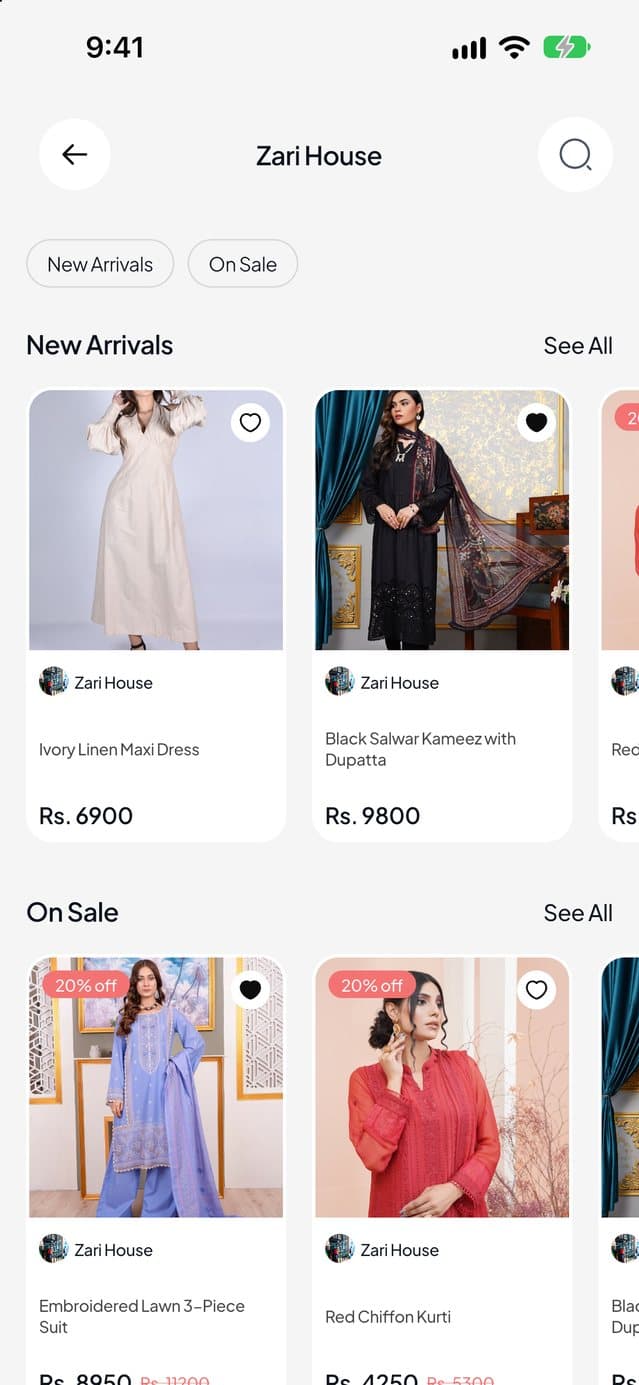
Clothes are bought on size and colour, so the product page leads with them: a photo gallery, size and colour variants, a size chart in a sheet, the fabric and care notes, ratings and more from the same brand. Every brand also has its own store with New Arrivals and On Sale sections, and an All Brands directory leads to each one.
Build
A checkout that is safe to retry
Mobile connections drop at the worst moment, often just after an order was sent and before the answer came back. Each order intent therefore carries an idempotency key in an HTTP header, so a retry after a lost response cannot place a second order. The checkout sends no amounts at all: the server prices the order from its own cart.
Filters fetch the sub categories for every chosen category in one debounced call and search them on the device. The backend is NestJS with Prisma on PostgreSQL, with Redis queues for background work, S3 for uploads and brand catalogues synced in from Shopify.
Result
Every brand's delivery, followed from one tab
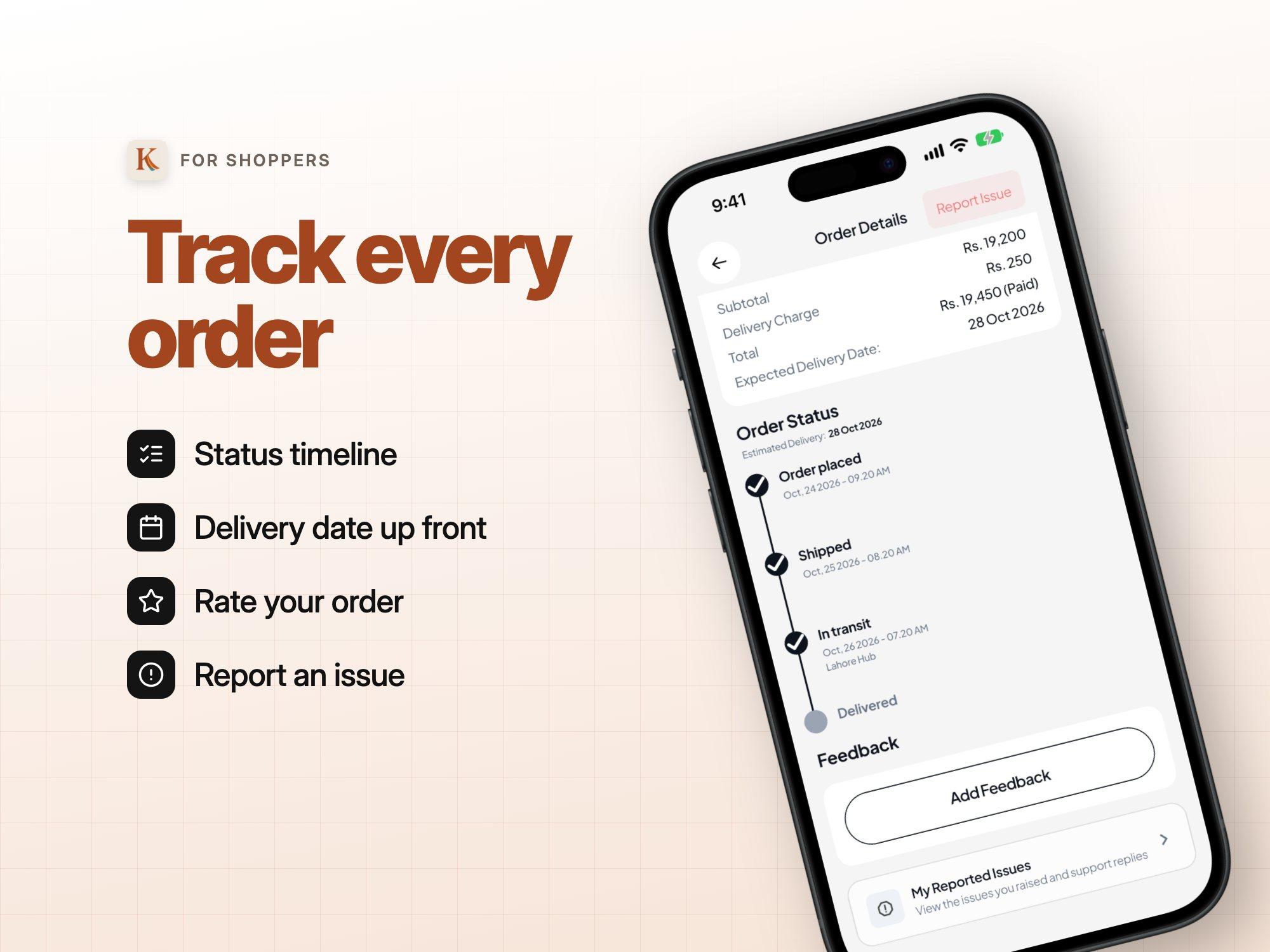
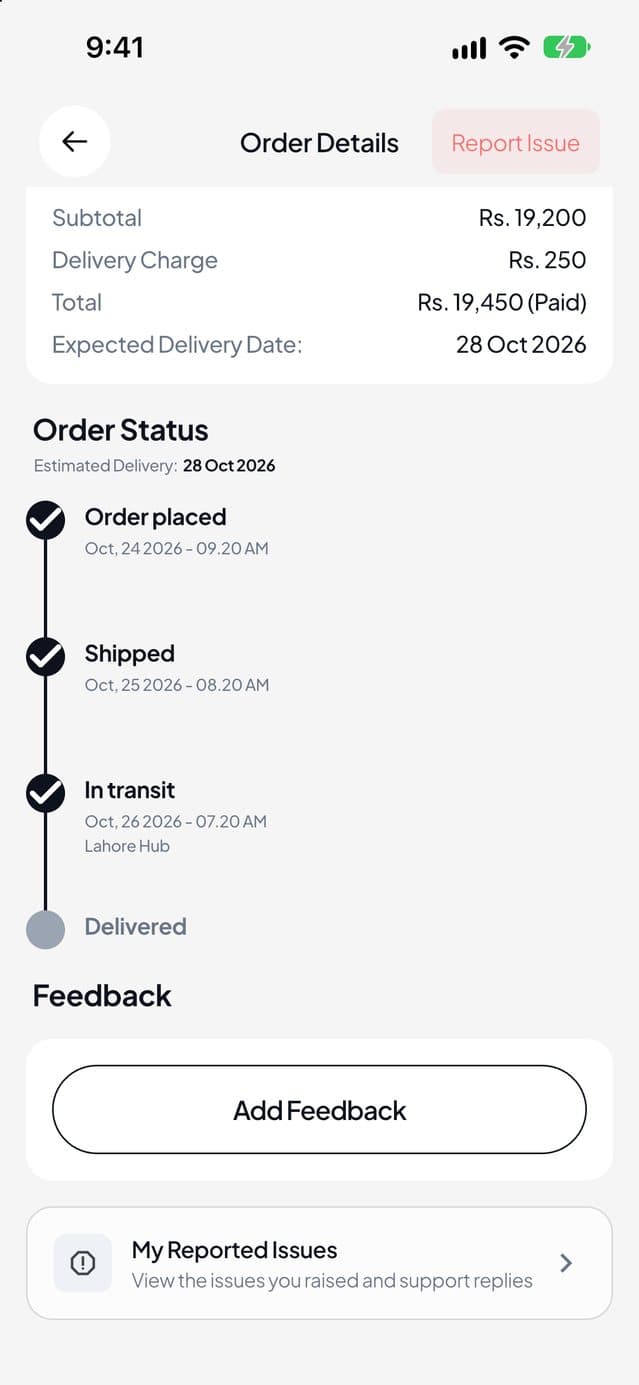
The Orders tab lists every order with its amount and payment status. Inside, the order is grouped by brand, each part with a timeline from placed to shipped, in transit and delivered. Shoppers can rate an order with stars and photos, report an issue and read the support team's replies in the same place, and they can pay cash on delivery.
Kaprayy is built end to end but has not been published on the App Store or Google Play. No usage figures are published here, because none have been measured for this site.
Inside the app
Real screens, demo data
06Book a call
Building something like this?
Book thirty minutes and we'll tell you quickly whether we're the right team for it, and roughly what it takes.
- 01You pick the slot
- 02Bring anything you have
- 03We come prepared
Your idea stays yours. Read only by the people who would build it, never reused, never passed on. Happy to sign your NDA first.
Pick a time. We'll tell you what it takes.
Thirty minutes, no pitch deck. Bring a rough idea or a finished spec, and leave with a straight answer on scope, cost and whether we're the right team.
- 01You pick the slotA live calendar, not a queue. Most people find something inside forty-eight hours.
- 02Bring anything you haveA spec, a Figma link, screenshots, a competitor you like, or nothing at all.
- 03We come preparedWe read whatever you send beforehand, so the call starts at the interesting part.
Your idea stays yours
- What you share stays between you and the people on your project.
- We never reuse your concept, your research or your materials elsewhere.
- Happy to sign your NDA before the call, or send ours.
We read every brief and reply within 60 minutes.
Prefer to write? with your files instead, or email abdullahmughal1976@gmail.com.