- Industry
- Recruitment
- Product type
- Mobile application
- Period
- 2026
- Platforms
- iOS, Android, API
- Services
- Cross-platform ApplicationsBackend Systems
- Technology
- Flutter · Dart · BLoC/Cubit · GoRouter · Dio · GetIt · Hive · Socket.IO · Firebase Cloud Messaging · NestJS · TypeScript · MongoDB · Zoom · Resend
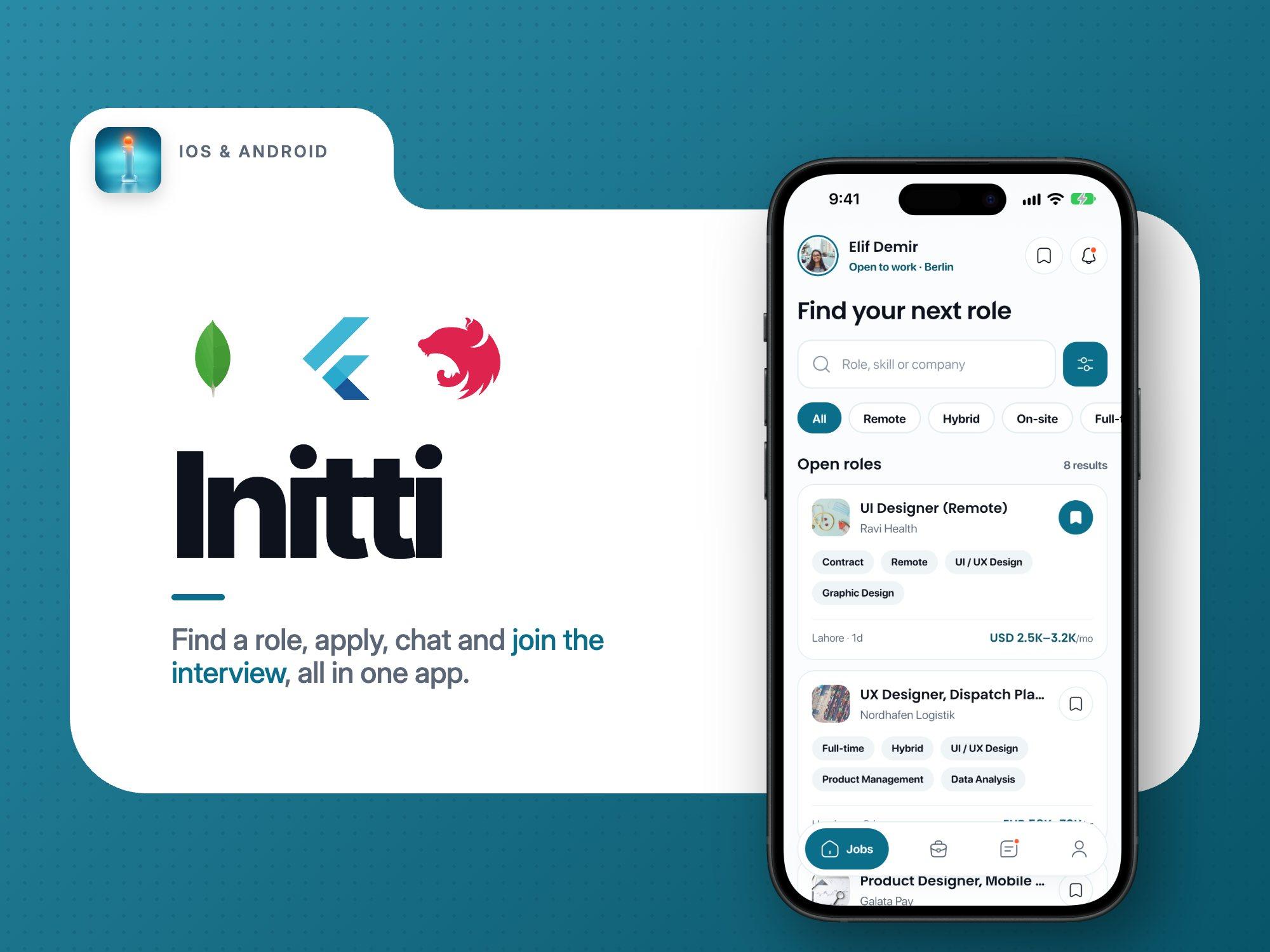
Job seekers find roles, see how many of the required skills they already have, apply in one tap, chat with the company and join a video interview. Companies post jobs, move applicants through a hiring pipeline, search a talent pool and schedule interviews on Zoom, without juggling email, spreadsheets and a separate calendar. The app is built and not yet published in the app stores.
- What we did
- Built the Flutter app with a seeker side and a company side, in English, German, Turkish and right-to-left Urdu, and the NestJS and MongoDB backend behind it: real-time chat, push, email and Zoom interviews.
- Outcome
- Built and not yet in the app stores. A hire runs from job post to interview inside one app, and a chat message sent twice on a bad connection still arrives once.
Draft write-up. The product and the screens are real; this account of the work is a draft awaiting review by the team who built it, and by the client.
The problem
Hiring happens in five places at once
A small company hiring today posts on a job board, tracks applicants in a spreadsheet, replies by email and sends a calendar invite for the interview. The candidate sees the other side of the same mess: an application disappears, and the next sign of life is an email they might miss.
The approach
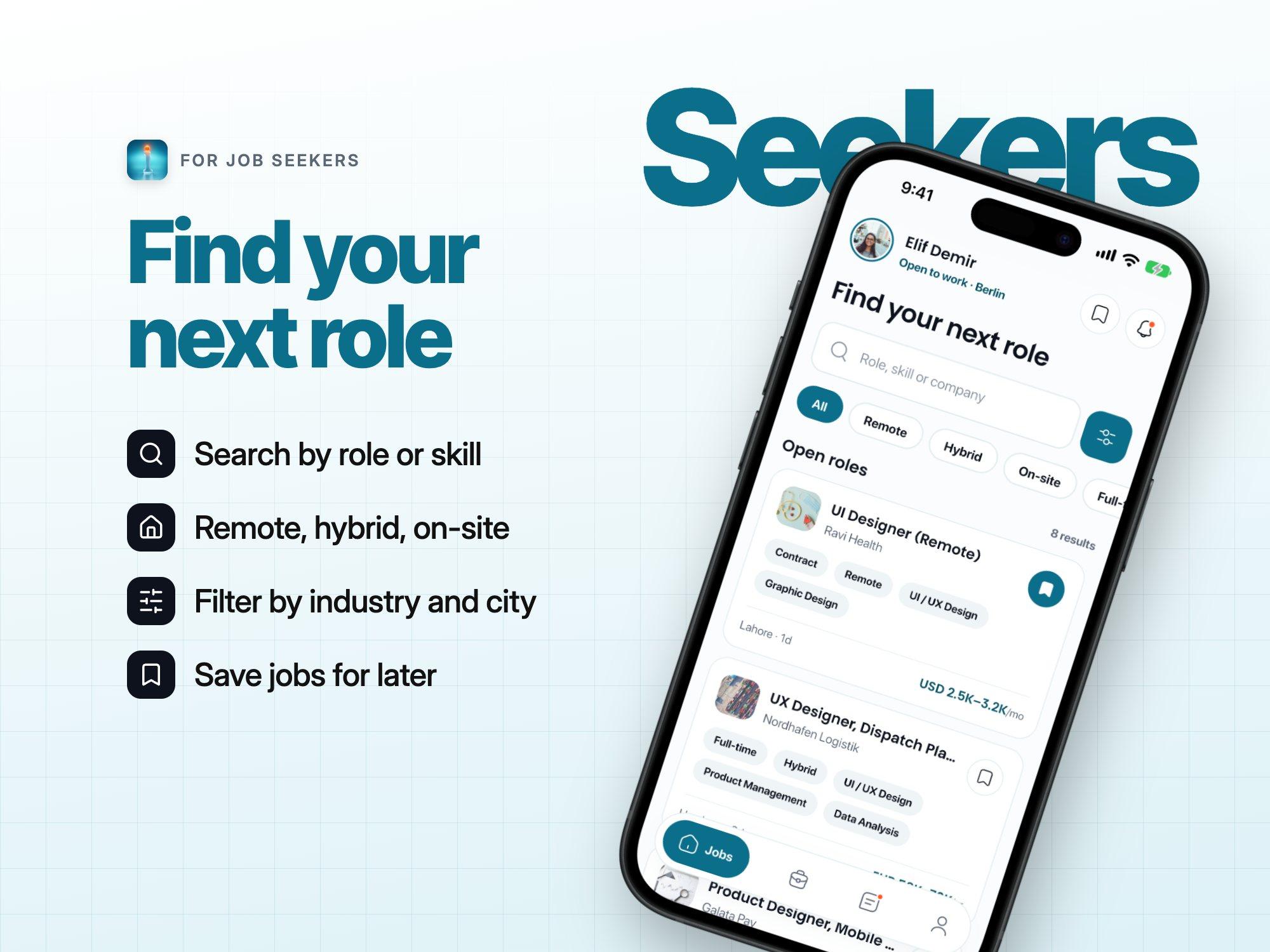
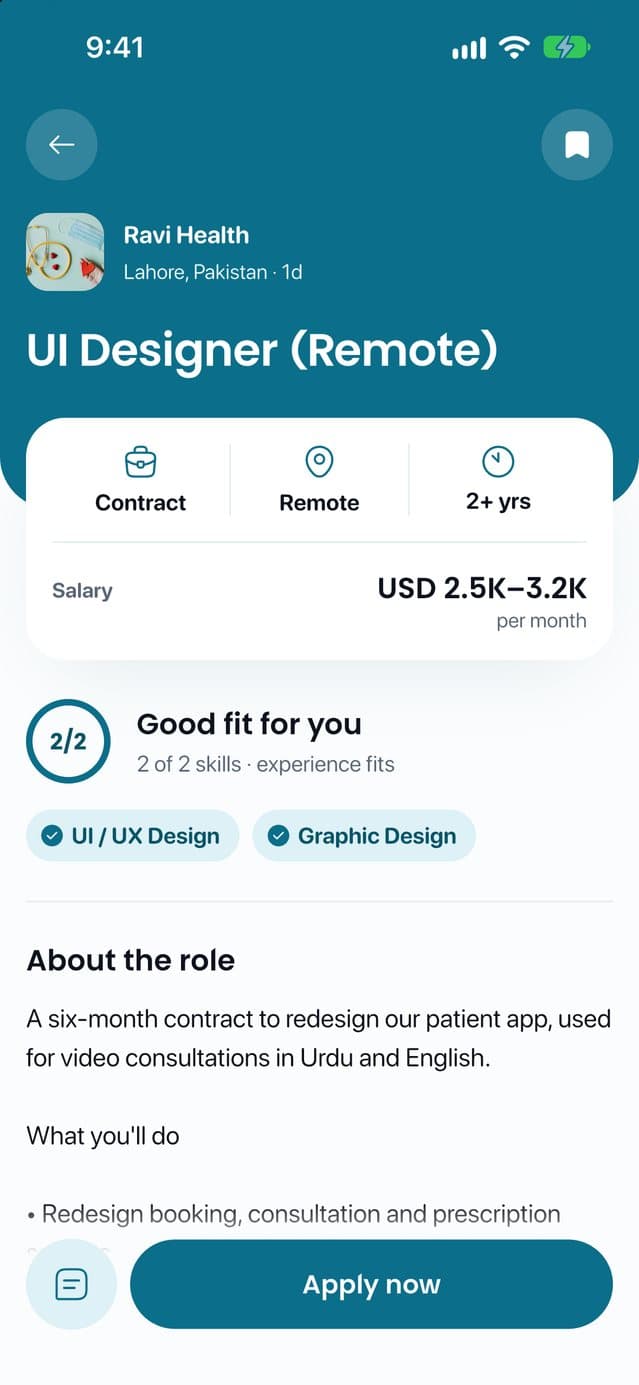
Show the fit before the seeker applies
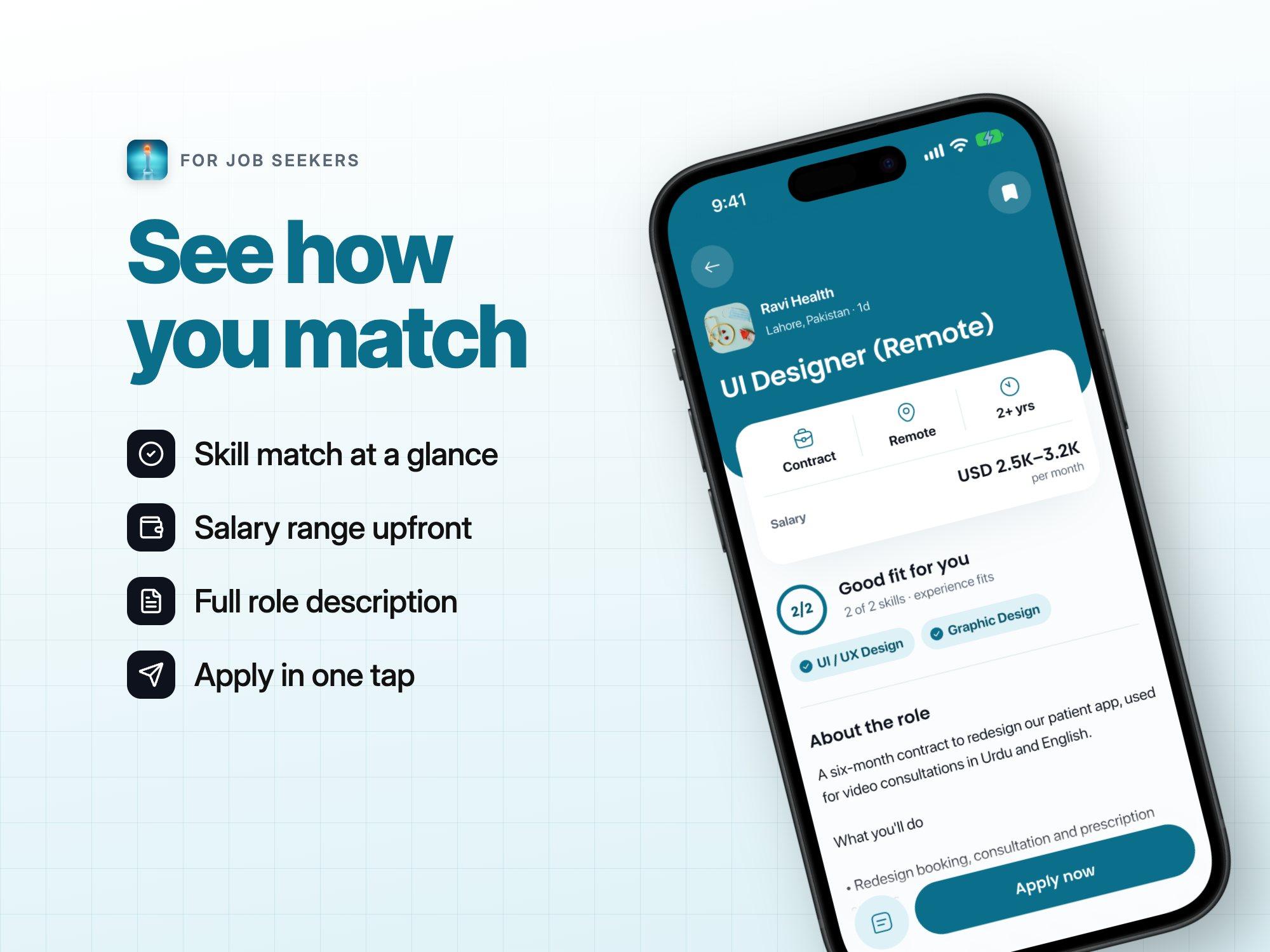
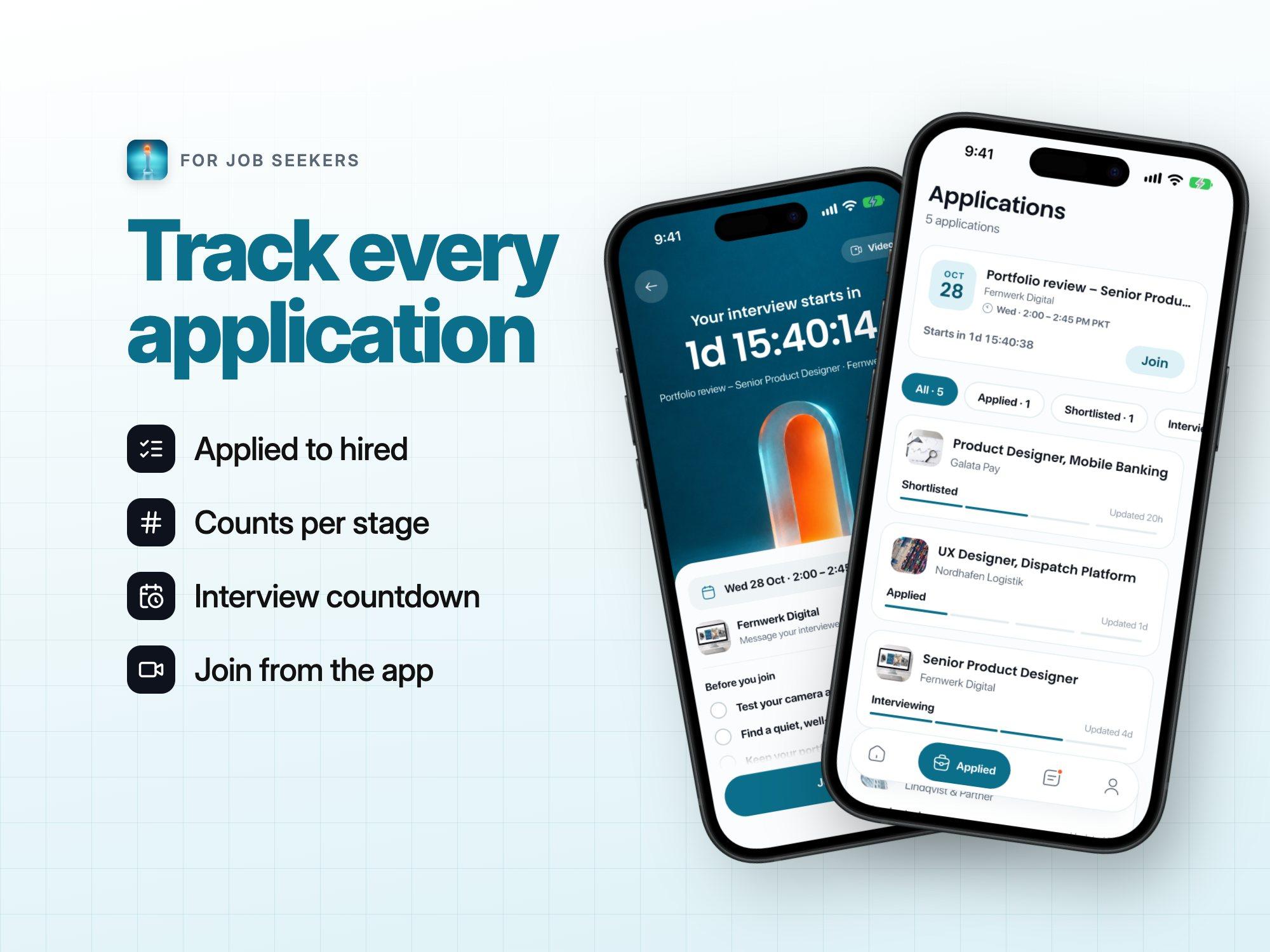
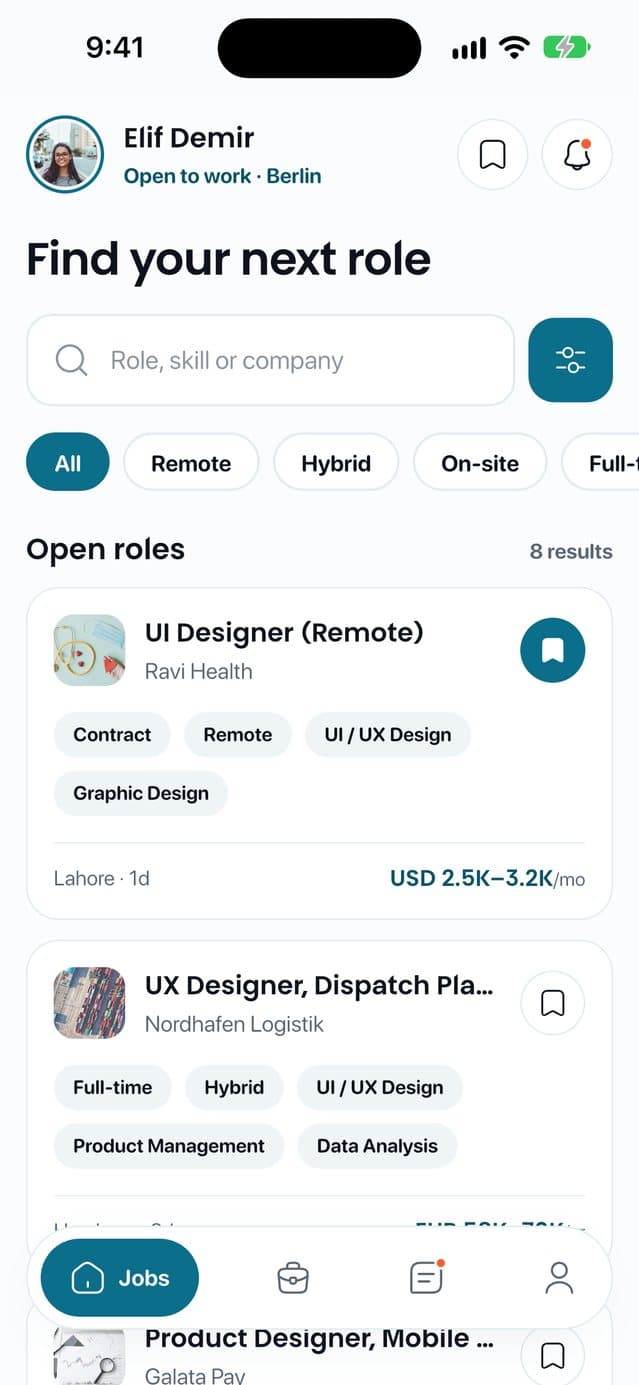
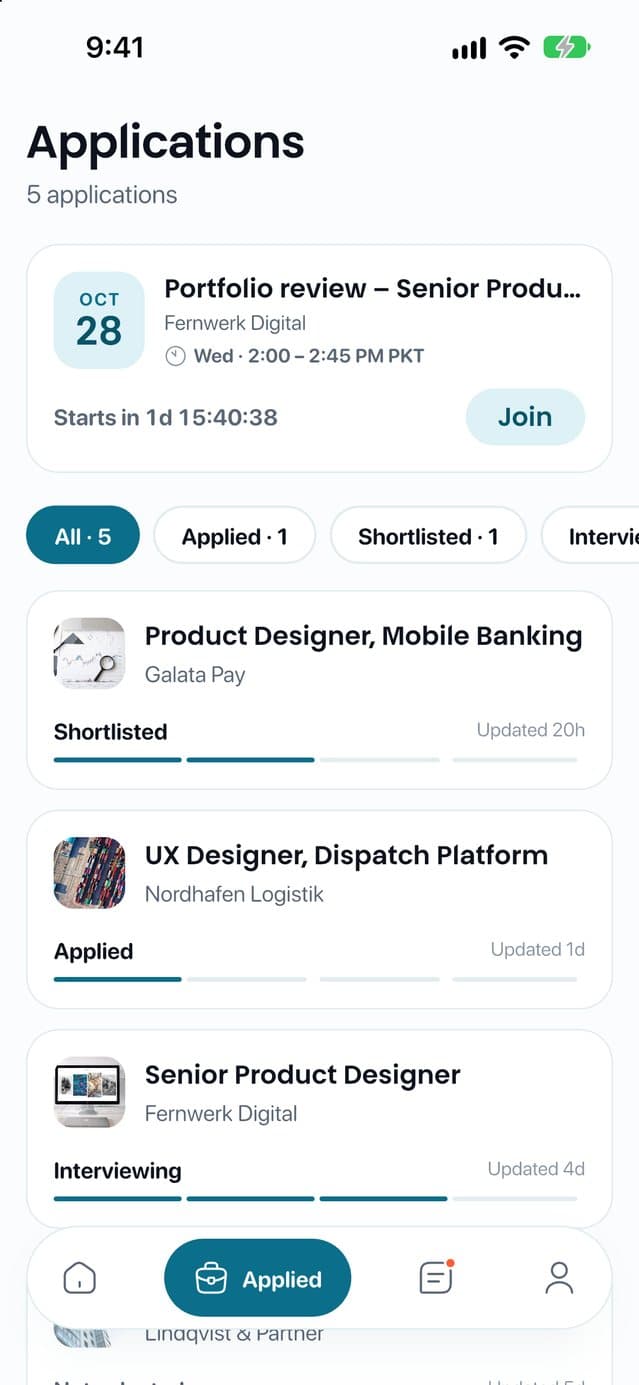
Every job shows how many of its skills the seeker already lists, such as four of five, next to the salary range with its currency and period. Applying is one sheet with an optional cover note, and from then on the application lives on a stage rail: Applied, Shortlisted, Interviewing, Hired, or Not selected and Withdrawn.
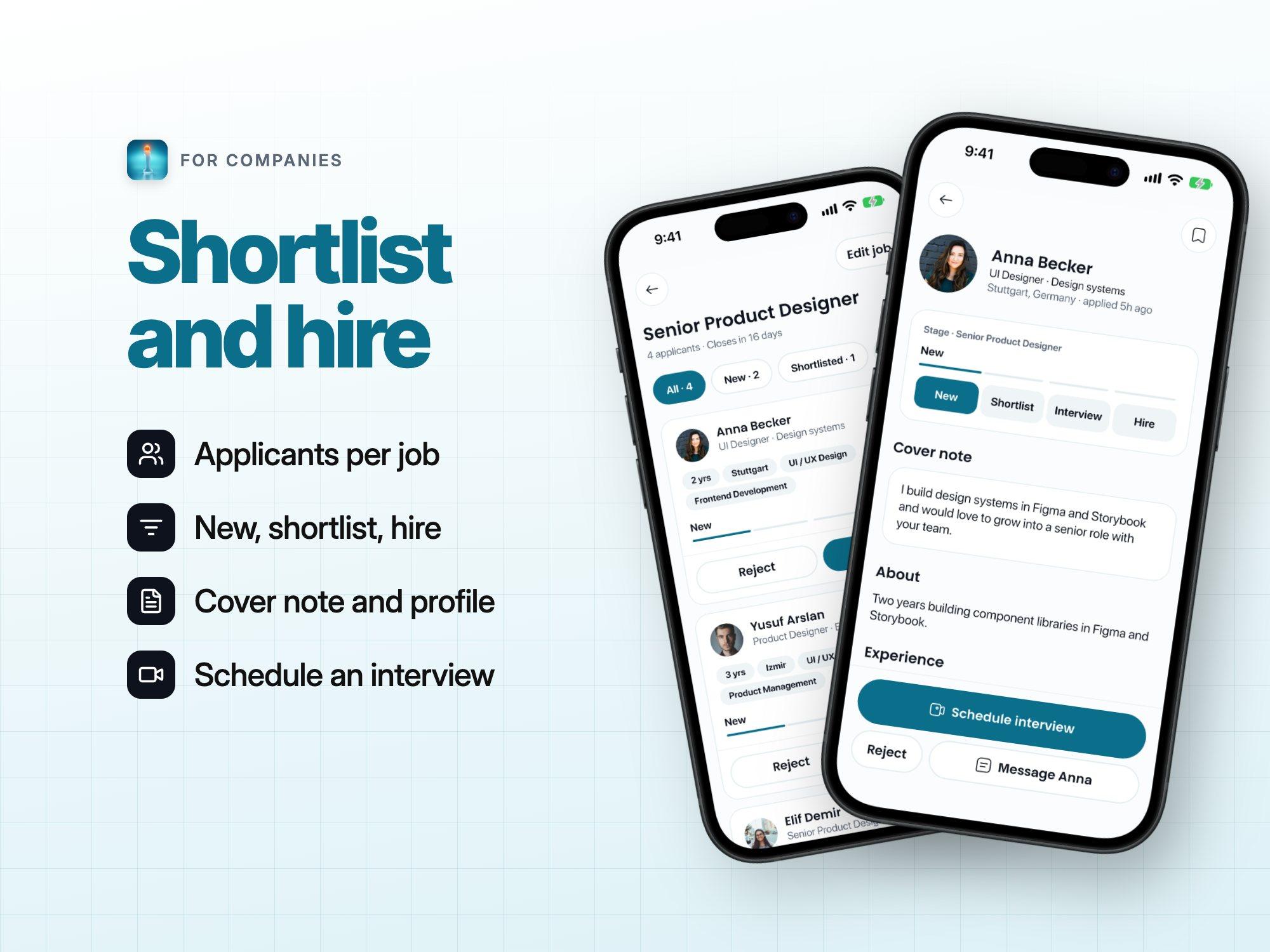
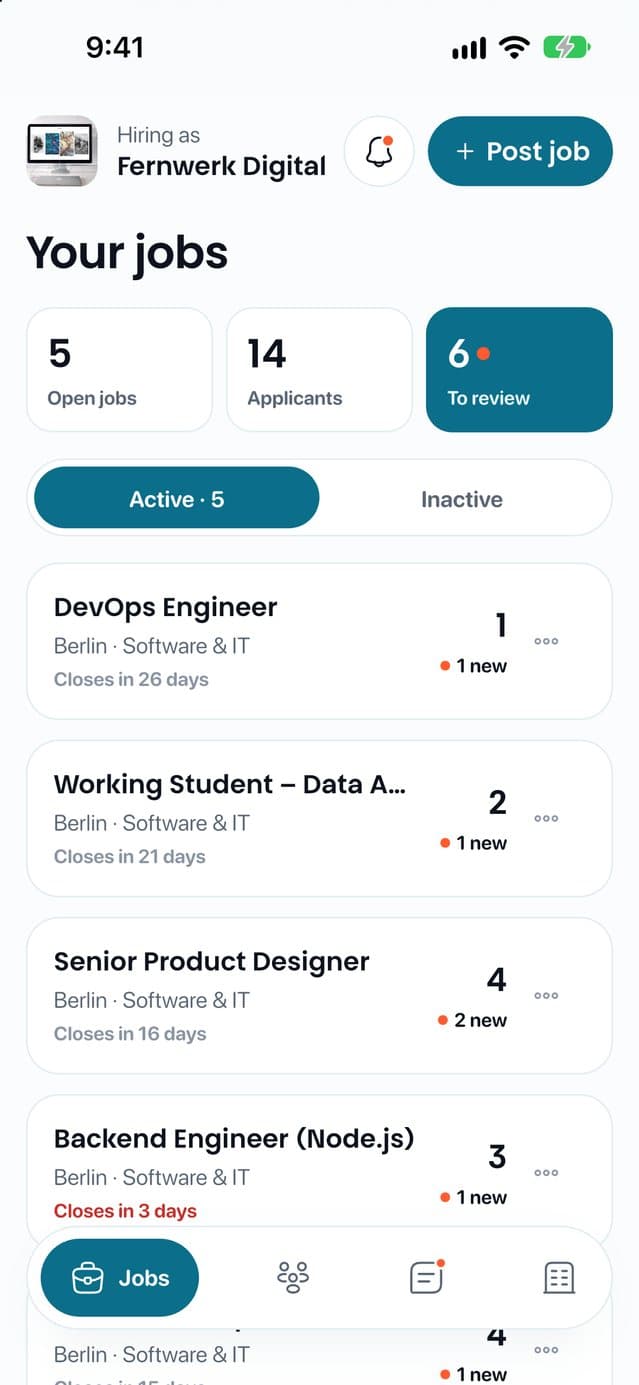
The company sees the same rail from the other side, one pipeline per job, and moves each applicant from stage to stage. Both sides always agree on where an application stands.
Design
The interview is a screen in the app, not an email
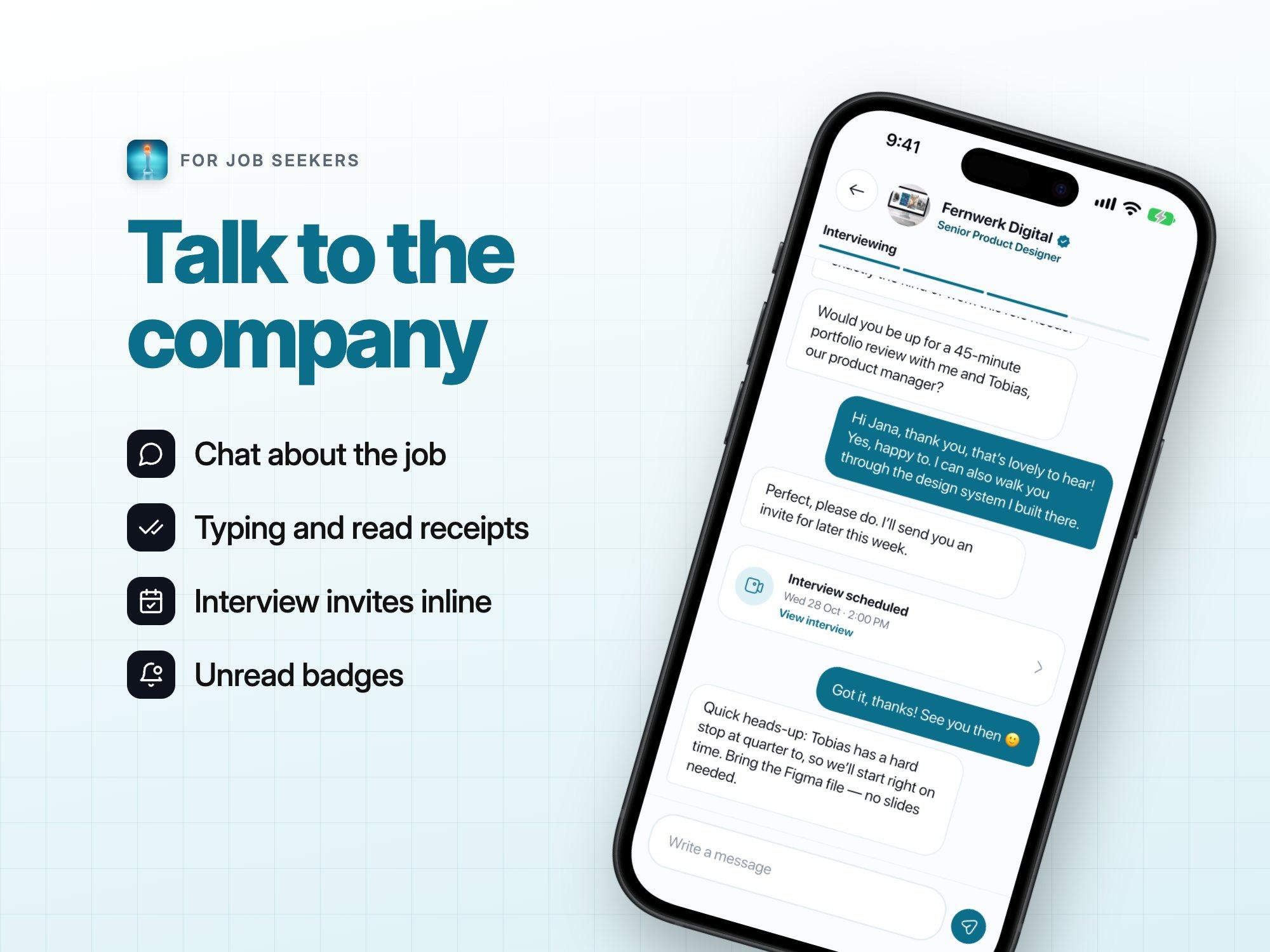
When a company schedules, reschedules or cancels a Zoom interview, it appears in the chat, in the activity feed and on an interview screen with a countdown and a Join button. The seeker's applications tab opens with the next interview at the top.
Calm ocean teal carries the structure and a single hot orange is kept for anything new: an unread dot, a fresh applicant, a ring around what needs attention. The interface runs in four languages, switchable from a globe menu, with Urdu set right to left in Noto Nastaliq.
Build
A chat that survives a bad connection
Chat between a company and a seeker is tied to one job and runs over Socket.IO, with unread badges, online status, typing and read receipts. Every message carries a client id reused as an idempotency key on retry, so a resend never doubles it, and after a reconnect the thread merges the newest page while the inbox and badge re-read.
Behind it, a NestJS and MongoDB backend issues JWT access and refresh tokens, creates Zoom meetings through server-to-server OAuth, sends email through Resend and push through Firebase Cloud Messaging, and hands out pre-signed upload URLs for avatars, logos and CVs. A push banner is held back when its chat thread is already open.
Result
A hiring desk in a company's pocket
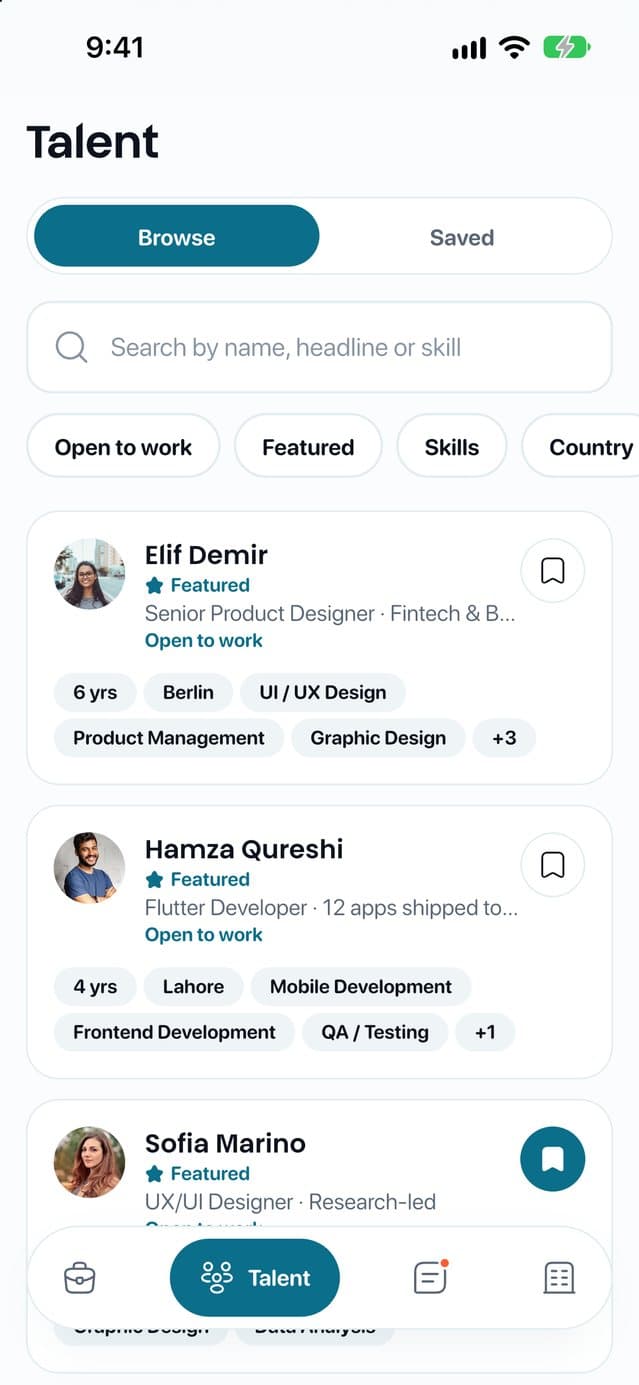
A company opens on its jobs with open roles, applicants and how many are still to review, and can post, edit, pause or delete a job through a multi-step form. Talent search filters the pool by skills, country, qualification, open to work and Featured, and a saved candidate keeps a private note.
The app is built and has not been published in the app stores. No usage figures are published here, because none have been measured for this site.
Inside the app
Real screens, demo data
06Book a call
Building something like this?
Book thirty minutes and we'll tell you quickly whether we're the right team for it, and roughly what it takes.
- 01You pick the slot
- 02Bring anything you have
- 03We come prepared
Your idea stays yours. Read only by the people who would build it, never reused, never passed on. Happy to sign your NDA first.
Pick a time. We'll tell you what it takes.
Thirty minutes, no pitch deck. Bring a rough idea or a finished spec, and leave with a straight answer on scope, cost and whether we're the right team.
- 01You pick the slotA live calendar, not a queue. Most people find something inside forty-eight hours.
- 02Bring anything you haveA spec, a Figma link, screenshots, a competitor you like, or nothing at all.
- 03We come preparedWe read whatever you send beforehand, so the call starts at the interesting part.
Your idea stays yours
- What you share stays between you and the people on your project.
- We never reuse your concept, your research or your materials elsewhere.
- Happy to sign your NDA before the call, or send ours.
We read every brief and reply within 60 minutes.
Prefer to write? with your files instead, or email abdullahmughal1976@gmail.com.