Mobility
Der Pendler
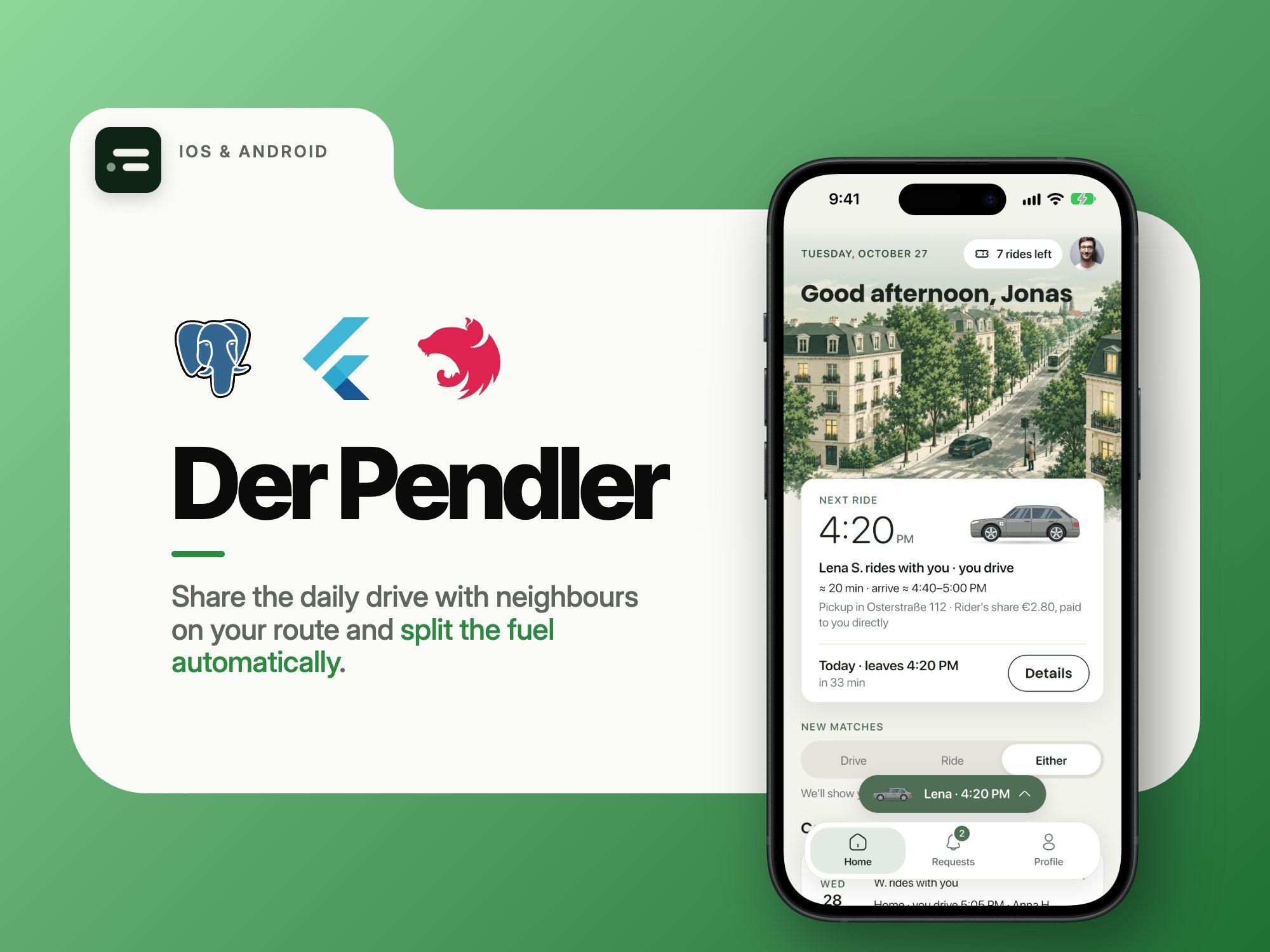
A carpool for the daily commute, matched by route and confirmed with a code at pickup
- Industry
- Mobility
- Product type
- Mobile application
- Period
- Sep, Oct 2026
- Platforms
- iOS, Android
- Services
- Cross-platform ApplicationsBackend Systems
- Technology
- Flutter · Dart · BLoC/Cubit · GoRouter · Dio · GetIt · Hive · Mapbox · Firebase · NestJS · TypeScript · PostgreSQL · Drizzle
Der Pendler matches people who drive or ride the same way to work. Each commuter sets a home area, a work area, days and a time window once; the app finds neighbours on overlapping routes, splits the fuel automatically, and has both people swap a four-digit code at pickup before the ride starts. It is built for Germany, in German and English, and is not yet in the app stores.
- What we did
- Built the Flutter app for drivers and riders, in German and English, with Mapbox maps and real commute roads, and the NestJS and PostgreSQL backend behind it: matching, ride credits and the pickup check.
- Outcome
- Built, not yet in the app stores. A commute set up once, matches that show the cost and the car before anyone asks, and a pickup both people confirm.
Draft write-up. The product and the screens are real; this account of the work is a draft awaiting review by the team who built it, and by the client.
The problem
The same drive every day, with empty seats
A commute repeats. The same road at the same hour, five days a week, often alone, while someone a few streets away makes the same trip. Ride-sharing apps built for one-off journeys make both of them search again every day for something that never changes.
Two strangers sharing a car also need to agree on money without haggling, and to know at the kerb that they are getting into the right car with the right person.
The approach
Match areas and roads, never home addresses
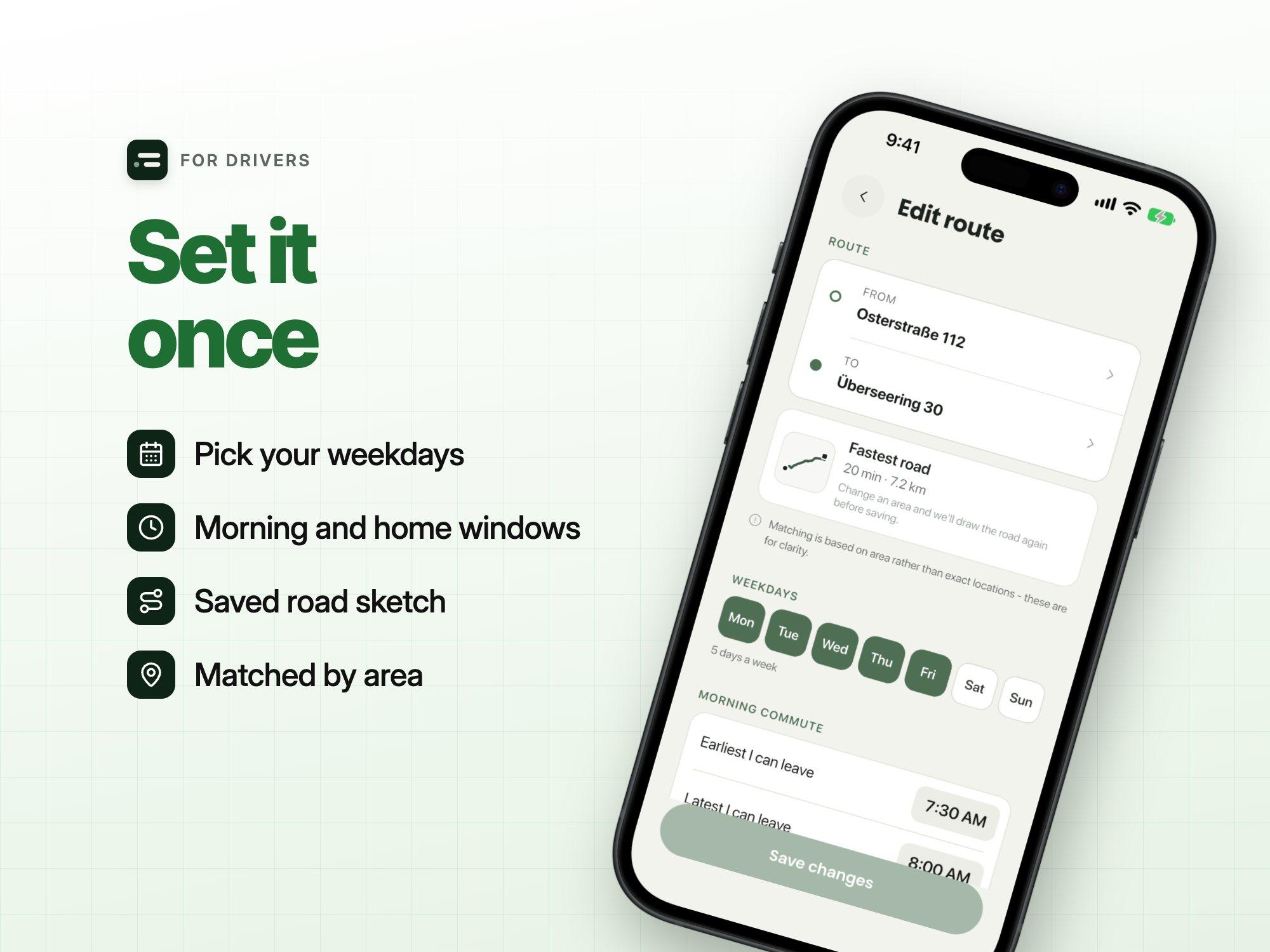
Each commuter picks a home area and a work area on a full-screen Mapbox map, by searching a district, a landmark, an address or a postcode, which resolves to the district around it, or by using their location. A radius from 0.5 to 5 km sets how far a match may be. Matching works on those areas, never on an exact home address.
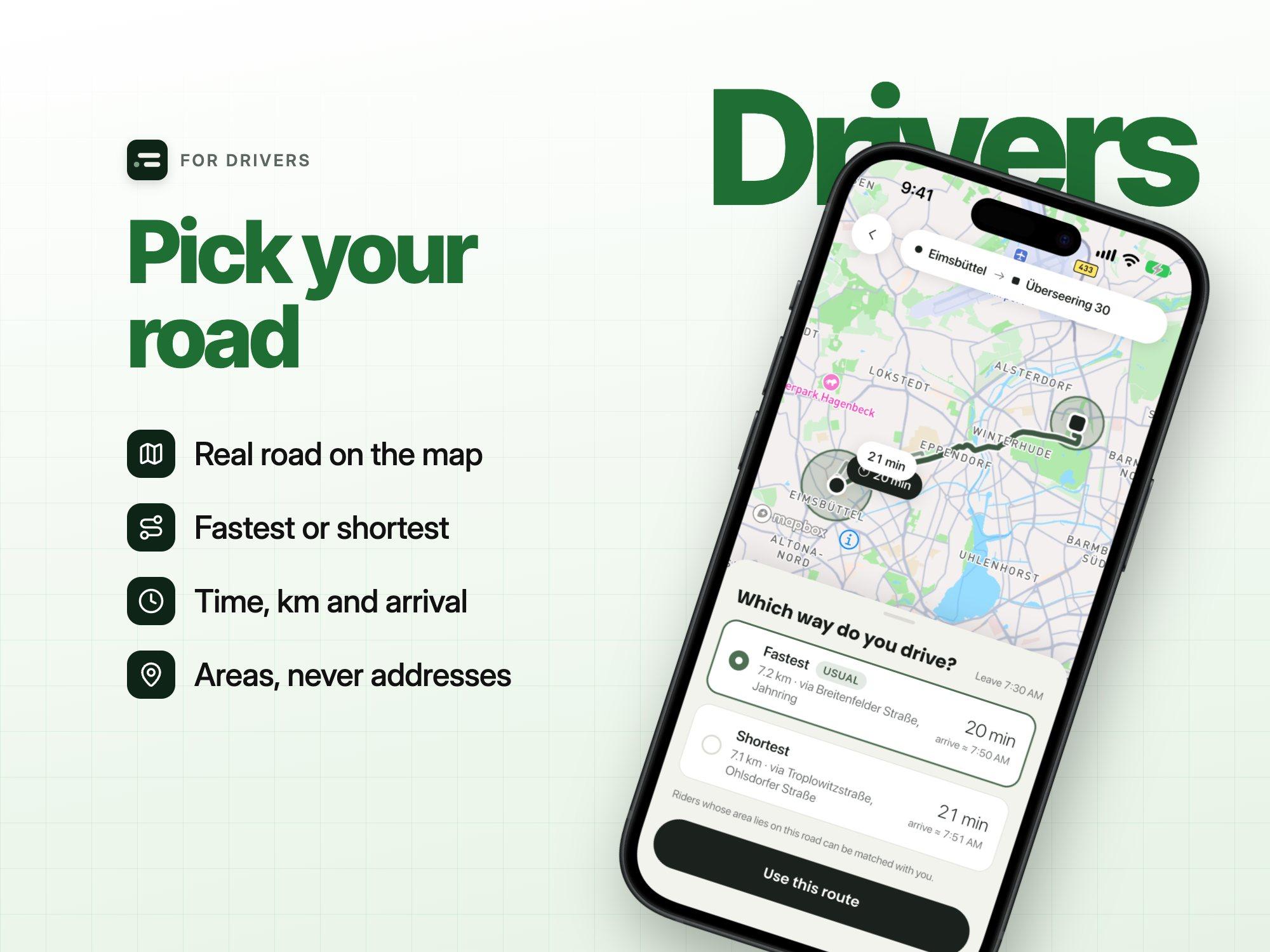
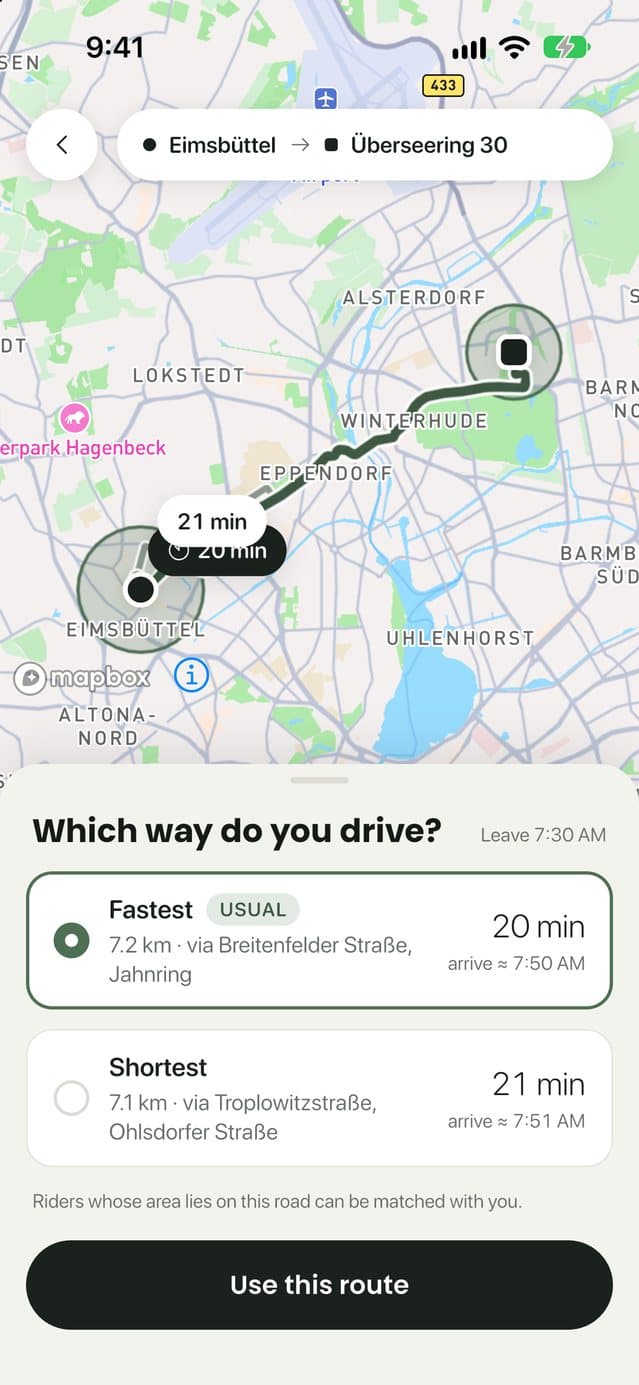
Once both areas are set, the app draws the real road between them, and a driver chooses the fastest or the shortest one, with the time, the distance, the streets it runs through and the arrival time. Riders whose areas lie along that road can then be matched with the driver.
Design
Everything needed to say yes, shown before anyone asks
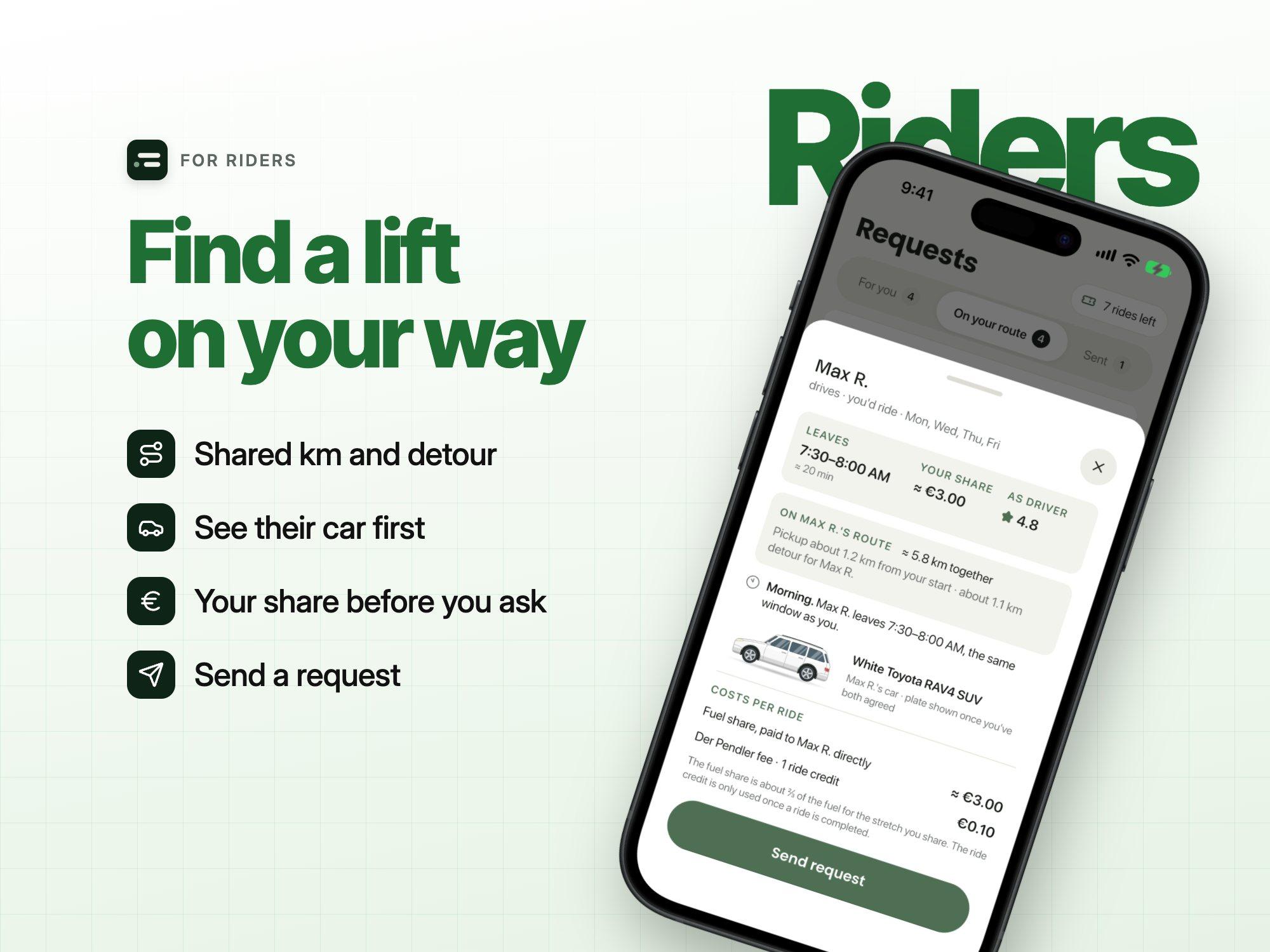
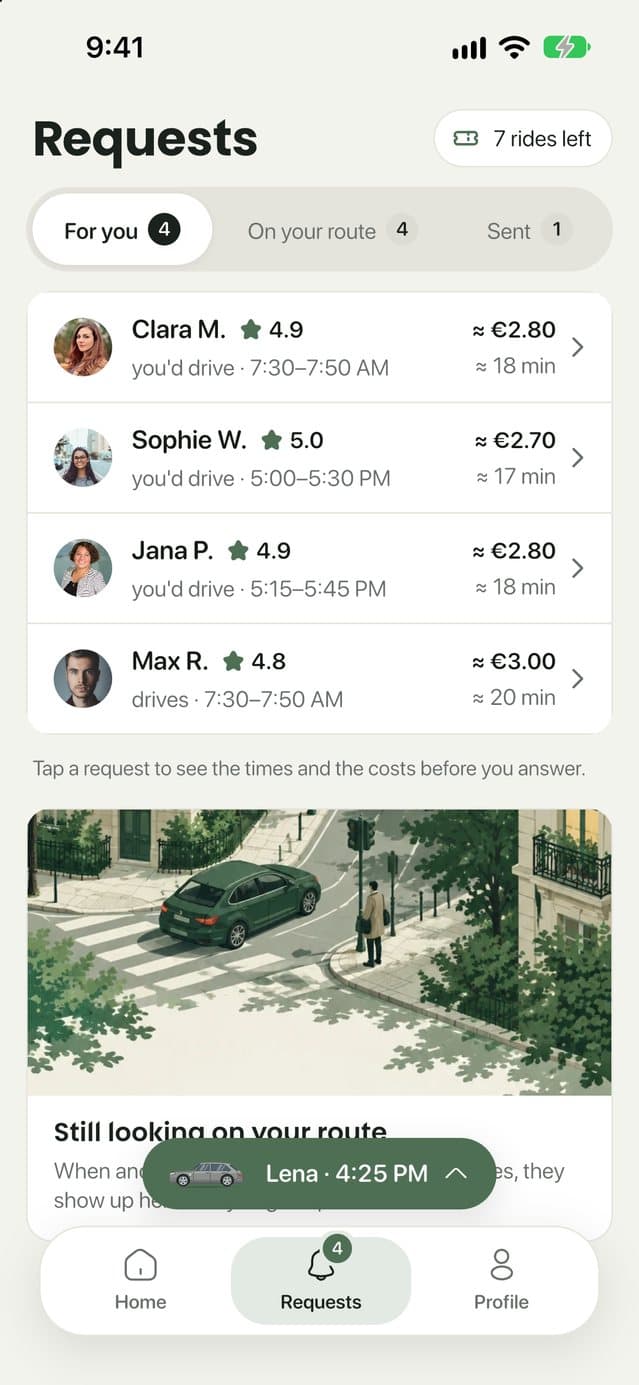
Requests sit in three tabs: for you, on your route and sent. Each card shows the other commuter's rating for the role they would play, their time window, the fuel share and the minutes spent together. Opening one shows the shared distance, the detour, their car and a full cost breakdown, with accept, decline or send request at the bottom.
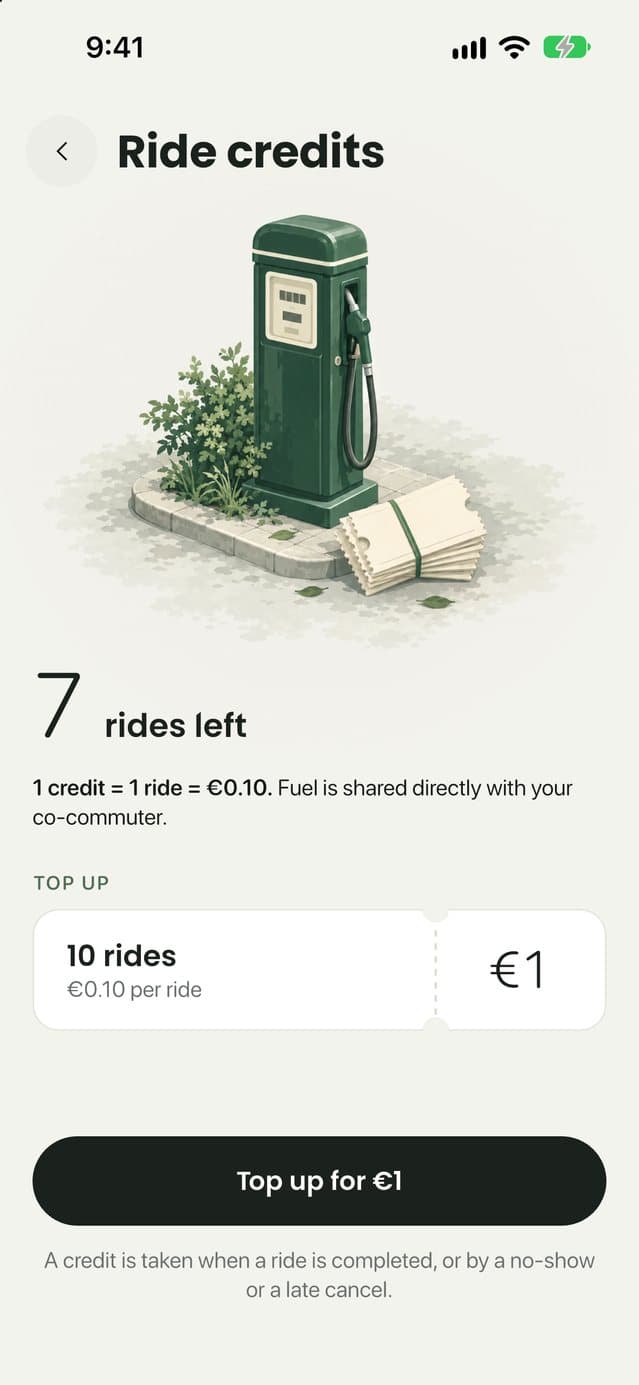
The money is settled by rule, not by conversation. The rider covers about two thirds of the fuel for the shared stretch and pays the driver directly, and the platform takes one ride credit, worth €0.10, when a ride is completed, missed or cancelled late. Every commuter carries separate ratings as a driver and as a rider, and can switch between driving, riding or either.
Build
A pickup that both people confirm
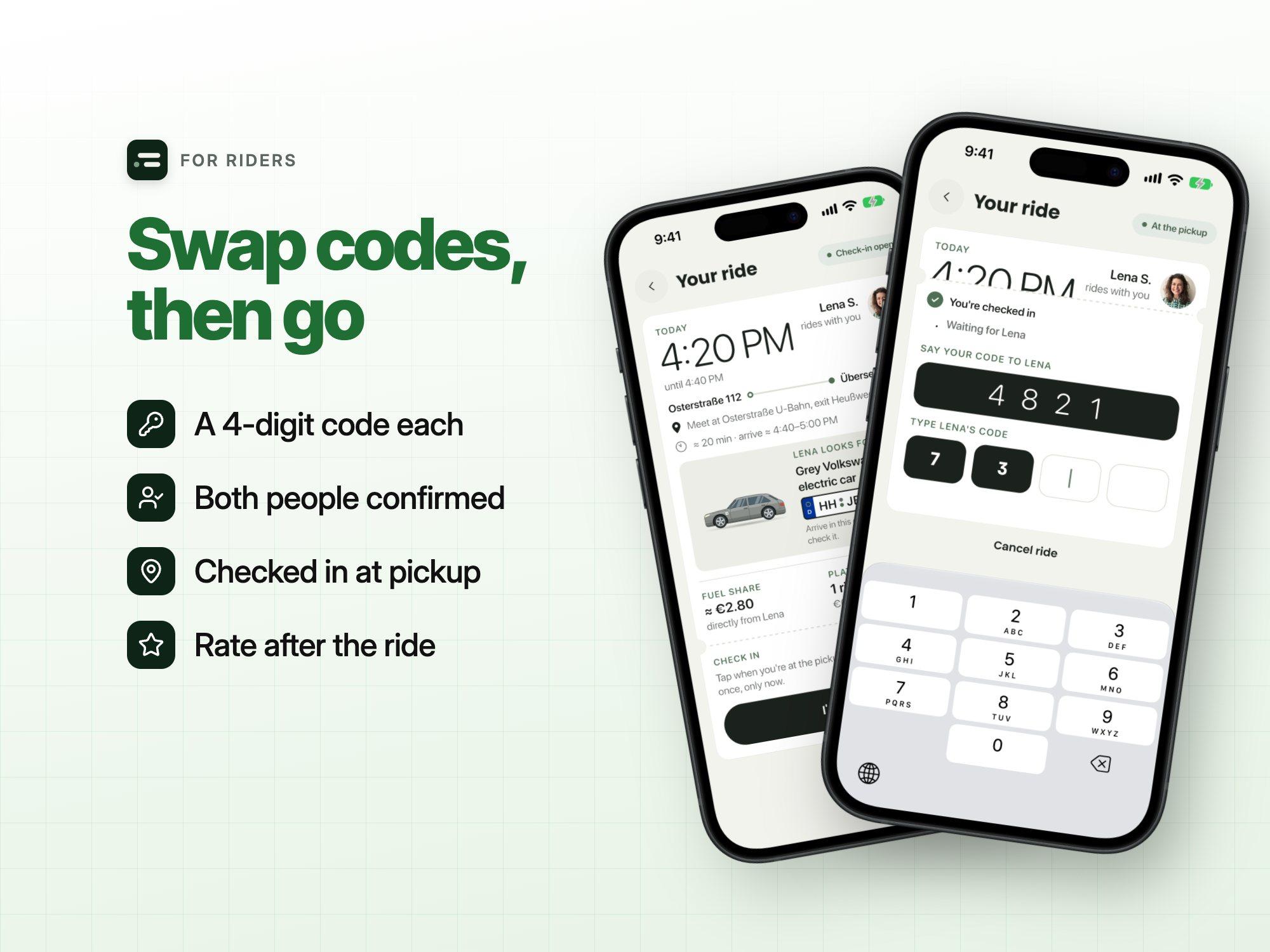
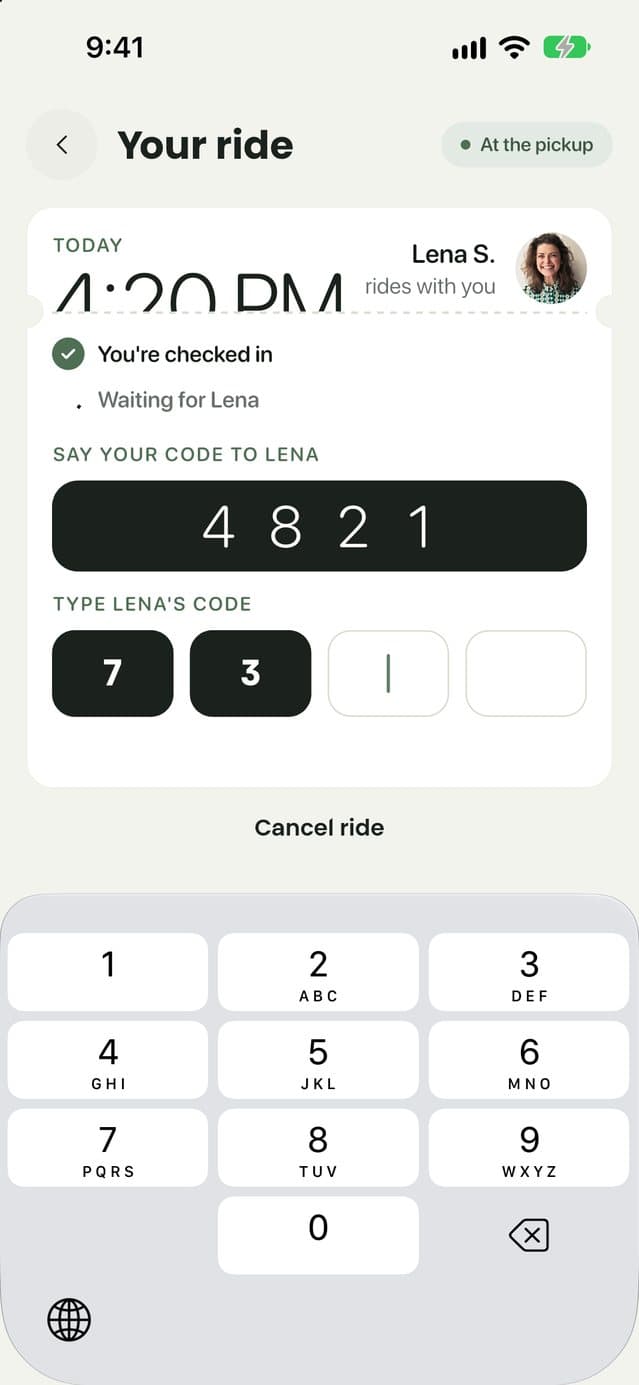
When the pickup window opens, I'm here takes one fresh location fix at the meeting point. Then each person shows their own four-digit code and types the other's. The other person's code is never sent to the device, and the sheet checks with the server every three seconds until it marks the ride as active.
The Flutter app follows Clean Architecture with Cubits and a tabbed GoRouter shell, with Mapbox for maps and geocoding. Sign-in is a six-digit email code, Apple or Google, with no password. Behind it, a NestJS and PostgreSQL backend with Drizzle handles matching, credits and the pickup check, and Firebase pushes new matches and requests that open on the right screen.
Result
A ride pass that says which car to get into
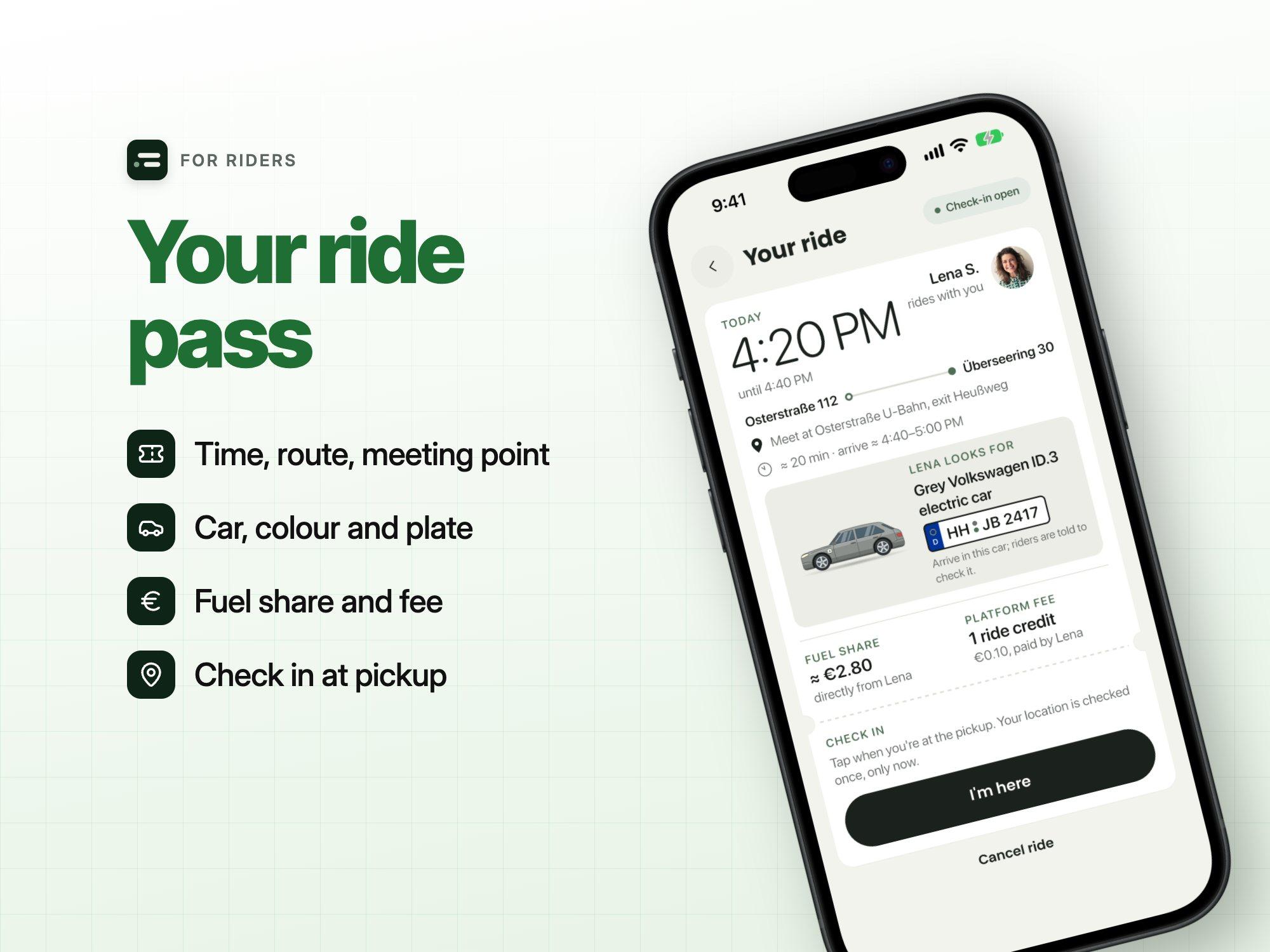
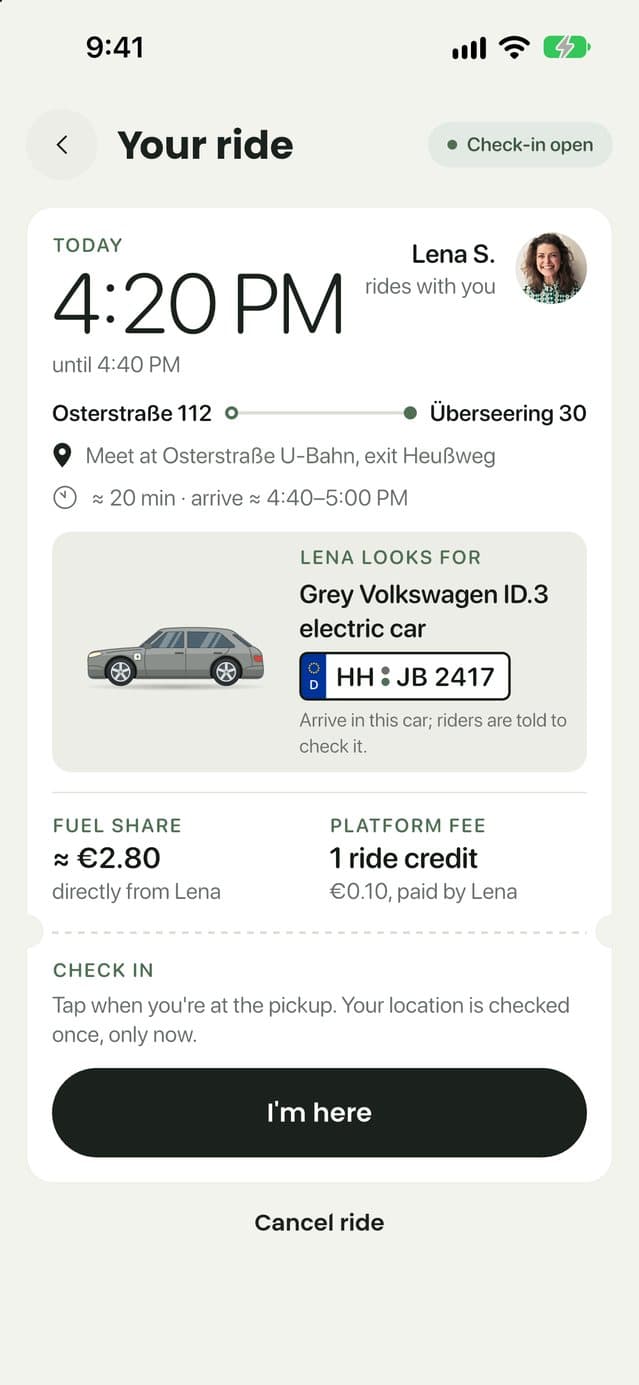
Each ride gets a pass styled like a ticket: the time, the other commuter, the route, the meeting point, the car to look for by make, colour and plate, the fuel share and the platform fee. Missed rides, cancellation reasons with a penalty for late cancels, a way to contest, and a one to five star rating afterwards close the loop.
Der Pendler is built and is not yet in the app stores, so this describes what was made rather than how it is used. No usage figures are published here, because none have been measured for this site.
Inside the app
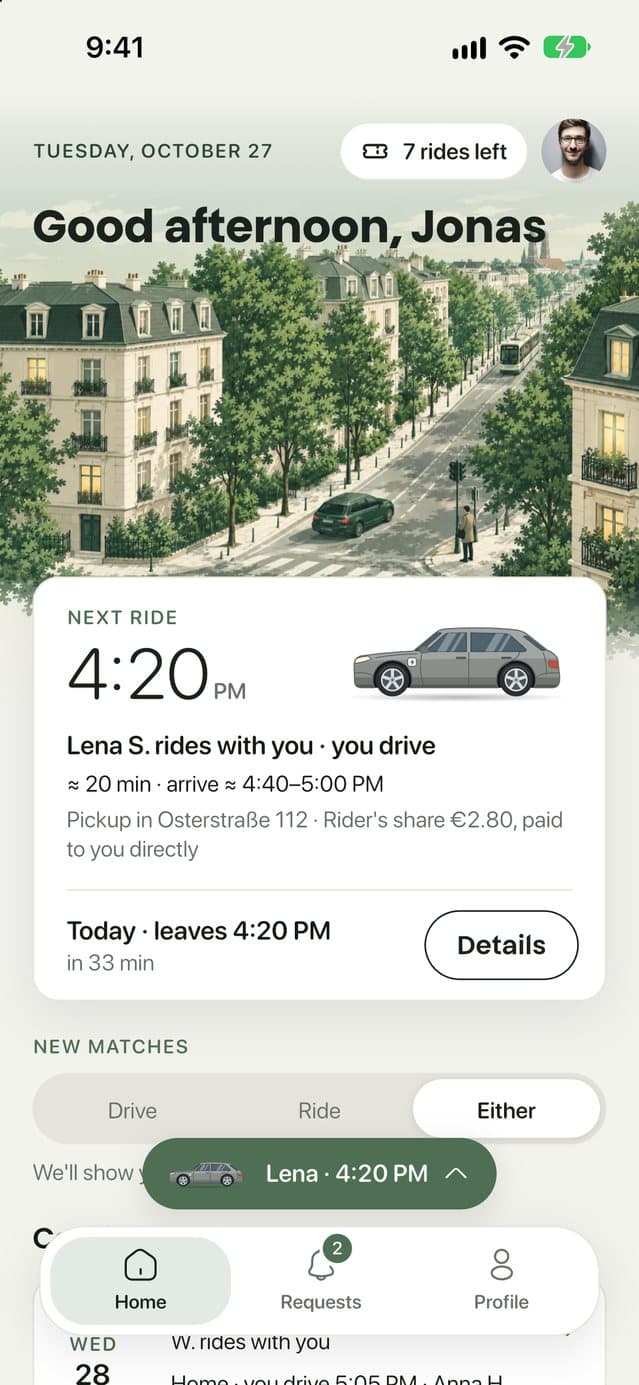
Real screens, demo data
06Book a call
Building something like this?
Book thirty minutes and we'll tell you quickly whether we're the right team for it, and roughly what it takes.
- 01You pick the slot
- 02Bring anything you have
- 03We come prepared
Your idea stays yours. Read only by the people who would build it, never reused, never passed on. Happy to sign your NDA first.
Pick a time. We'll tell you what it takes.
Thirty minutes, no pitch deck. Bring a rough idea or a finished spec, and leave with a straight answer on scope, cost and whether we're the right team.
- 01You pick the slotA live calendar, not a queue. Most people find something inside forty-eight hours.
- 02Bring anything you haveA spec, a Figma link, screenshots, a competitor you like, or nothing at all.
- 03We come preparedWe read whatever you send beforehand, so the call starts at the interesting part.
Your idea stays yours
- What you share stays between you and the people on your project.
- We never reuse your concept, your research or your materials elsewhere.
- Happy to sign your NDA before the call, or send ours.
We read every brief and reply within 60 minutes.
Prefer to write? with your files instead, or email abdullahmughal1976@gmail.com.