Travel
Layali
One booking request to five holiday stays, and the first host to say yes gets it
- Industry
- Travel
- Product type
- Mobile application
- Period
- October 2026
- Platforms
- iOS, Android
- Services
- Cross-platform ApplicationsBackend Systems
- Technology
- Flutter · Dart · BLoC/Cubit · GoRouter · Dio · GetIt · Hive · Socket.IO · Stripe · Mapbox · Firebase · NestJS · MongoDB · Amazon S3
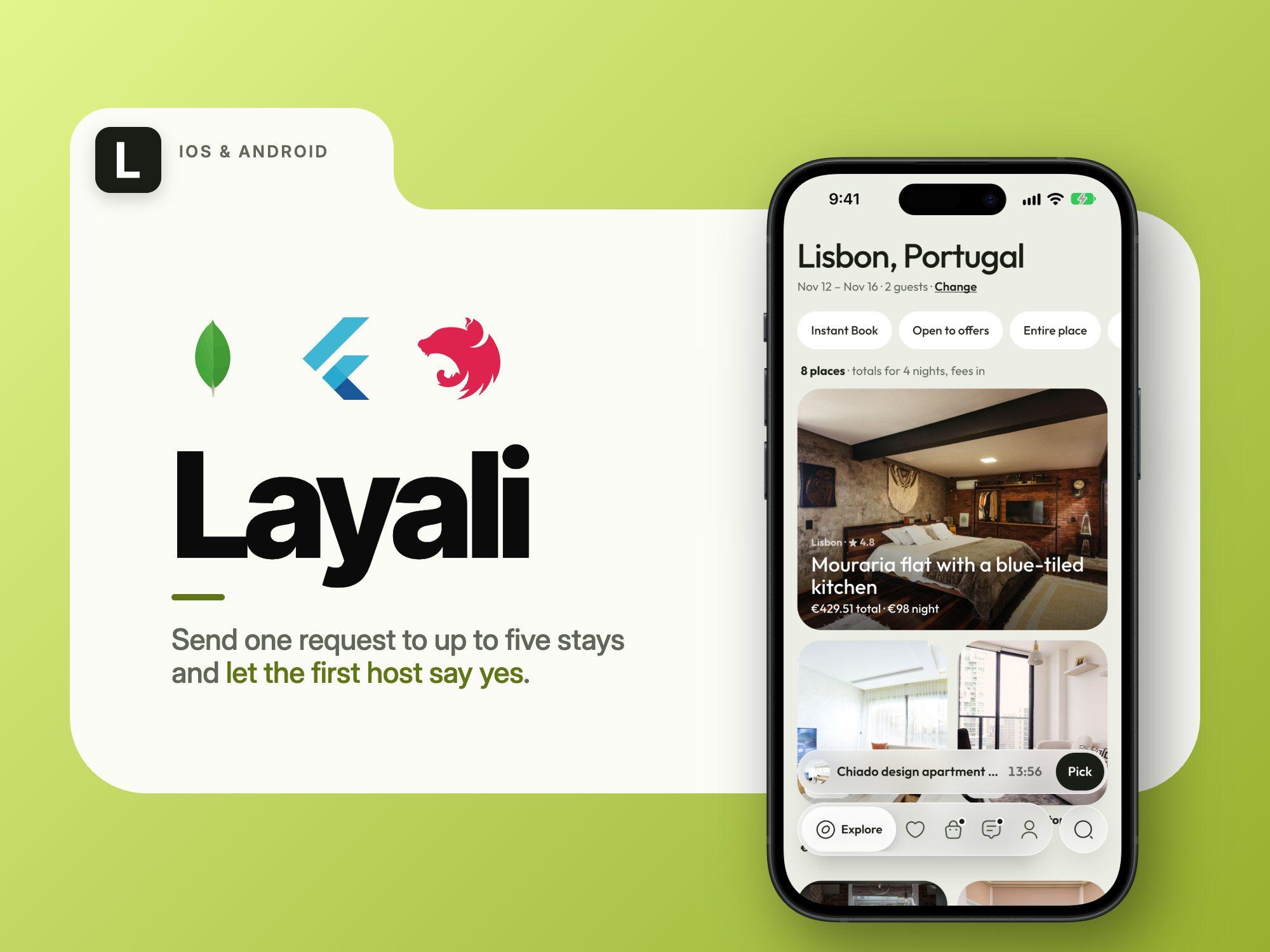
A short-stay rental marketplace for Europe. A guest picks up to five places for the same dates and sends them one request; hosts accept, decline or counter with their own nightly price, and the first host to say yes gets the booking. The same account switches between travelling and hosting, with chat, payments and payouts built in. Layali is built and not yet in the app stores.
- What we did
- Built the Flutter app for guests and hosts, in English and Spanish, and the NestJS and MongoDB backend behind it: multi-place requests, counter offers, real-time chat, Stripe payments and Stripe Connect payouts.
- Outcome
- Built, not yet in the app stores. A guest sends one request instead of five, and a host answers, counters or declines it from the same app they book with.
Draft write-up. The product and the screens are real; this account of the work is a draft awaiting review by the team who built it, and by the client.
The problem
Booking a short stay means asking one host at a time
Where a host has to approve each stay, a guest asks one place, waits, hears no or nothing, and starts again with the next. Every round costs a day, and the dates that worked at the start of the week are gone by the end of it.
Price is the other half of the back and forth. A guest who would book at a slightly lower rate has no clean way to say so, and a host who would accept one has no clean way to offer it.
The approach
Ask five places at once and let the first yes win
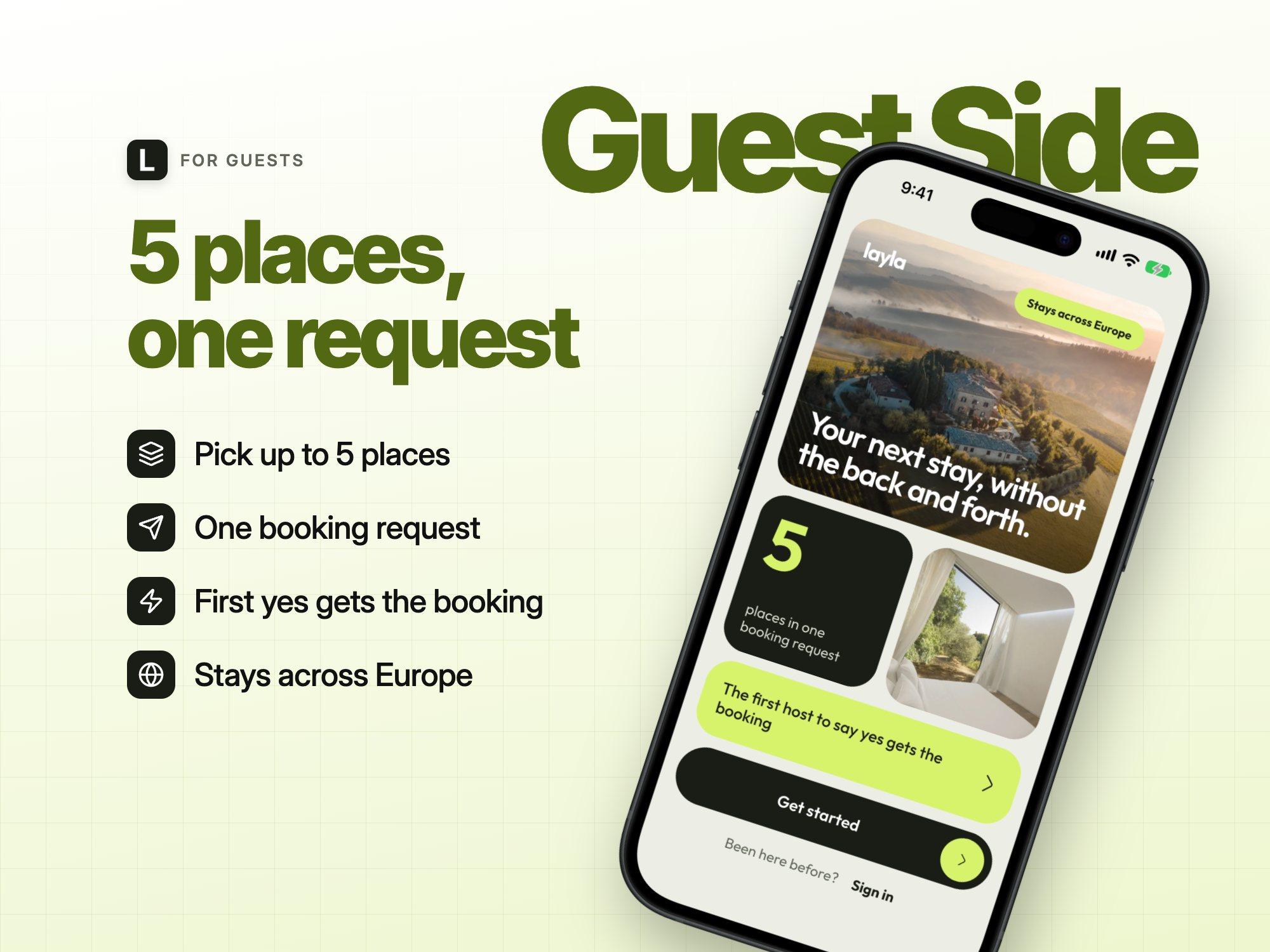
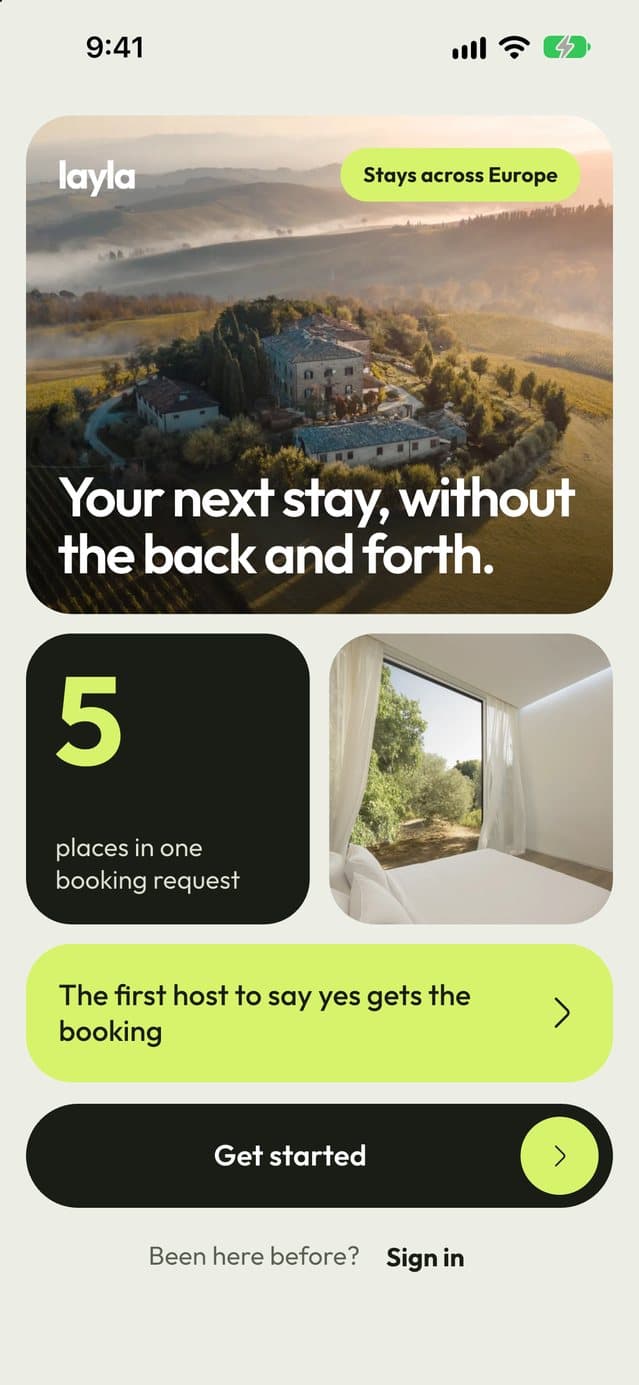
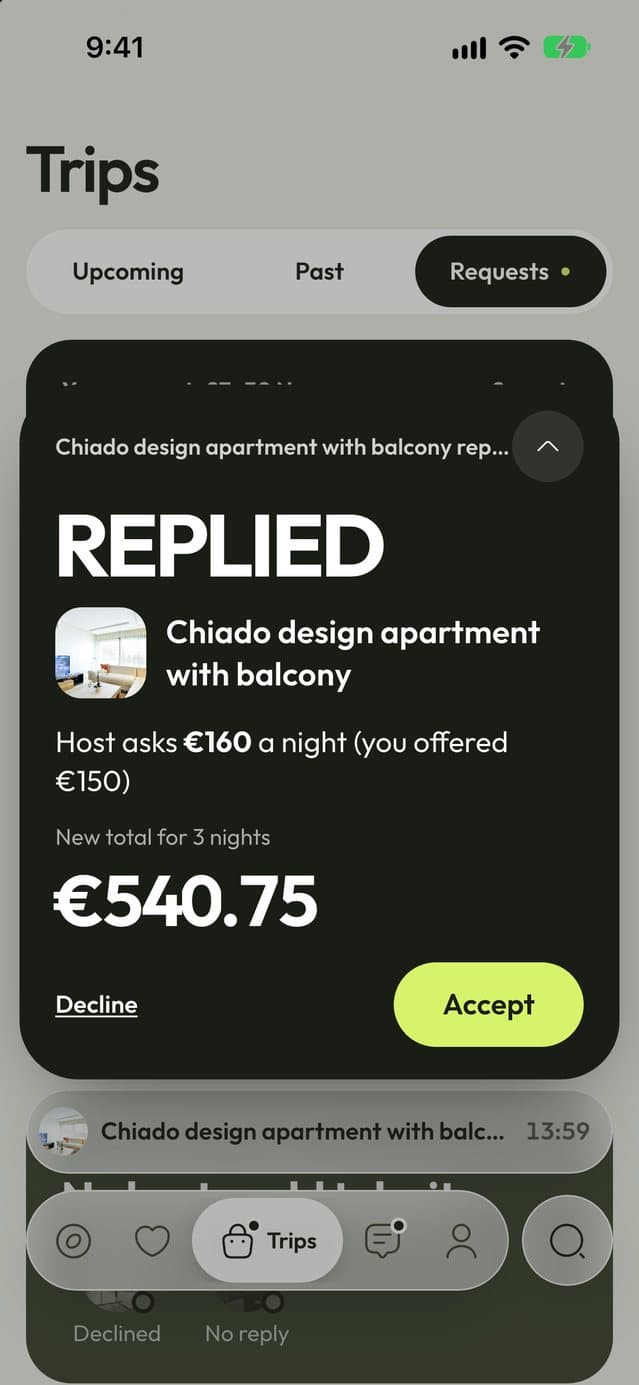
A guest adds up to five places to an ask list and sends one request for the same dates. A live countdown shows how long hosts have to answer, each place shows whether it is waiting, has replied, sent an offer, booked or declined, and the first host to accept gets the booking.
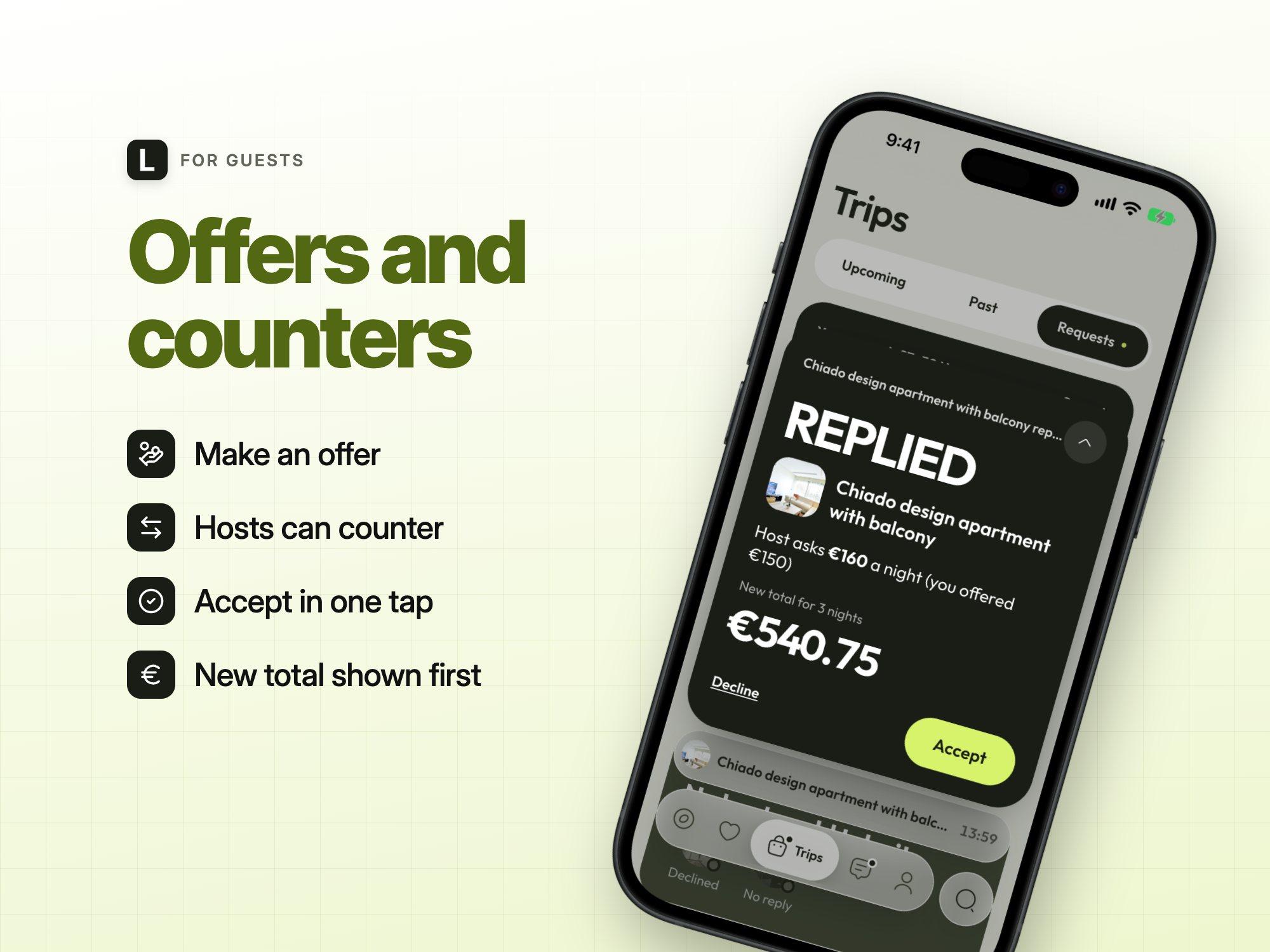
Price can move in both directions. A guest can make an offer from a listing, a host can counter with a different nightly price, and the guest sees the new total first and accepts or declines it in one tap.
Design
The real price, shown before anyone commits
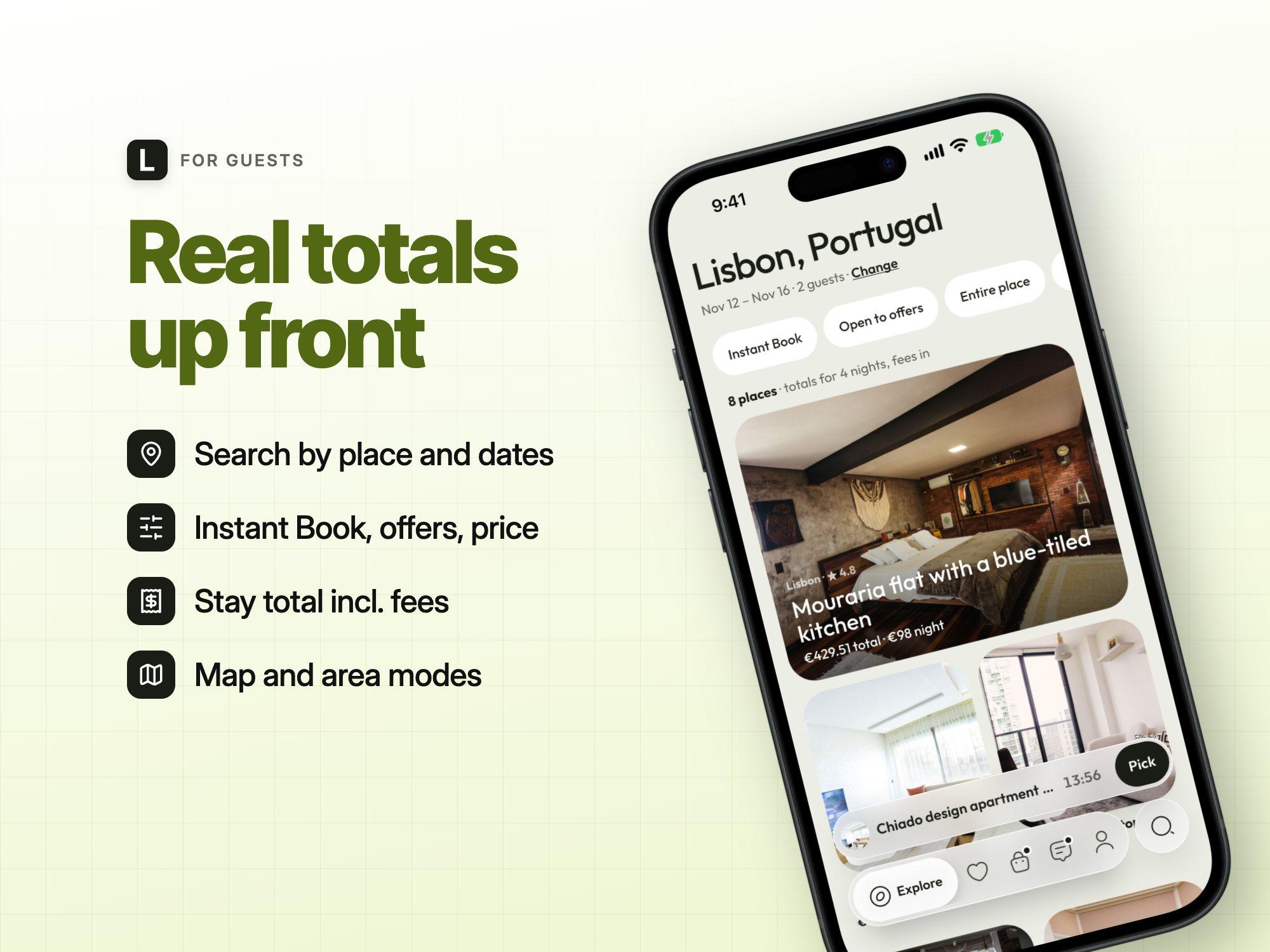
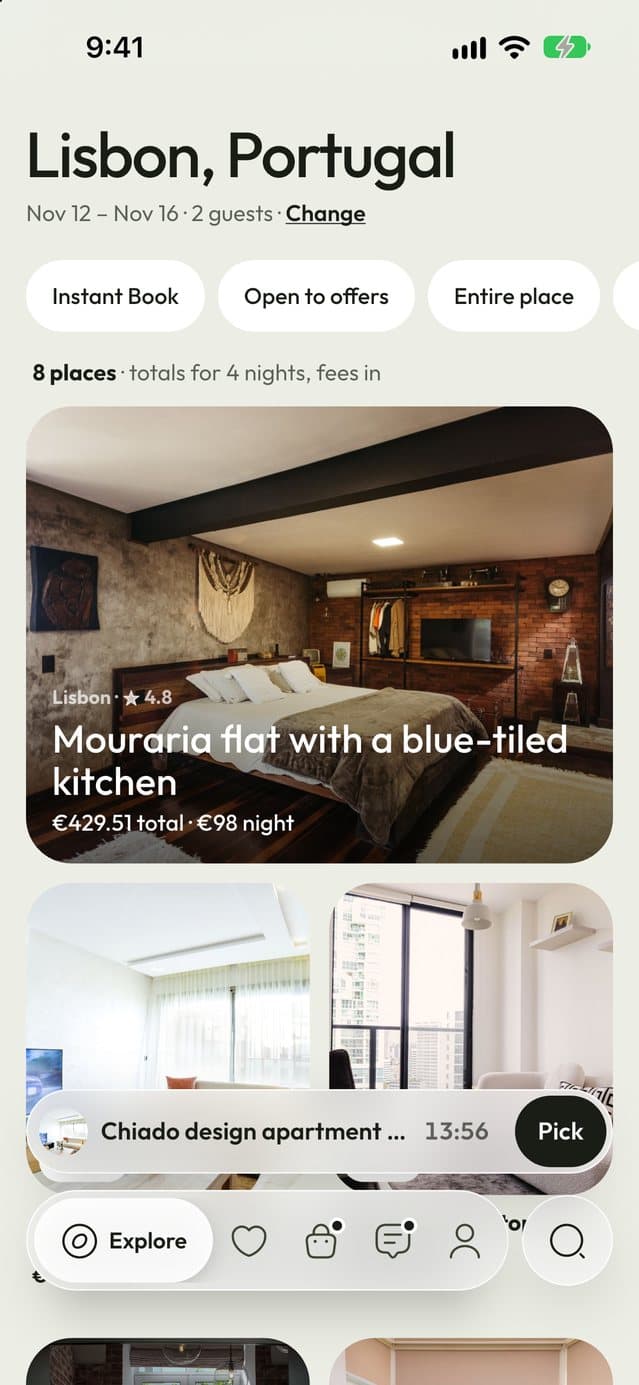
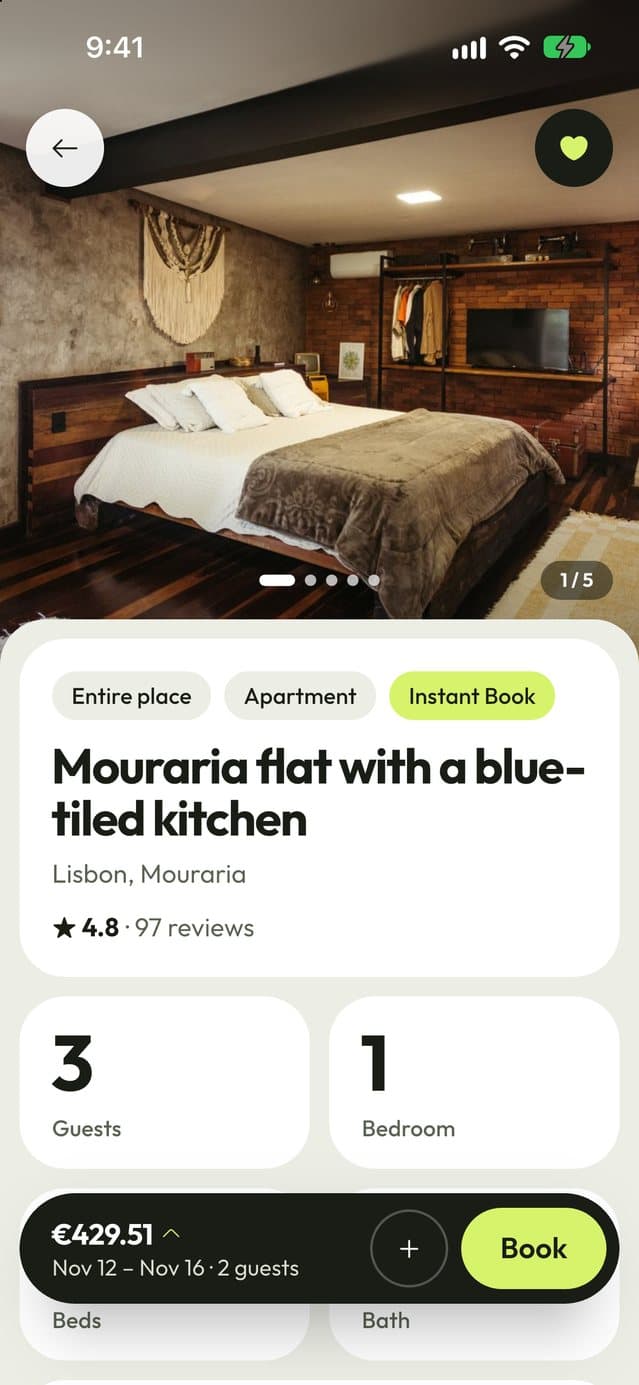
Search runs by place and dates, with map and area modes and filters for Instant Book, places open to offers, entire places, price, rooms and amenities. Every result shows the total for the whole stay with fees included, not a nightly rate that grows at checkout.
A listing carries its gallery, a guest rating broken into six areas, the reviews behind it, house rules and the cancellation policy, with a live quote in the Book bar. Guests keep places in wishlists with cover photos, and either side can report or block the other.
Build
Requests, money and messages kept in one place
The Flutter app follows Clean Architecture with Cubits, caches each user's data in Hive, refreshes its session through Dio, and ships in English and Spanish. Sign-in covers email and password, an email code, Google and Apple, and place search runs on Mapbox geocoding.
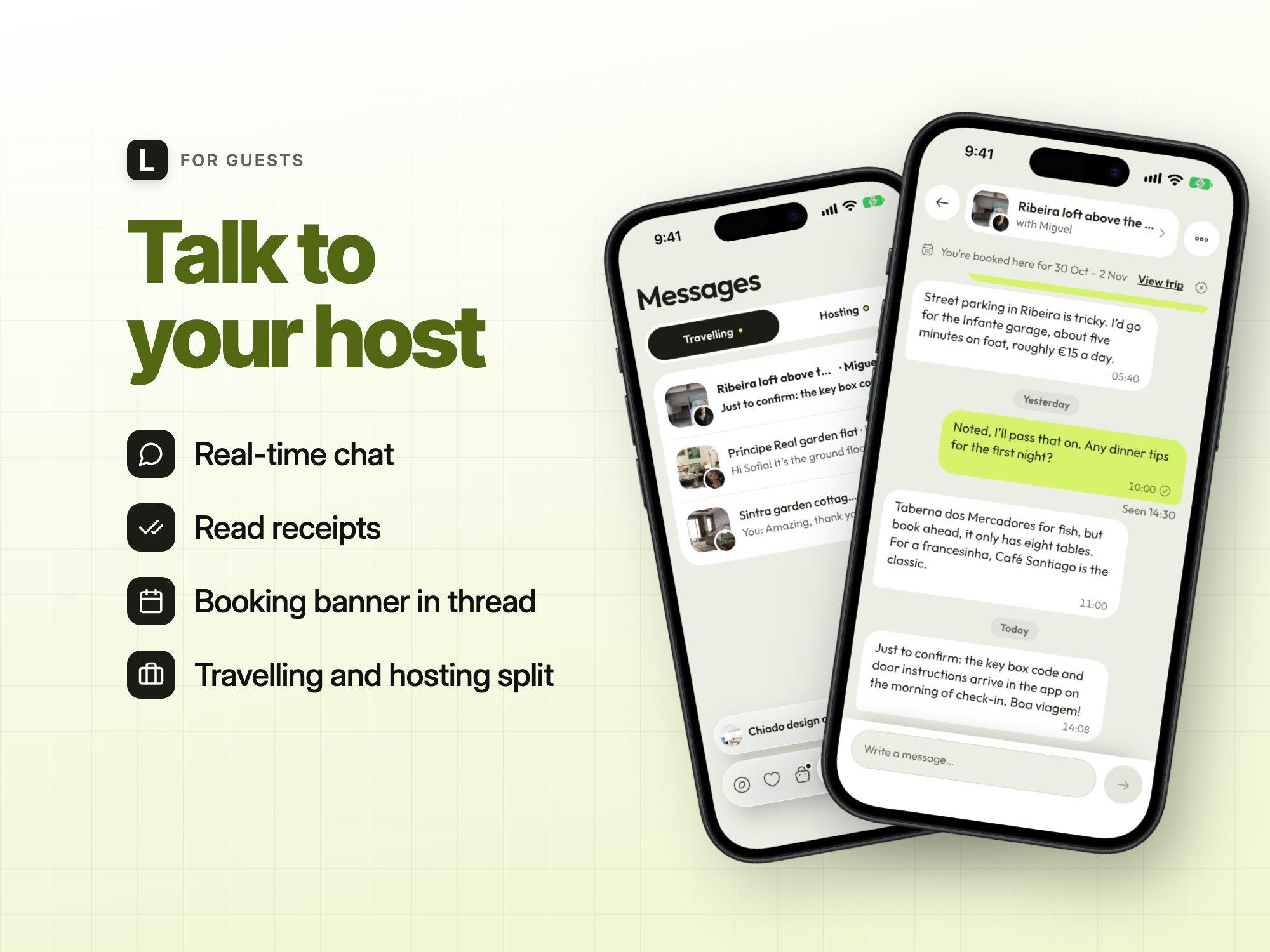
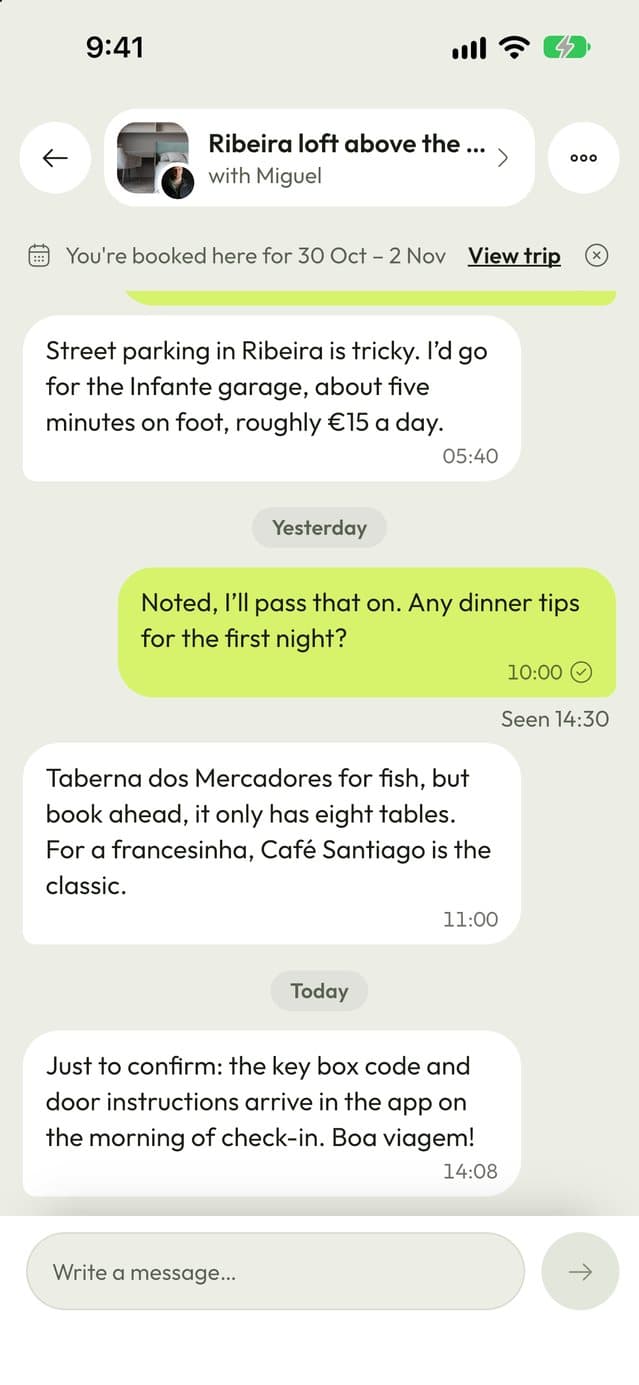
Behind it, a NestJS and MongoDB backend holds the booking core: the multi-place request, the counter offers and who gets the stay. Guests pay through the Stripe payment sheet in the app, hosts are paid out through Stripe Connect, chat runs over Socket.IO split into travelling and hosting threads with a booking banner and read receipts, push goes through Firebase, and photos upload to S3.
Result
A host console inside the same app
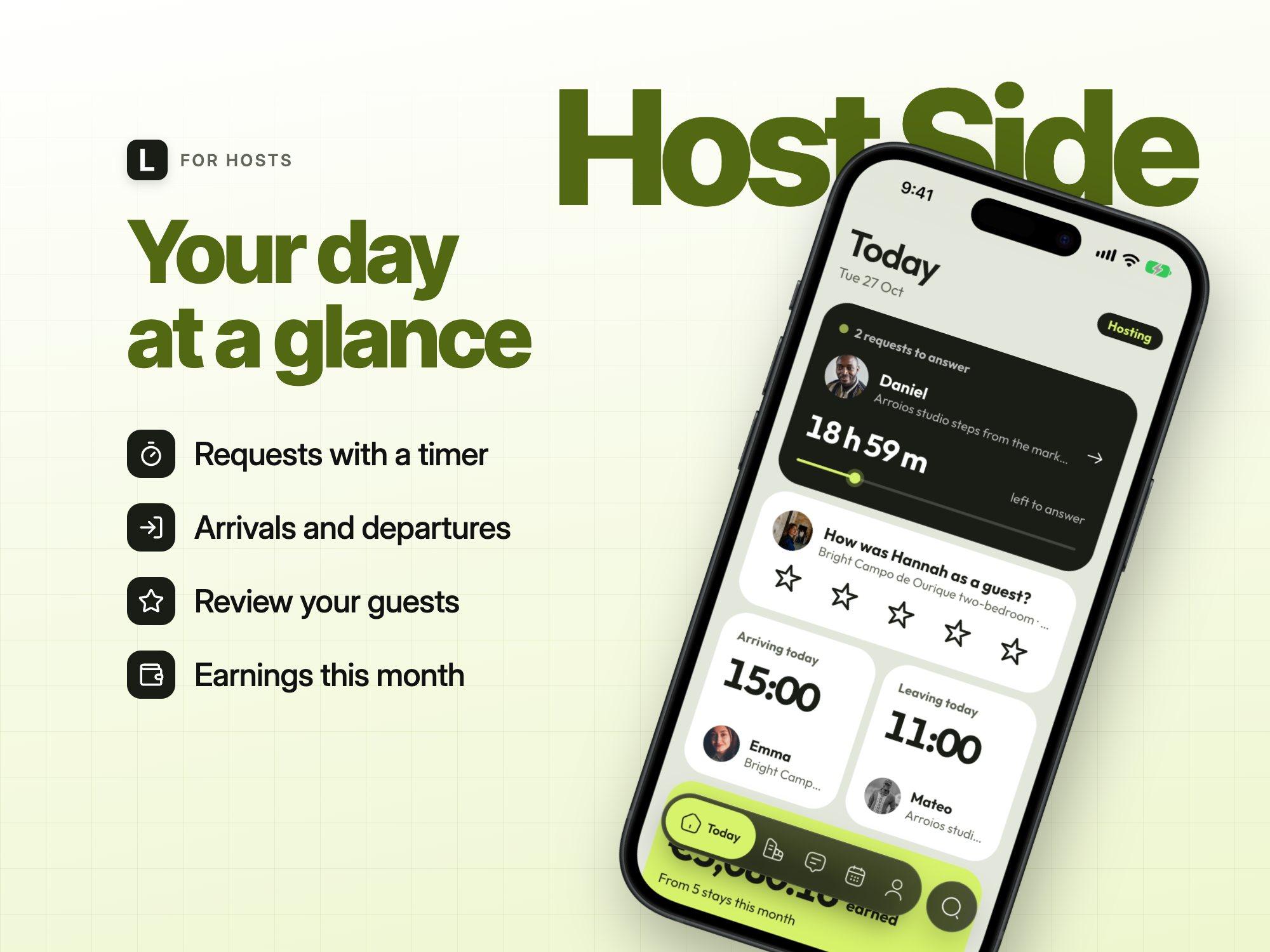
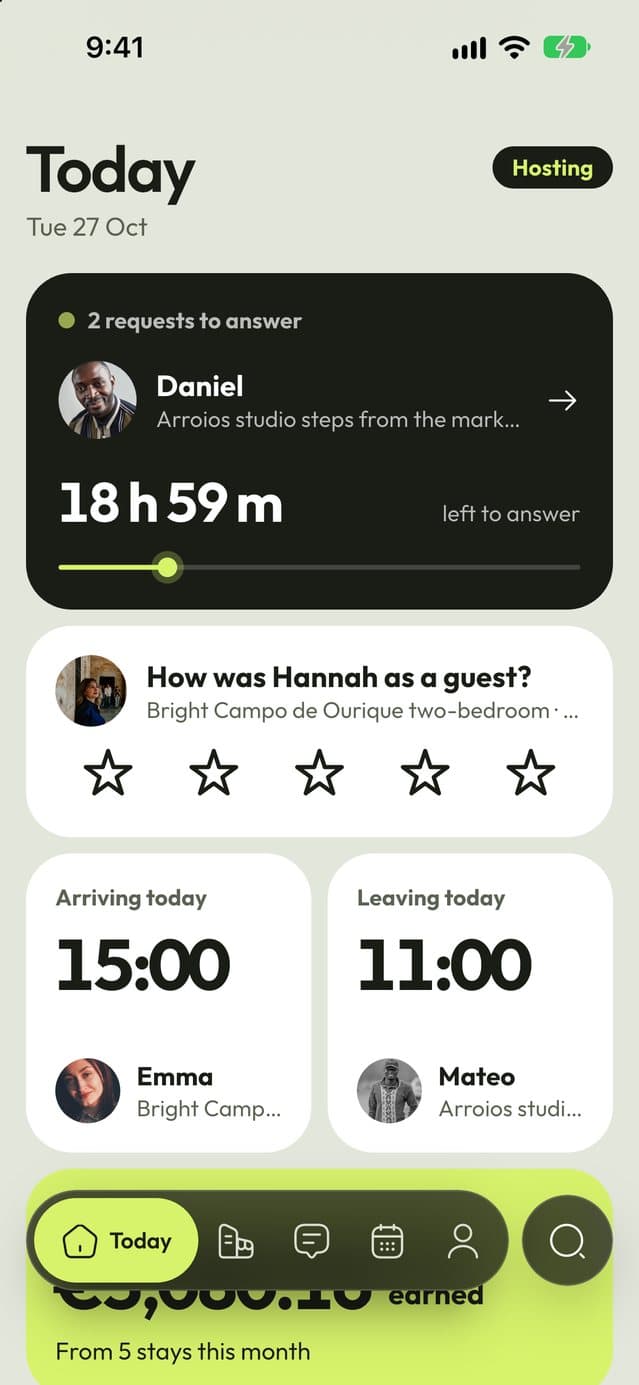
After host onboarding, a Hosting switch turns the same account into a console. Today lists the requests to answer with their deadline, the guests to review, who arrives and leaves that day and the month's earnings. Listings are live, paused or drafts with a step-by-step editor, the inbox shows each offer against the asking price with what the host would earn, and a calendar marks booked and blocked nights per listing.
Layali is built and is not yet in the app stores, so this describes what was made rather than how it is used. No usage figures are published here, because none have been measured for this site.
Inside the app
Real screens, demo data

06Book a call
Building something like this?
Book thirty minutes and we'll tell you quickly whether we're the right team for it, and roughly what it takes.
- 01You pick the slot
- 02Bring anything you have
- 03We come prepared
Your idea stays yours. Read only by the people who would build it, never reused, never passed on. Happy to sign your NDA first.
Pick a time. We'll tell you what it takes.
Thirty minutes, no pitch deck. Bring a rough idea or a finished spec, and leave with a straight answer on scope, cost and whether we're the right team.
- 01You pick the slotA live calendar, not a queue. Most people find something inside forty-eight hours.
- 02Bring anything you haveA spec, a Figma link, screenshots, a competitor you like, or nothing at all.
- 03We come preparedWe read whatever you send beforehand, so the call starts at the interesting part.
Your idea stays yours
- What you share stays between you and the people on your project.
- We never reuse your concept, your research or your materials elsewhere.
- Happy to sign your NDA before the call, or send ours.
We read every brief and reply within 60 minutes.
Prefer to write? with your files instead, or email abdullahmughal1976@gmail.com.